In a recent interview with Báo Người Lao Động, Mr. Đoàn Nguyên Đức (also known as bầu Đức), Chairman of Hoàng Anh Gia Lai Joint Stock Company, a new investor in the coffee sector with 10,000 hectares of land, confirmed that harvesting will begin on some areas by 2027.
Coffee is set to become a major revenue contributor for Hoàng Anh Gia Lai, as it is an industrial crop that can be produced on a large scale, similar to Brazil’s vast coffee farms.
According to bầu Đức, Hoàng Anh Gia Lai primarily cultivates Arabica coffee, and with current prices exceeding 200,000 VND/kg, the profit margins are exceptionally high. Coffee farmers are now among the wealthiest, affording cars and sending their children to study in Ho Chi Minh City by plane.
Additionally, the coffee market is expanding as Chinese consumers increasingly embrace coffee, and the commodity’s presence on trading platforms ensures stable demand.
“In agriculture, cost efficiency is key—with low production costs, profitability is guaranteed,” emphasized bầu Đức.
Furthermore, bầu Đức positions Hoàng Anh Gia Lai as a supplier of raw materials, avoiding direct competition with processed coffee brands like Trung Nguyên.
While Trung Nguyên focuses on the “end of the chain,” leveraging strengths in deep processing, branding, and direct consumer engagement, HAGL targets the “beginning of the chain,” specializing in supplying raw materials and seedlings. These strategies are complementary rather than competitive.
Trung Nguyên’s journey began in 1996 under the leadership of Mr. Đặng Lê Nguyên Vũ, growing from a small café into a comprehensive coffee ecosystem with thousands of franchises domestically and internationally. The company focuses on roasting, instant coffee, refined coffee, and an extensive network of processing facilities.
In early 2025, Trung Nguyên Legend commenced construction on a 2,000 billion VND Coffee Energy Plant, poised to become Asia’s largest coffee processing facility, enhancing deep processing capabilities and value chain integration.
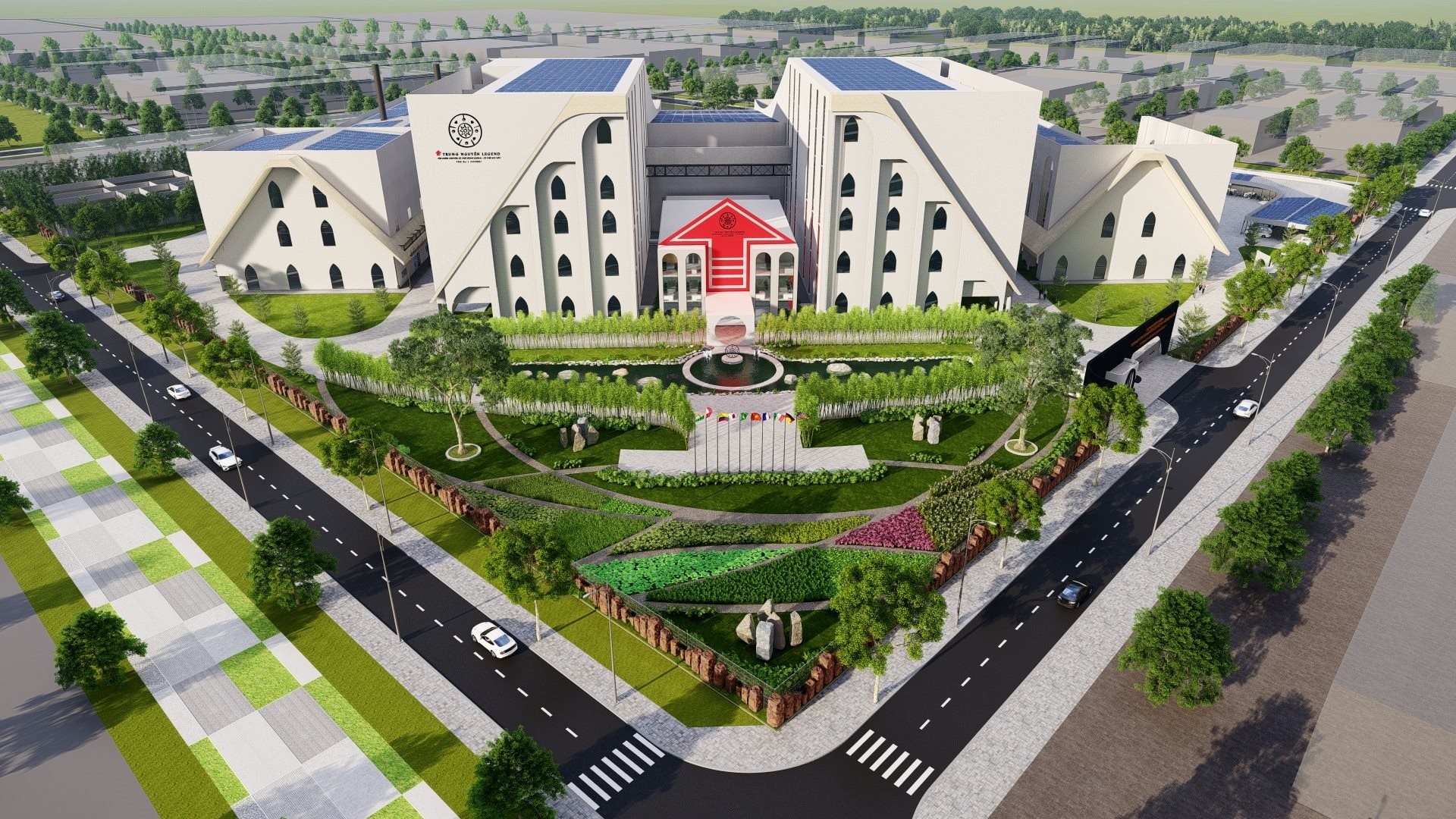
Rendering of Trung Nguyên Legend’s Coffee Energy Plant at Tân An Industrial Cluster, Buôn Ma Thuột—the largest in Southeast Asia.
HAGL, leveraging its extensive land holdings, industrial agriculture model, and fruit cultivation expertise, focuses on expanding its raw material segment. At the June 2025 Shareholders’ Meeting, bầu Đức announced that after a decade of commitment to agriculture, HAGL’s prospects have brightened, opening new investment avenues.
HAGL plans to cultivate an additional 2,000 hectares of Arabica coffee alongside bananas, durians, and pig farming. The project, with an estimated investment of over 2,000 billion VND, will be implemented in Gia Lai (Vietnam) and Champasak (Laos). By late October 2025, the company signed a contract with the Western Highlands Agriculture and Forestry Science Institute (WASI) to procure 30 million high-yield Arabica and Robusta seedlings.
From 2026 to 2027, HAGL aims to plant approximately 3,500 hectares of coffee annually, targeting a long-term goal of 10,000 hectares, with a 70% Arabica and 30% Robusta composition. In a recent discussion with Báo Người Lao Động, bầu Đức reiterated that HAGL will focus solely on supplying raw materials, avoiding competition in deep processing or retail—areas where Trung Nguyên holds a strong advantage.
Today’s Coffee Prices (Jan 15): Robusta Floods the Market
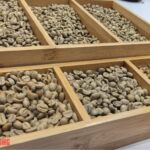
Coffee prices today saw a predominantly downward trend, with both Arabica and Robusta experiencing declines across most contracts. The exception was the March 2026 delivery for Robusta, which bucked the trend.
Today’s Coffee Prices (Jan 7): Surging Up, Reclaiming Key Milestone
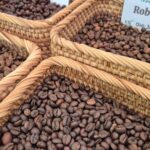
Coffee prices surged today, with Robusta rebounding to the $4,000 per ton mark and Arabica surpassing $8,000 per ton.
HAGL Welcomes New Creditor: Ministry of Finance’s Debt Trading Company
On December 30, 2025, Hoang Anh Gia Lai Joint Stock Company (HAGL, HOSE: HAG) disclosed an unusual announcement, revealing the receipt of information regarding the transfer of ownership rights for Group A bonds from bondholder BIDV (HOSE: BID) on December 29, 2025.
Today’s Coffee Prices (Dec 27): Africa Races to Expand Market Share

Coffee prices held steady today, with the exception of Arabica on the New York exchange, amid rising coffee export volumes from Africa.
Today’s Coffee Prices (Dec 20): 7th Consecutive Decline Amid Record-High Consumption
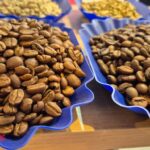
Coffee prices dipped today, yet the market appears to be finding a bottom as many farmers face no pressing need to sell.