Despite the market index’s upward trend, many investors witnessed a decline or even losses in their portfolios, creating a paradox of “market up, portfolio down” as the index repeatedly reached new highs.
Market Gains Concentrated in Large-Cap Stocks
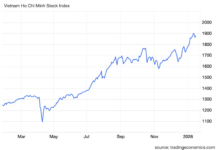
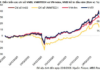
According to experts, in 2025, the VN-Index surged by nearly 41%. However, behind the impressive index gains lies a deeply divided market, where not all investors profited, and many, especially individual investors, faced losses.
Explaining why the stock market rose by nearly 41% in 2025 while many investors, primarily individual ones, still lost money, experts attribute this to the market’s gains being heavily concentrated in a few large-cap stocks within the VN30 basket. Meanwhile, over 46% of stocks on the market recorded negative returns.
“Even stocks of many fundamentally strong companies experienced prolonged adjustments due to interest rate impacts, macroeconomic factors, and shifts in capital flows,” said Mr. Đặng Trần Phục, Chairman of AZfin Vietnam Securities Company.

Stock market is not a playground for all investors. (Illustrative image)
Mr. Phục also noted that the unexpected performance of many stocks last year showed that a quality company does not always equate to an effective investment opportunity at all times.
“Therefore, instead of chasing short-term, localized gains, funds that steadily accumulate leading companies’ stocks, investors should prioritize risk management and maintain portfolio structure. This strategy may yield lower returns than the VN-Index in some periods but preserves portfolio structure and accumulates quality assets, optimizing investment efficiency when the market enters a broader growth cycle,” Mr. Phục advised.
Further elaborating, Mr. Đào Minh Châu, Deputy Director of Equity Analysis at SSI Securities Corporation, stated that the core reason lies in the market’s extreme polarization and shifts in capital flows.
“The market operated almost in ‘autopilot mode,’ with capital heavily concentrated in the Banking sector and a few large-cap stocks with unique narratives, while most other sectors were left behind.”
“Particularly, the U.S. launch of ‘Trade War 2.0’ at the beginning of 2025, with tariffs ranging from 20–46%, significantly impacted traditional export enterprises – a familiar stock group for individual investors, leading to portfolio underperformance,” Mr. Châu added.
According to Mr. Châu, the biggest mistake investors made last year was being conservative and failing to adapt to capital flow shifts.
“Instead of following smart money into quality stocks with reasonable valuations and strong financial fundamentals, many investors awaited rebounds in sectors that had broken trends or were negatively affected by macroeconomic factors, missing out on the rally of leading stocks,” Mr. Châu explained.
A Game Not for the Masses
Entering 2026, the market began showing more positive signs of capital dispersion. Despite the return of dispersed capital, experts believe this game is not for the masses.
To avoid repeating the situation of “index up, portfolio down” in 2026, experts suggest individual investors shift their mindset from “index-based buying” to a selective stock approach.
Mr. Đào Minh Châu mentioned that the closing session on January 16 officially confirmed the VN-Index surpassing its historical peak around 1,879 points. The strong upward momentum at the end of the session, accompanied by increased volume, indicated buyers were more proactive than before.
“Currently, although the market has surpassed its peak, it is highly polarized and still poses risks for undisciplined investors. Therefore, investors should focus on companies with strong fundamentals, concentrate on core sectors, and maintain strict capital management discipline to avoid risks during market volatility,” Mr. Châu advised.
Meanwhile, Mr. Đặng Trần Phục also noted that new market highs do not guarantee profits for all investors.
“Market gains are primarily driven by a few large-cap stocks, while many others do not rise or even decline. Thus, many investors see a green index but still have red portfolios. This reality highlights the market’s severe polarization. When the index does not accurately reflect the market, investors who choose the wrong stocks or lack patience will struggle to benefit, even as the market reaches new highs,” Mr. Phục explained.
In the long term, a truly healthy market requires gains from the synergy of multiple sectors. Given the cautious capital and lack of fundamental catalysts for most companies outside the pillar stock group, the upward trend relying on a few large-cap stocks will be difficult to sustain.
To avoid repeating the situation of “index up, portfolio down” in 2026, experts suggest individual investors shift their mindset from “index-based buying” to a selective stock approach.
“The market no longer moves in unison; capital is concentrated in companies with real narratives and clear fundamentals, such as the Banking sector or companies benefiting from fiscal policies. Averaging down on weak or broken-trend stocks is considered a mistake to avoid,” Mr. Phục said.
Mr. Phục also advised investors to prioritize companies with high-quality assets, double-digit EPS growth, and adhere to the discipline of following major capital flows.
“In 2026, with market valuations remaining attractive compared to long-term averages, opportunities exist but will only favor investors who choose the right stocks in a continuously polarizing market,” Mr. Phục cautioned.
Market Pulse 15/01: Recovery Efforts Underway, Yet Insufficient
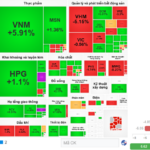
After enduring a barrage of challenges in the morning session, the market demonstrated notable recovery efforts in the afternoon. However, these attempts could only partially offset the earlier decline.
VN-Index Surpasses 1,900 Points for the First Time
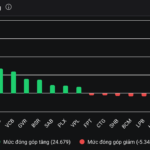
The Vietnamese stock market soared to new heights on January 13th, as the VN-Index breached the 1,900-point milestone for the first time, setting a historic record.
Stock Market Welcomes the New Year with a Spectacular Fireworks Display

Closing today’s trading session (December 31), the VN-Index reached its highest year-end close at 1,784 points. Since the beginning of the year, the VN-Index has surged by over 517 points, marking its best performance since 2017.
Stock Market Rebounds to 1,700 Points: Latest Forecast for Next Week

Banking, securities, and energy stocks surged last week, overtaking the Vingroup family of stocks and fueling hopes for a continued VN-Index recovery.
Foreign Block “Pours Money” as VN-Index Surges 57 Points, Investing Nearly 500 Billion in a Blue-Chip Stock
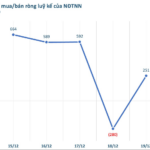
Foreign investors made a surprising return to net buying in the first and last sessions of the past week, significantly impacting trading values.