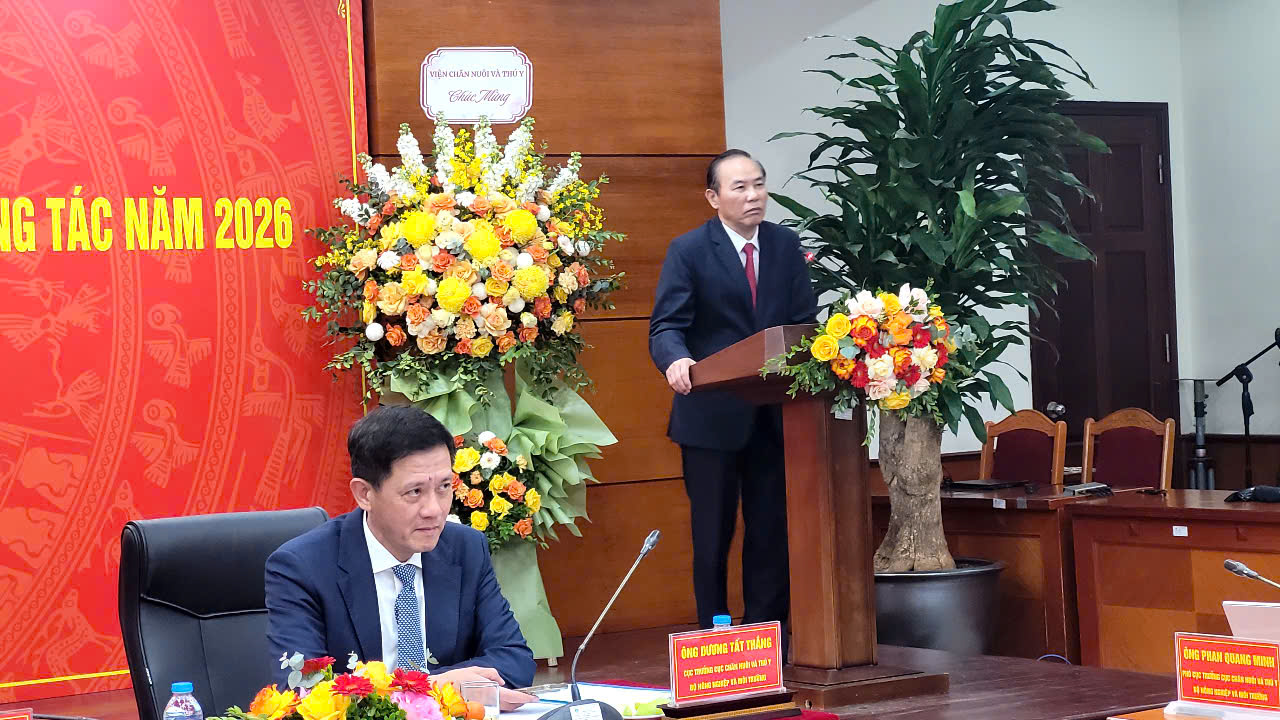
On the afternoon of January 21, the Department of Livestock and Animal Health under the Ministry of Agriculture and Environment held a conference to review the work of 2025 and deploy the work plan for 2026.
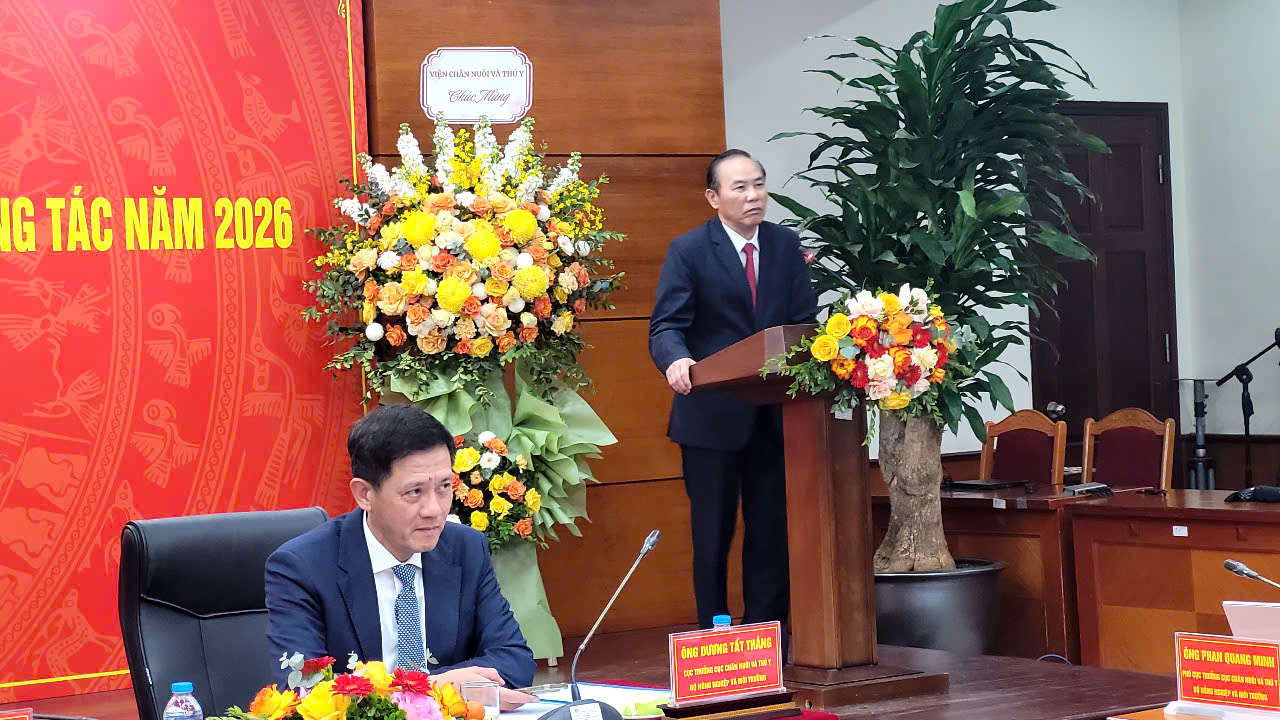
The Department of Livestock and Animal Health organized the conference to review the work of 2025 and deploy the work plan for 2026.
Mr. Phung Duc Tien, Deputy Minister of Agriculture and Environment, emphasized food safety control in slaughtering, particularly in over 24,000 small-scale slaughterhouses. “We must manage the industry responsibly. Look at the Ha Long canned food incident or cases where food establishments use spoiled raw materials of unknown origin,” he stated.
Deputy Minister Tien questioned why there is so much spoiled pork, offal, and internal organs, and whether this is related to temporary import for re-export. Are there “ghost” companies involved in imports?
Mr. Pham Kim Dang, Deputy Director of the Livestock Department, reported that as of December 2025, the pig population was approximately 9.58 million, accounting for 30.5% of the total national pig population.
In 2025, an estimated 25.74 million pigs were sold, representing about 44.4% of the total national sales.
Over 1.27 Million Pigs Culled Due to Disease Outbreaks
The number of pigs that died or were culled was 1,273,082 (a 13-fold increase compared to 2024), with the peak of the outbreak occurring in July-August, primarily among small-scale farmers who did not meet biosecurity standards.
Looking ahead, as disease outbreaks are controlled, farmers will restock and expand herds, ensuring a stable supply. Demand for food during year-end holidays and festivals is expected to rise by 10-15%, with piglet prices stabilizing at 70,000-75,000 VND/kg.
The market is expected to remain stable, balancing supply and demand to prevent food shortages during holidays and festivals.
The Livestock and Animal Health sector will continue to improve institutional frameworks to enhance productivity, quality, and competitiveness, expand markets, and modernize livestock management for greater efficiency.
Additionally, the sector will focus on effectively implementing the amended Livestock and Animal Health Laws, related decrees, and development strategies, while strengthening communication to raise awareness and political commitment among farmers, businesses, and central and local authorities.
Exposing the Stench: Rancid Pork on the Verge of Flooding the Market

According to the Domestic Market Management and Development Department under the Ministry of Industry and Trade, the Dong Nai Market Management Sub-Department has recently filed a case to destroy 63 slaughtered pigs and 86 kg of offal, totaling nearly one ton in weight.
800 Tons of Chemical-Laden Fresh Noodles Flood Ho Chi Minh City Market: What Are the Health Risks?
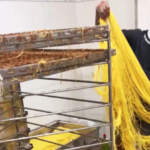
Over the past three years, Chau Phat business in Ho Chi Minh City has sold approximately 800 tons of fresh noodles containing banned substances, including borax, to the market.
Ministry of Agriculture and Environment Investigates ‘Contaminated’ Streetlight Paste Linked to Sick Pigs
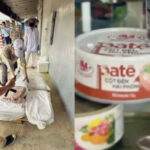
The Quality, Processing, and Market Development Department under the Ministry of Agriculture and Environment has requested the Hai Phong Department of Agriculture and Environment to provide comprehensive information regarding food safety management and disease control measures implemented by Halong Canned Food Joint Stock Company throughout its operational history.
Halong Canned Food Company Audit: No Violations Detected in 3 Years
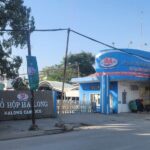
Through rigorous inter-sector inspections conducted over the three-year period from 2023 to 2025, Halong Canned Food Company has consistently adhered to all legal regulations governing food safety.
EXPOSED: The Shocking Truth About Hạ Long Canfoco’s Contaminated Paté and the Unaccountable Parties Involved

Over 130 tons of pork contaminated with the African Swine Fever virus were sold to Ha Long Canfoco (Ha Long Canned Food Joint Stock Company) for the production of processed meat products, including pâté.