Segregating Business and Personal Cash Flows
Transitioning from lump-sum tax to self-assessment, many business households are now concerned about how tax authorities will cross-check cash flows and monitor tax obligations. On tax forums, numerous questions arise regarding whether business households need to open separate bank accounts for transactions and declare them. Concerns have emerged over online rumors about tightening account management for tax calculation purposes.
According to Decision No. 3389/QĐ-BTC by the Ministry of Finance, business households with annual revenue exceeding 200 million VND must open a separate bank account for business transactions. This decision, issued in October 2025, will be implemented under the tax management model before the revised Personal Income Tax Law and Tax Administration Law are adopted. Under the new laws, the tax-exempt revenue threshold for households and individuals is set at 500 million VND annually.
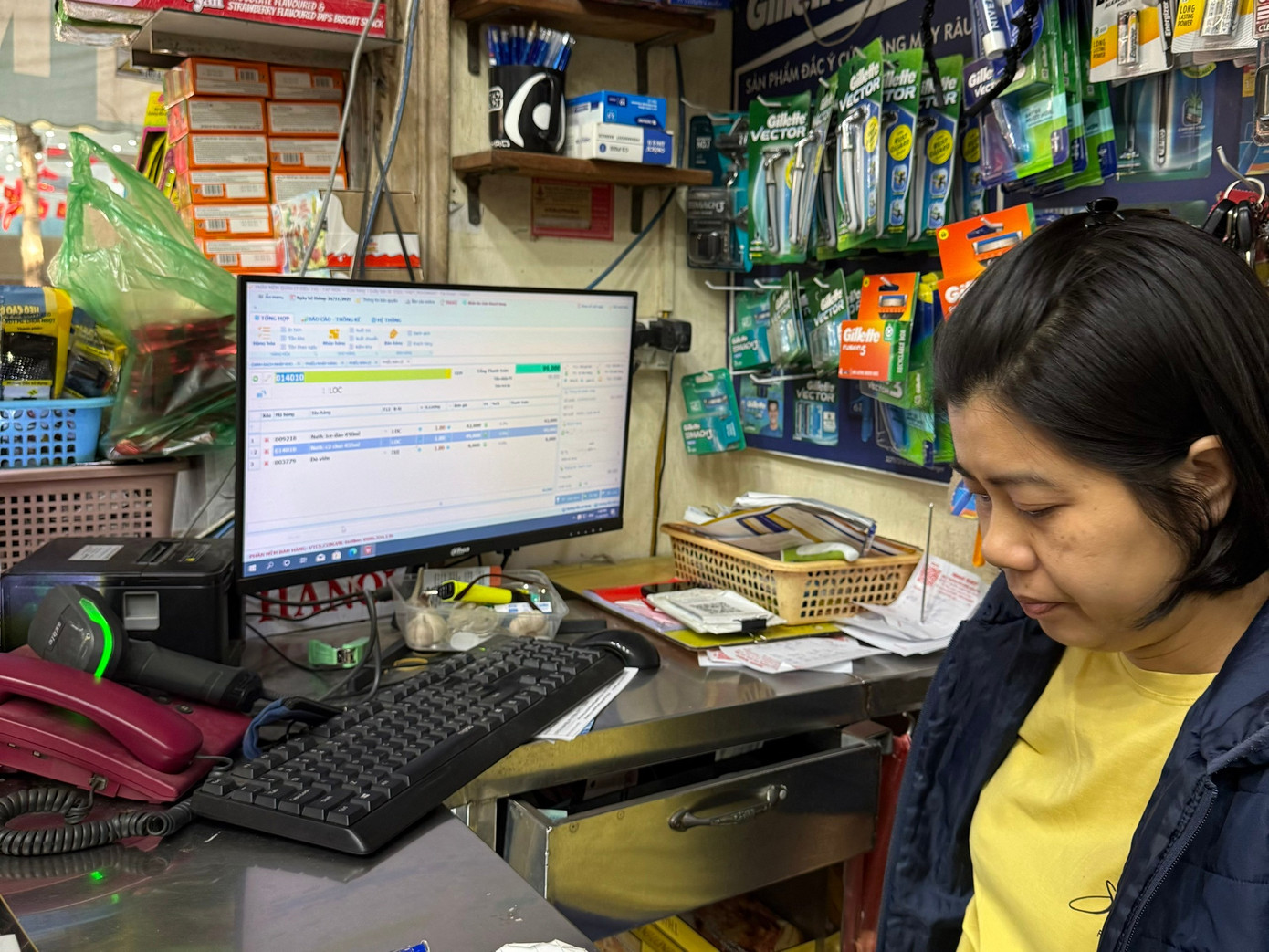
Requirement for business households to declare business accounts.
Currently, business households await specific guidelines, as the tax threshold has been adjusted. In the draft Decree on tax declaration, calculation, deduction, and payment, as well as electronic invoice usage for households and individuals, the Ministry of Finance proposes that households and individuals must notify tax authorities of all bank accounts related to production and business activities.
Many business households express concerns about how tax authorities will monitor revenue and cash flows.
Speaking with Tiền Phong, Mr. Lê Văn Tuấn, Director of Keytas Accounting and Tax LLC, noted that the regulation requiring business households to declare bank accounts for business activities aims to segregate business and personal cash flows, thereby facilitating tax compliance.
On one hand, this measure reduces instances of incorrect tax assessments due to mixed cash flows, which can be difficult to clarify over time. The requirement to declare business bank accounts will take effect from 2026.
From 2026 onward, business households will open new accounts under their business names for declaration to tax authorities. This means these accounts will only receive business-related funds starting this year.
Regarding concerns about “tightening account management for tax purposes” and the possibility of business households withdrawing savings from banks due to tax policies, Mr. Tuấn believes these assumptions lack basis.
“Business households’ savings remain in personal accounts, which are not subject to tax declaration requirements. Additionally, savings interest is always tax-exempt, so savings do not affect tax obligations,” Mr. Tuấn stated, emphasizing that savings accounts are not required to be declared to tax authorities.
When Can Tax Authorities Inspect Bank Accounts?
Under current regulations, the tax sector applies risk management to taxpayers. According to Article 15 of Circular 31/2021/TT-BTC by the Ministry of Finance, tax authorities classify business households into risk levels to apply appropriate management measures. There are three risk levels in tax management for business households.
The highest level is high risk, where tax authorities may apply measures such as inspections, surveys, and information verification to reassess revenue and tax amounts.
Additionally, Circular 31 stipulates that risk management information is collected both internally and externally from the tax sector.
Tax authorities do not have the right to access individuals’ bank accounts for e-commerce tax collection. They can only request relevant agencies and organizations to provide information for inspection purposes to determine taxpayers’ obligations.
The E-Commerce Tax Department of the Tax Agency also highlights eight cases where funds received in personal accounts may be subject to personal income tax, unless exempt or below the threshold, including: income from production and business activities; wages and salaries; capital investment; capital transfer; real estate transfer; winnings; royalties; and franchise rights.
Are Year-End Party Bonuses and Raffle Winnings Taxable?

According to regulations, Lunar New Year bonuses are classified as taxable income subject to personal income tax. Employees who win prizes at year-end parties, if the prize value exceeds 10 million VND, are also required to pay personal income tax.
Tax Authority Representative Addresses Invoice Violations: Serious Businesses Proactively Correcting Errors Exempt from Decree 310 Penalties

The Tax Department representative affirmed that Decree 310 aims to address invoice violations more reasonably and effectively.
Why the Tax Department’s Leadership is Reassuring Small Businesses

After more than two weeks of implementing the tax declaration under the Tax Administration Law, many business households remain uncertain, fearing incorrect declarations, penalties, or back-tax assessments from previous years. Addressing these concerns, Mr. Mai Sơn, Deputy Director of the Tax Department, assured that the initial phase will focus on guidance and support, rather than stringent inspections or penalties, to help business households confidently comply with regulations.
Eliminating Lump-Sum Tax: Businesses Grapple with Bookkeeping Challenges and Penalty Concerns

After nearly two weeks of eliminating the lump-sum tax, some users have resorted to manual note-taking, while others have registered for sales software but are still in the familiarization phase, yet to fully utilize its features. The most significant challenge lies with elderly household heads and small traders, who have limited exposure to technology.
Do Landlords Need to Register a Business?

Many landlords are often unsure about tax filing, business registration, and whether they need to establish a business license. According to tax authorities, setting up a business license is an individual’s right, not a mandatory obligation. This regulation has been in effect since this year.