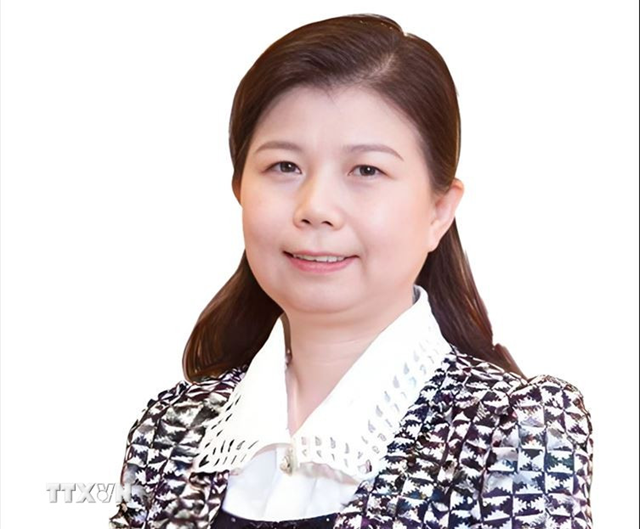
Liu Ying, a researcher at the Chongyang Institute for Financial Studies, Renmin University of China. (Photo: TTXVN)
|
Amid the global economic downturn, Vietnam’s ambitious goal of achieving an average annual GDP growth rate of approximately 10% between 2026 and 2030 presents significant challenges.
However, with its existing economic foundation and clear policy reform direction, this target remains attainable if Vietnam effectively implements systemic structural reforms and accelerates infrastructure investment.
This perspective was shared by Liu Ying, a researcher at the Chongyang Institute for Financial Studies, Renmin University of China, during an interview with TTXVN in China regarding the economic development goals outlined at the 14th National Congress of the Communist Party of Vietnam.
From an expert’s viewpoint, Liu Ying emphasized that Vietnam should prioritize industrialization, modernization, infrastructure investment, and addressing logistical cost bottlenecks.
Currently, Vietnam’s logistics costs account for approximately 16-18% of its GDP, compared to the global average of 10.7%, and are higher than many ASEAN countries, thereby reducing business competitiveness.
To support production and expand exports, she suggested that Vietnam expedite the implementation of the 2021-2030 National Master Plan, with a vision toward 2050, focusing on key areas such as the high-speed road network, high-speed rail, and seamless multimodal rail-sea transportation.
Additionally, perfecting capital mobilization mechanisms for infrastructure is crucial, including expanding public-private partnerships (PPPs) and considering the establishment of a special national infrastructure fund to attract sovereign wealth funds and long-term capital.
Priority investment areas include upgrading critical transportation routes connecting the Northern Industrial Corridor (Hanoi-Haiphong) with the Southern Economic Zone (Ho Chi Minh City-Dong Nai-Binh Duong), thereby reducing transportation time and costs while enhancing supply chain efficiency.
Beyond infrastructure, Liu Ying stressed the importance of continuing financial system reforms. Alongside upgrading the capital market, Vietnam should expand green financial incentives, given that the growth rate of green credit outstanding has surpassed overall credit growth.
Extending the 2% interest rate subsidy policy for green projects will facilitate the establishment of a carbon credit trading platform, channeling capital into renewable energy and circular economy initiatives.
Praising Vietnam’s efforts to develop international financial centers (IFCs), Liu Ying noted that with IFCs in Ho Chi Minh City and Da Nang already operational, Vietnam should accelerate the launch of international credit rating agencies, cross-border payment systems, and foreign financial licensing mechanisms to establish a regional capital mobilization hub.
Regarding new growth drivers, the Chinese expert advised Vietnam to simultaneously promote the digital economy and industrial upgrading, increase digital economy penetration, develop high-tech manufacturing, establish a national technology transfer fund, and implement tax exemptions for businesses introducing advanced production technologies.
This should be complemented by building a comprehensive human resource development system, enhancing labor market adaptability, and promoting balanced regional development.
Commenting on China-Vietnam economic relations, Liu Ying stated that both nations are building a strategic community with a shared future, opening opportunities for comprehensive and systematic economic cooperation centered on four pillars: balanced trade, infrastructure connectivity, financial coordination, and collaboration in emerging fields.
She proposed four measures to further enhance China-Vietnam economic ties.
First, promote sustainable and balanced bilateral trade by expanding market access in China for Vietnam’s advantageous products and encouraging Chinese enterprises to invest in regional R&D centers and procurement hubs in Vietnam.
Second, accelerate strategic infrastructure connectivity between the two countries, prioritizing intermodal rail projects like the Hanoi-Haiphong-Lao Cai route, linking the “Two Corridors, One Belt” framework with the “Belt and Road Initiative.”
Simultaneously, expand financial cooperation by promoting local currency settlements and exploring bilateral currency swap agreements. Lastly, Liu Ying emphasized the need for China and Vietnam to create new cooperation highlights in emerging fields, aiming to build “new quality productive forces” and cooperative growth poles in the coming decade, including enhanced experience-sharing in state-owned enterprise reforms.
Hai Yến
– 08:23 25/01/2026
Unlocking Vietnam’s Clean Energy Transition: Beyond the $700 Billion Opportunity
The “Green Transition Investment Shift” (SHIFT) project officially launched on January 27, marking a pivotal moment in mobilizing and managing financial resources for Vietnam’s Net Zero roadmap. Central to this strategy is the transition to clean energy, serving as the backbone of the nation’s sustainable economic transformation.
Prime Minister: Ensuring Seamless Opportunities for Swedish Businesses Investing and Operating in Vietnam
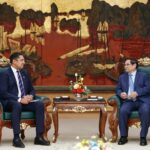
Prime Minister affirms Vietnam’s continued commitment to supporting and facilitating foreign businesses, including SYRE Company, in their investment and operations within the country. This support is grounded in ensuring compliance with Vietnamese law and fostering a spirit of “mutual benefits and shared risks.”
Unleashing Radical Innovation for Breakthrough Growth
The 14th National Party Congress places people, science, technology, and innovation at the heart of its development strategy, paving the way for a period of rapid yet sustainable growth for the nation, according to expert assessments.
Textile Enterprises Secure Orders Through Q1 2026

According to the Vietnam Textile and Apparel Association, many businesses are increasingly concerned about mounting pressures on pricing, tighter delivery timelines, and a rise in smaller order volumes.
Prime Minister Chairs 23rd Meeting of the Steering Committee for Transport Infrastructure Projects

On the morning of January 30th, Prime Minister Pham Minh Chinh, Head of the National Steering Committee for Key Transport Projects, chaired the 23rd meeting of the Committee.