China has launched the world’s largest compressed air energy storage (CAES) facility in Jiangsu Province, marking a significant milestone in its strategy to expand energy storage infrastructure. This move supports the nation’s transition to a low-carbon economy.
According to Harbin Electric, one of the project’s key contributors, the facility boasts a storage capacity of 2,400 MWh and a power output of 600 MW. At this scale, it can meet the annual electricity demands of approximately 600,000 households while playing a crucial role in stabilizing the grid as renewable energy adoption grows.
Compressed Air Energy Storage (CAES) is recognized as one of the most cost-effective solutions for long-term energy storage. The technology harnesses surplus electricity—primarily generated during off-peak hours or when renewable sources exceed demand—to compress air and store it in underground caverns. During peak demand, the compressed air is released to drive turbines, generating electricity for the grid.
As China accelerates its development of wind and solar power, the need for large-scale storage systems has become increasingly urgent. The government aims to add over 180 GW of new storage capacity by 2027, fueling a surge in battery storage projects while paving the way for alternative technologies like CAES.
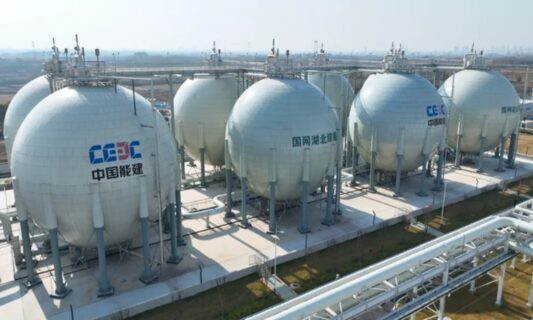
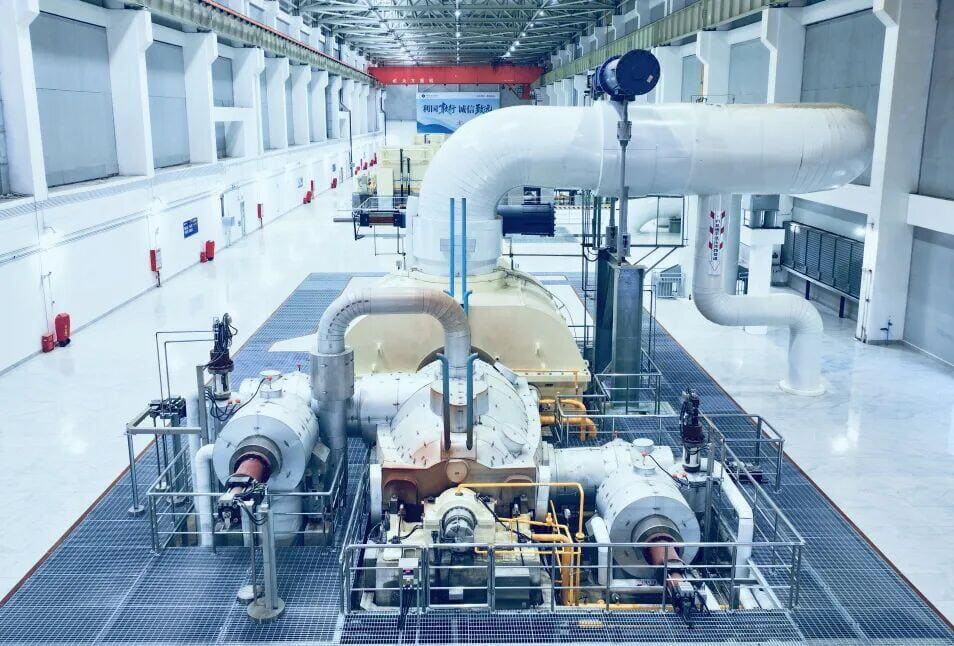
The Jiangsu facility utilizes advanced turbine technology, capable of rapidly reducing peak load demands within just 10 minutes of activation. This swift response transforms stored compressed air into electricity, ensuring grid stability during high-demand periods.
The project is expected to complete approximately 330 charge-discharge cycles annually. Each charging cycle can store around 2.8 million kWh of electricity, equivalent to powering roughly 100,000 electric vehicles. According to Chen Hui, Deputy Director of Engineering, Safety, and Quality, the facility will save approximately 270,000 tons of standard coal annually while reducing CO₂ emissions by about 520,000 tons.
This facility stands as China’s sole national-level demonstration project in compressed air energy storage and represents the country’s first large-scale commercial CAES plant. Developed through collaboration between China National Salt Industry Corporation, China Huaneng Group, and Tsinghua University, it exemplifies the synergy between state-owned enterprises and research institutions in China’s energy transition strategy.
GHC Officially Lists on HOSE
On January 30, 2026, approximately 47.7 million shares of Gia Lai Hydropower Joint Stock Company (GHC) were officially listed on the Ho Chi Minh City Stock Exchange (HOSE) with a reference price of 29,000 VND per share.
Unlocking Vietnam’s Clean Energy Transition: Beyond the $700 Billion Opportunity
The “Green Transition Investment Shift” (SHIFT) project officially launched on January 27, marking a pivotal moment in mobilizing and managing financial resources for Vietnam’s Net Zero roadmap. Central to this strategy is the transition to clean energy, serving as the backbone of the nation’s sustainable economic transformation.
Unveiling the Winning Investor of the $2.5 Billion Cà Ná LNG Project in Khánh Hòa
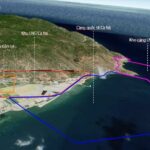
On January 28, 2026, the People’s Committee of Khanh Hoa Province officially issued a decision approving the selection of the investor for the Ca Na LNG Thermal Power Plant Project in Ca Na Commune, Khanh Hoa Province. The winning consortium is Trung Nam – Sideros River.
Could U.S. Tariffs on Nations Trading with Iran Provoke China’s Wrath?
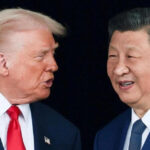
President Donald Trump’s announcement of tariffs on goods from countries trading with Iran threatens to derail the fragile trade truce between Beijing and Washington. Following Trump’s statement, Chinese Foreign Ministry spokesperson Mao Ning asserted that Beijing would firmly safeguard its rights and interests.
Breaking News: Google to Manufacture Premium Smartphones in Vietnam This Year

Google is set to commence the development and production of high-end smartphones in Vietnam starting this year, following in Apple’s footsteps in India as U.S. tech giants move closer to establishing complete supply chains outside of China.