According to public data from the Ministry of Finance, as of December 26, 2025, out of 25,143 public land and property assets requiring reorganization nationwide, 19,658 have been completed. This leaves 5,488 assets still pending reorganization.
Eight localities have successfully completed the reorganization of public land and property: Lang Son, Quang Ninh, Gia Lai, Lai Chau, Lao Cai, Hanoi, Nghe An, and Hue.
Four localities remain incomplete.
Tran Dieu An, Deputy Director of the Public Asset Management Department (Ministry of Finance), stated that the delays in many localities are not due to mechanisms.
Ms. Dieu An explained that most of these assets have already had their handling plans approved and are awaiting decisions from competent authorities.
Some localities still have a large number of pending assets because their handling plans have not yet been approved by the Provincial Party Committees or City Party Committees before being submitted to competent authorities.
Additionally, in some areas, the reorganization of public land and property has not received sufficient attention or decisive leadership from local authorities, particularly from top officials.
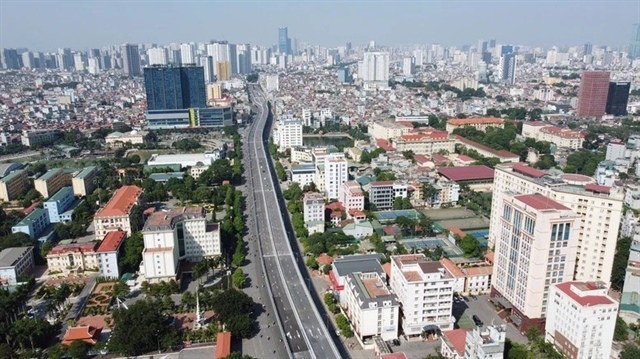
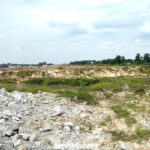
As of now, 30 out of 34 localities have completed the handling of surplus public land and property assets. Illustration: MINH TRÚC |
Recognizing these challenges, the Ministry of Finance has issued multiple documents urging ministries, sectors, and localities to expedite the review, completion, and implementation of reorganization plans for surplus public land and property in accordance with the law.
The Ministry requires localities to clearly categorize each asset, determine appropriate handling plans based on planning, usage needs, and local conditions, avoiding formalities or superficial measures.
Furthermore, the Ministry has organized working groups to directly engage with localities that have a significant number of pending assets, such as Lam Dong, Khanh Hoa, and Quang Ngai, to oversee, inspect, and resolve obstacles.
As a result, by January 19, 30 out of 34 localities have completed the handling of surplus assets. Only 4 localities remain incomplete, with a total of 36 assets—a reduction of 5,452 assets compared to late December 2025.
Progress is promising, but challenges persist
According to the Ministry of Finance, although only 36 assets in 4 localities remain, their handling is complex.
These assets often have complicated origins, long-standing histories, incomplete legal documentation, or are located in areas with overlapping or changing planning schemes.
Many localities report that the biggest challenge is assets located within residential areas, no longer suitable for their original purposes, or high-value land parcels affected by planning issues, making auctions or land-use conversions difficult.
“If not handled carefully, there’s a high risk of complaints, disputes, or state asset losses,” said Ms. Dieu An.
Moving forward, the Ministry of Finance plans to continue reviewing and improving the legal framework for public asset management. They will also urge the remaining 4 localities to complete the handling of their pending assets.
For localities that have completed the process, the Ministry will enhance inspections and supervision of public asset management to ensure compliance with the law, efficiency, and prevention of waste or loss.
|
Recently, the Ministry of Finance issued a document to ministries, government agencies, and provincial People’s Committees, urging focused leadership in implementing key tasks and solutions for public asset management in 2026. For assets already approved for recovery or transfer to local management, the Ministry requests that responsible agencies promptly develop exploitation or handling plans to ensure assets are utilized or definitively processed, avoiding abandonment or waste. The Ministry also calls for strengthened inspections and supervision of public asset management, focusing on the arrangement, reorganization, and handling of headquarters and public assets during organizational restructuring and administrative unit reorganization. This will enable timely detection, prevention, and strict legal action against violations, especially for assets showing signs of waste. |
MINH TRÚC
– 17:14 26/01/2026
Finance Ministry Clarifies Tax Threshold for Gold Bullion Transfers

The Ministry of Finance has announced the timeline for submitting regulations on the gold bar value threshold subject to personal income tax upon transfer.
Minister Nguyễn Văn Thắng: 2026 Fiscal Management Demands Greater Resolve to Achieve 10% Growth Target
The ambitious growth target of 10% or higher demands a robust and strategic financial and budgetary policy, especially amidst an economy still fraught with underlying challenges.
Ho Chi Minh City to Establish Urban Railway Corporation

Speaking at the Ho Chi Minh City teleconference, Vice Chairman of the City People’s Committee Nguyen Cong Vinh announced the establishment of the Urban Railway Corporation by Ho Chi Minh City.
Proposed Policy Adjustment: Aligning Salaries with Market Rates

According to the Ministry of Finance, price management has been consistently implemented in alignment with market principles, under the regulatory oversight of the State as stipulated by the Law on Prices.
“Ho Chi Minh City Chairman Intervenes in Case of Public Land Transformed into ‘Private Property’”
The Chairman of the Ho Chi Minh City People’s Committee has officially taken charge of addressing and assigning responsibilities to relevant units regarding the case of misappropriating public land under state management. This involves the issuance of land use certificates to individuals, resulting in significant financial losses to the state during project implementation and land clearance compensation.