According to the Japan External Trade Organization (JETRO)’s 2025 survey on Japanese businesses investing abroad, Vietnam remains an attractive destination. This marks the 38th year JETRO has conducted this survey since 1987.
Key survey categories include: Business Profit Outlook, Future Business Development, Expansion Strategy, Impact of U.S. Tariff Policies, Investment Environment Appeal and Challenges, Competition, Procurement and Exports, Employment Environment, and Wages.
Domestic Procurement Reaches Record High
The survey reveals Vietnam’s domestic procurement rate hit 38.1%, a 1.5-point increase from the previous year, matching Malaysia’s 1.6-point rise.
Procurement from Vietnamese businesses accounted for 18.3% of total procurement, up 2.6 points year-over-year. This marks the first time the figure surpassed 18% since the survey began and is the highest on record.
However, JETRO highlights challenges in local sourcing. 58.9% of firms cited a lack of local raw material suppliers, while 51.4% noted insufficient quality and technical capabilities among domestic suppliers. Though these figures have decreased, they remain significant barriers.
Ms. Cong Tang Ton Nu Thuy Trang, Vice Chairwoman of the Vietnam Electronic Industries Association (VEIA), identifies three key challenges for Vietnamese businesses, especially in supporting industries and automation.
First, a gap in standards and management systems: Many Vietnamese firms possess strong technical skills but lack robust quality control, traceability, ESG compliance, and international standards—critical requirements for multinational corporations.
Second, becoming a Tier 1 supplier to foreign firms demands significant investment in machinery, R&D, and process standardization. Vietnamese businesses often struggle with long-term financing and lack sufficient “order-support” mechanisms to justify such investments.
Third, a lack of meaningful connections between foreign and domestic firms. Many Vietnamese businesses are not involved early in the process, from design and technical specifications to production planning, making it difficult to meet requirements promptly.
“Vietnamese businesses have the capability, but they need more time, trust, and genuine support to grow within the global supply chain,” Ms. Trang emphasized.
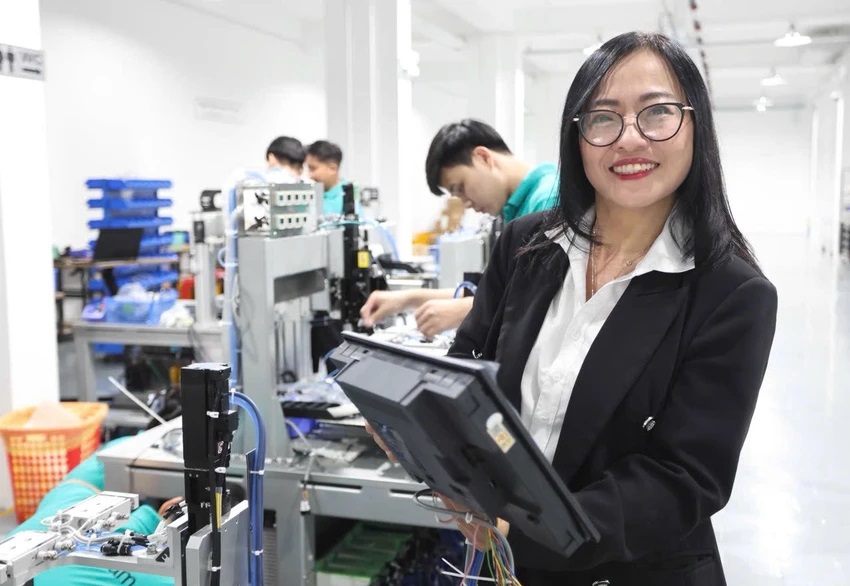 Ms. Cong Tang Ton Nu Thuy Trang at Ito Vietnam’s automated production line. Photo: T.TRANG
|
Aspiring to Build a Genuine “Make in Vietnam” Ecosystem
Notably, 49.4% of Japanese firms surveyed plan to expand local procurement in the next one to two years, a 1.5-point decrease from last year but indicating a stable trend.
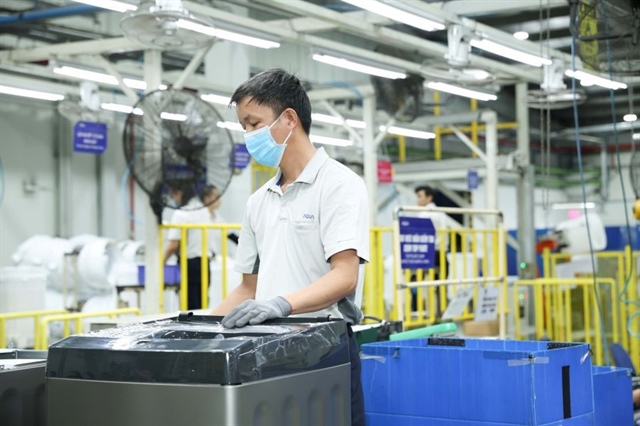
Mr. Fan Guofeng, General Director of AQUA Vietnam, shared that the company’s current localization rate exceeds 50%, nearing 60%. Long-term goals aim for 100% localization, with an initial target of 75%.
To achieve this, AQUA is encouraging existing suppliers to establish production in Vietnam and integrating Vietnamese suppliers into its supply chain, particularly for core home appliance components.
Similarly, Ito Vietnam’s leadership reported that 100% of its designs are executed by Vietnamese engineers, and over 80% of components are sourced locally. All core software and precision mechanics are produced in-house.
“We aim not only to be a ‘Made in Vietnam’ company but also to foster a Vietnamese business ecosystem capable of competing globally,” said an Ito Vietnam representative.
The company is actively expanding its domestic supplier network, focusing on precision machining and automation support. Ito Vietnam prioritizes co-development partnerships over cost-cutting, sharing technical standards, and supporting process improvements, even accepting initial “learning costs” for potential partners.
The company believes a sustainable supply chain requires quality, transparency, and social responsibility.
 |
Vietnam’s Investment Environment Offers Significant Advantages
According to AQUA Vietnam’s leadership, Vietnam’s open market and attractive policies make it a top destination for foreign investment. Compared to regional peers, Vietnam is among the fastest-growing nations with the most favorable investment policies.
AQUA Vietnam highlights two key factors for sustainable growth: a skilled workforce and robust infrastructure. Free 15-year education has produced a qualified labor force, ensuring product quality. New airport construction in Dong Nai and efficient seaports and logistics services further optimize operational costs.
“Reduced transportation costs enhance product competitiveness, making quality products more accessible to consumers,” shared AQUA Vietnam’s leadership.
JETRO’s survey confirms Vietnam’s advantages in market size, labor costs, and political stability compared to ASEAN peers. 56.9% of Japanese firms in Vietnam plan to expand operations in the next one to two years, leading ASEAN for the second consecutive year.
TÚ UYÊN
– 17:50 29/01/2026
Japanese Enterprises Set Record in Domestic Procurement from Vietnam

According to JETRO, domestic procurement from Vietnamese businesses accounted for 18.3% of total procurement activities, marking a 2.6-point increase from the previous year—the highest level ever recorded.
Electric Scooter Race: Industry Giants Compete for Dominance
Leading international motorcycle brands such as Honda, Yamaha, and SYM are strategically expanding their electric motorcycle offerings in Vietnam.
China Expert Assesses Vietnam’s Growth Targets

Amidst the backdrop of a global economic downturn, Vietnam faces a formidable challenge in achieving its ambitious goal of an average annual GDP growth rate of approximately 10% during the 2026–2030 period.
Unlocking Vietnam’s Clean Energy Transition: Beyond the $700 Billion Opportunity
The “Green Transition Investment Shift” (SHIFT) project officially launched on January 27, marking a pivotal moment in mobilizing and managing financial resources for Vietnam’s Net Zero roadmap. Central to this strategy is the transition to clean energy, serving as the backbone of the nation’s sustainable economic transformation.
Prime Minister: Ensuring Seamless Opportunities for Swedish Businesses Investing and Operating in Vietnam
Prime Minister affirms Vietnam’s continued commitment to supporting and facilitating foreign businesses, including SYRE Company, in their investment and operations within the country. This support is grounded in ensuring compliance with Vietnamese law and fostering a spirit of “mutual benefits and shared risks.”