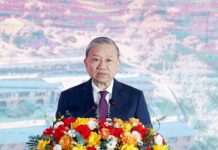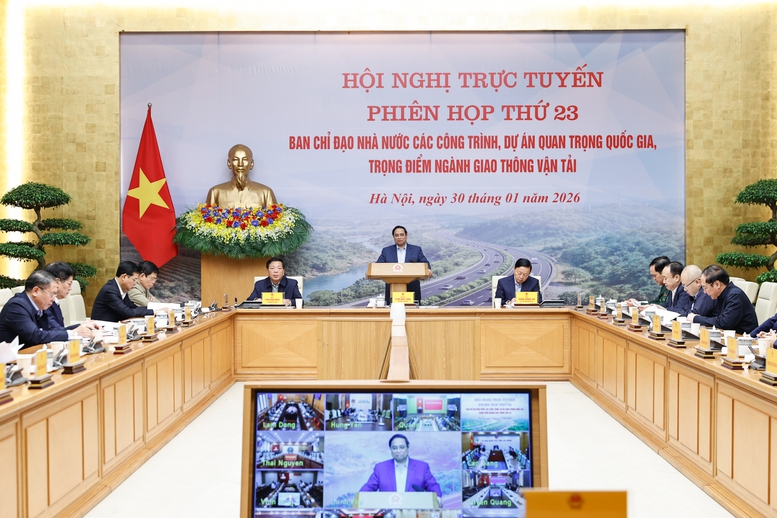
Prime Minister Pham Minh Chinh, Head of the National Steering Committee for Key Transport Projects, chaired the 23rd meeting of the Committee. Photo: VGP/Nhat Bac
The meeting was held online, connecting the Government Office with 27 localities. Deputy Prime Minister Tran Hong Ha, Permanent Deputy Head of the Committee; Minister of Construction Tran Hong Minh, Deputy Head of the Committee; and leaders from various ministries, sectors, and localities were in attendance.
In his opening remarks, Prime Minister Pham Minh Chinh emphasized the need to promptly implement the directives of General Secretary To Lam and the Politburo following the successful 14th National Party Congress. He stressed the importance of swift action and achieving the highest efficiency, using these as key performance metrics.
The Prime Minister outlined the meeting’s objectives: reviewing tasks assigned since the 22nd meeting, assessing project progress within the Committee’s portfolio, devising investment plans to upgrade highways to meet standards, and ensuring timely audits and settlements.
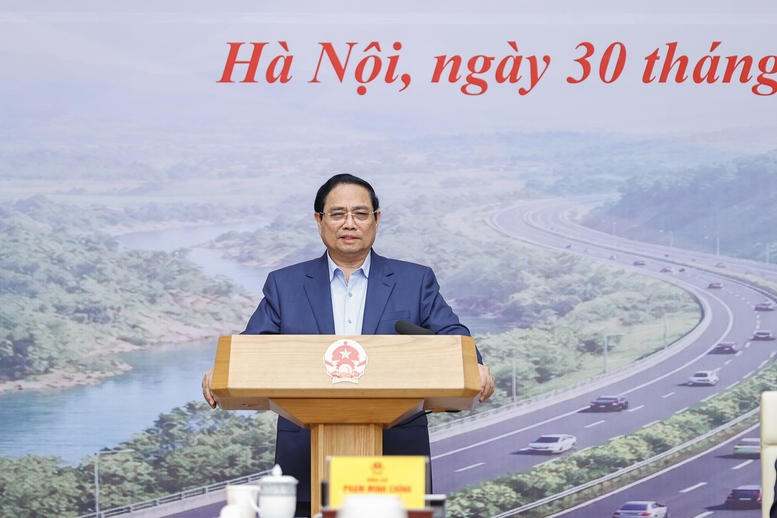
The Prime Minister urged delegates to review project implementation and address bottlenecks. Photo: VGP/Nhat Bac
He also highlighted the need to ensure project quality, safety, technical compliance, aesthetics, and environmental hygiene, while improving living conditions for relocated residents.
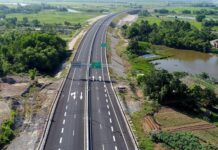
The Prime Minister called for a thorough review of local project implementation, particularly for highways such as Tuyen Quang – Ha Giang, Huu Nghi – Chi Lang, Dong Dang – Tra Linh, Cao Lanh – An Huu, Khanh Hoa – Buon Ma Thuot, HCMC Ring Road 3, and the East-West Highway (Chau Doc – Can Tho – Soc Trang). He warned against over-segmenting projects among contractors, which causes delays and potential corruption.
He emphasized prioritizing highway development in challenging mountainous areas like Lai Chau, Son La, Cao Bang, and Tuyen Quang to accelerate regional transformation. Localities must take initiative and responsibility, avoiding dependency.
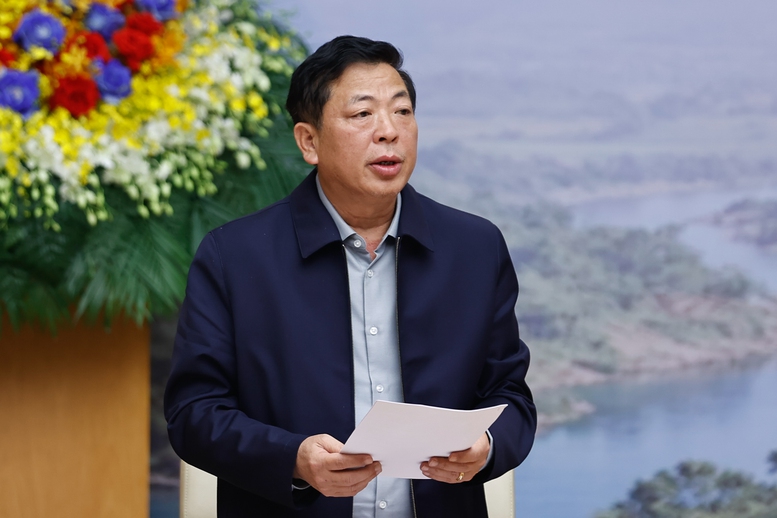
Minister of Construction Tran Hong Minh reported at the meeting. Photo: VGP/Nhat Bac
The Prime Minister stressed enhanced oversight, proactive project reviews, and anti-corruption measures. He advocated for audits before, during, and after construction, urging inspectors to prevent minor issues from becoming major problems. He emphasized accountability without hindering progress.
By 2030, Vietnam aims to complete 5,000 km of highways. The Prime Minister called for urgent resource allocation and project preparation, urging a mindset of “no wasted days, no delayed weeks, no missed monthly opportunities, and no yearly setbacks.” He emphasized decisiveness and time management.
Building on the momentum of the 14th Party Congress and the new year 2026, he urged immediate action, stating, “Each subsequent meeting, month, and year must surpass the previous.”
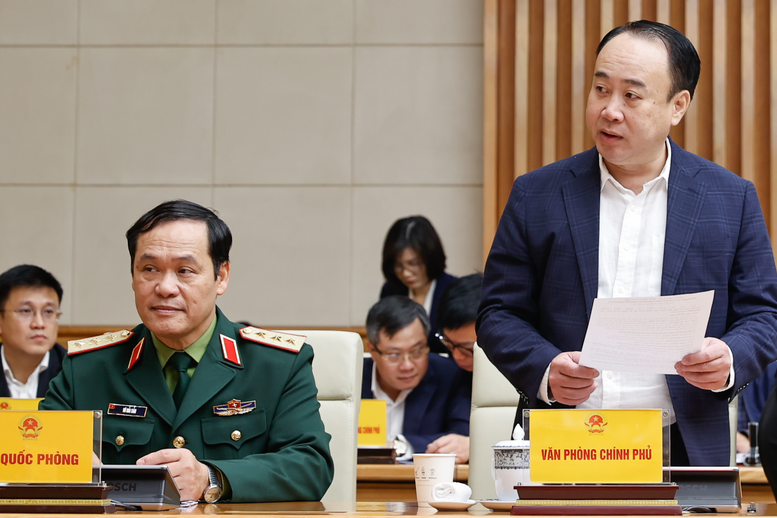
Deputy Chief of the Government Office Nguyen Sy Hiep spoke at the meeting. Photo: VGP/Nhat Bac
According to reports and discussions at the meeting, in 2025, ministries, localities, and Committee members made significant strides, completing numerous projects that marked the 2021-2025 period. These achievements boosted economic and social development, strengthened national defense, and met public expectations, earning citizen and business support.
Despite severe weather in 2025, including major storms and floods, project stakeholders demonstrated resilience, quickly recovering to meet targets: over 3,000 km of highways and 1,700 km of coastal roads.
In 2025, ministries and localities successfully held three ceremonies inaugurating and launching 564 projects across 34 provinces, with a total investment of over VND 5,140 trillion.
The Ministry of Construction reported that at the 22nd meeting on December 9, 2025, the Prime Minister assigned 31 tasks. Of these, 13 were completed on time, and 13 are ongoing (5 routine tasks and 8 pending deadlines).
The Government’s e-portal will provide further updates on the meeting.
Prime Minister: Preventing the Scenario of “One Kilometer of Expressway with Dozens of Contractors Working Simultaneously”
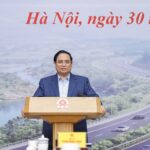
The Prime Minister emphasized that by 2030, Vietnam aims to complete 5,000 kilometers of expressways. To achieve this goal, immediate solutions are required for resource allocation, project preparation, and swift implementation.
Infrastructure Giant Proposes $20 Billion Project to Alleviate Traffic Congestion at Eastern Gateway of Vietnam’s Most Populous City
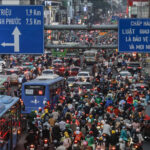
This project is seamlessly integrated with the urban development strategy following the TOD (Transit-Oriented Development) model at the Hang Xanh intersection area.
Vietnam’s Economic Growth Forecast for This Year
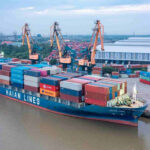
VinaCapital forecasts Vietnam’s GDP to grow by approximately 8% in 2026. In a more optimistic scenario, growth could reach 10%, driven by the significant policy space available, enabling the government to proactively implement growth-supportive measures as needed.
Deo Ca Joint Venture Accelerates $1.6B Highway Project, Aiming for One-Year Early Completion; Chinese Firms Eager to Partner

Numerous contractors have expressed their eagerness to partner with the consortium of investors, ensuring the project reaches its completion as per the scheduled timeline.
General Secretary To Lam Signs Directive to Implement the Resolutions of the 14th National Party Congress

General Secretary Tô Lâm has signed and issued Directive 01 of the Politburo, focusing on the study, learning, thorough understanding, dissemination, and implementation of the resolutions from the 14th National Party Congress.