






Accelerating key tasks and solutions to achieve the 2026 economic growth target.
|
The year 2026 holds significant importance as the first year of implementing the 5-year Socio-Economic Development Plan (2026-2030), marking a new era of national development. To successfully fulfill the resolutions of the 14th National Party Congress, the Prime Minister has urged ministries, agencies, localities, corporations, and state-owned enterprises to vigorously and effectively implement the tasks and solutions outlined in Resolution No. 01/NQ-CP dated January 8, 2026. This includes closely monitoring domestic and international developments, enhancing analytical and forecasting capabilities, and ensuring flexible, timely, and effective policy responses to avoid any surprises. Key focus areas include:
1. Ministry of Finance to lead and coordinate with relevant agencies in drafting the Government’s Action Program for implementing the 14th National Party Congress resolutions, to be submitted to the Government by February 5, 2026.
2. Fiscal and Monetary Policy Management
a) Ministry of Finance to continue implementing an expanded fiscal policy with clear priorities, coordinating effectively with monetary and other macroeconomic policies, including:
– Strengthening financial discipline, ensuring timely and accurate tax collection, broadening the tax base, and combating tax evasion, especially in e-commerce, dining, and retail. Aiming for a 10% increase in state budget revenue in 2026 compared to 2025 estimates.
– Extending tax reductions, deferrals, and land rent exemptions to support citizens and businesses, particularly SMEs, in boosting production and business activities.
– Utilizing public debt and deficit margins within safe limits to mobilize resources for investment, including issuing government bonds for key national projects in areas like science, technology, innovation, and digital transformation.
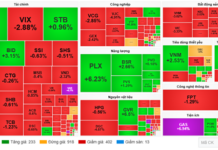
– Implementing measures to stabilize and develop the stock and corporate bond markets, making them efficient medium- and long-term capital mobilization channels for double-digit growth.
b) State Bank of Vietnam to closely monitor and manage monetary policy proactively, flexibly, and effectively, coordinating with fiscal policy to promote growth, macroeconomic stability, inflation control, and balance of payments. This includes:
– Managing interest rates and exchange rates in line with macroeconomic conditions and monetary policy goals, stabilizing the Vietnamese Dong, and ensuring foreign exchange market stability. Directing credit institutions to safely and efficiently increase lending, focusing on production, priority sectors, and growth drivers. Continuing government-directed credit programs, especially for social housing, infrastructure, digital technology, and high-quality rice production and consumption. Strictly controlling credit in high-risk areas.
– Actively addressing weak credit institutions, restructuring special-controlled commercial banks, and enhancing bad debt resolution to prevent new bad debts.
– Expediting the establishment of a national gold trading exchange, submitting a proposal to the Government by January 2026.
c) State-Owned Enterprises to enhance their leadership, management, and operational efficiency, aiming for a minimum 10% growth in output or revenue in 2026. Accelerating key infrastructure projects and proposing new investments.
3. Revitalizing Traditional Growth Drivers (Investment, Consumption, Exports)
a) Investment
– Ministry of Finance, relevant ministries, and localities to finalize the 2026 capital plans for National Target Programs by February 2026. Monitoring and expediting public investment disbursement, aiming for 100% completion. Resolving land clearance and material supply issues, reallocating funds from slow- to fast-disbursing projects.
– Promoting large-scale, high-tech FDI projects. Finalizing the Resolution on Foreign Investment Development for Politburo approval. Attracting multinational corporations and strategic investors in semiconductors, AI, and digital technology.
– Resolving bottlenecks for stalled projects as per Politburo conclusions and National Assembly Resolution 265/2025/QH15 by January 30, 2026. Establishing task forces to oversee local implementation.
– Developing legal frameworks for BT projects, reporting to the Government by January 2026. Establishing a National Investment Portal with integrated local databases by February 2026.
– Ministry of Construction and relevant agencies to upgrade existing and new expressways to full standards, ensuring complete technical infrastructure. Submitting plans to the Prime Minister by February 15, 2026. Accelerating social housing, targeting 110,000 units in 2026, and key transport projects like the Lao Cai-Hanoi-Haiphong railway and North-South high-speed rail. Developing Long Thanh International Airport (Phase 2) and regional airports.
– Ministry of Agriculture and Rural Development to promote sustainable, high-value agriculture through technology and innovation. Ensuring food security and preparing for the winter-spring crop. Providing market information for efficient agricultural product distribution.
– Ministry of Justice to draft a Resolution on administrative procedure and business condition simplification by January 2026.
b) Consumption
– Implementing consumption stimulus measures, especially for Tet. Promoting Vietnamese products, ensuring supply stability, and controlling prices. Strengthening market surveillance and intellectual property protection. Enhancing service quality, particularly in tourism, to attract international visitors.
– Drafting a Government Action Program for consumer rights protection by February 15, 2026. Organizing a successful Spring Fair in early February 2026.
c) Exports
– Diversifying export markets, leveraging 17 FTAs, and negotiating new agreements with Latin America, the Middle East, and Pakistan. Focusing on Halal, African, and Latin American markets.
– Resolving IUU fishing issues to lift the EU’s yellow card by April 2026.
4. Unleashing New Growth Drivers
a) Ministry of Science and Technology to accelerate innovation and digital transformation projects. Implementing Politburo Resolution 57-NQ/TW.
b) Ministry of Education to develop mechanisms for world-class universities and strategic research programs. Accelerating the construction of 100 boarding schools in border areas and planning for 148 more in 2026.
c) Ministry of Finance and relevant agencies to operationalize the International Financial Center in Vietnam, finalizing regulations by January 2026. Piloting a digital asset trading platform and attracting global investment.
d) Ministry of Public Security to draft regulations for data innovation centers by January 2026.
e) All ministries and localities to implement 9 breakthrough resolutions, develop policies for economic sectors, promote research commercialization, and enhance intellectual property protection. Advancing digital transformation, green growth, and sustainable development.
5. Deputy Prime Ministers to oversee implementation in their respective sectors.
6. Government Office to monitor progress and report to the Prime Minister as needed.
– 08:26 25/01/2026