





Infrastructure Transforms Southern Vietnam’s Industrial Real Estate Landscape
According to industry experts, the Southern Key Economic Region is on the cusp of a new growth cycle, driven by the simultaneous development of large-scale infrastructure projects. Here, location, scale, and connectivity are becoming decisive advantages.
The most notable project is the Long Thanh International Airport, a transformative initiative for the Southern region. Once operational by mid-2026, it will significantly enhance logistics and export capabilities for industrial hubs in Dong Nai, Binh Duong, Long An, and Ho Chi Minh City.
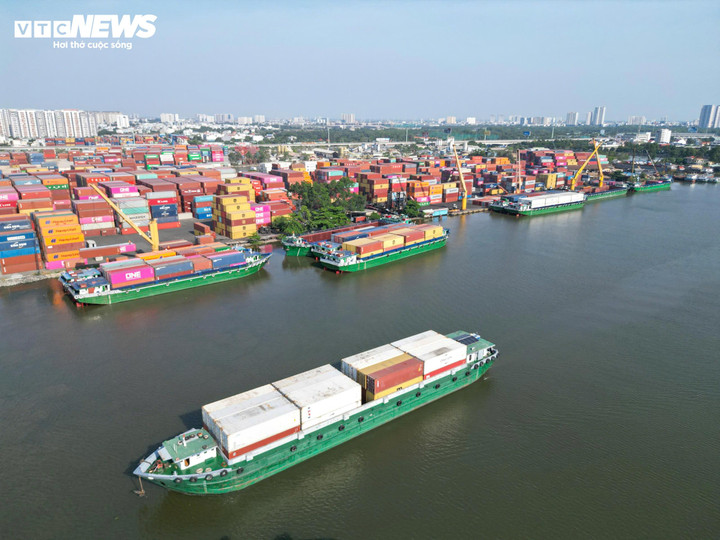
Industrial land rental prices in Ho Chi Minh City remain high, particularly in the Cai Mep-Thi Vai port area, attracting large-scale tenants.
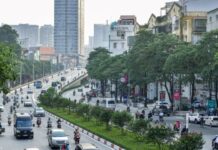
Simultaneously, the expanding highway and ring road networks are significantly improving connectivity between Ho Chi Minh City and surrounding areas.
Among these, the HCMC Ring Road 3, connecting Ho Chi Minh City, Dong Nai, Binh Duong, and Long An, is expected to be completed in 2026. Ring Road 4 is also in the pipeline, along with the Bien Hoa-Vung Tau Expressway, which will create direct links between industrial zones and deep-sea ports.
The combination of the Cai Mep-Thi Vai deep-sea port, Long Thanh Airport, and the highway and ring road networks is creating Vietnam’s most comprehensive infrastructure ecosystem for manufacturing and logistics.
This not only solidifies the Southern Key Economic Region’s leading role but also positions it as a regional industrial and logistics hub, catering to high-value supply chains. This is particularly relevant with the rising trends in semiconductor development, data centers, AI, electric vehicles, and sustainable development demands.
Savills Vietnam’s 2025 Industrial Real Estate Spotlight Report predicts that from 2026, as key projects become operational, the competitive edge of Southern industrial real estate will reach new heights.
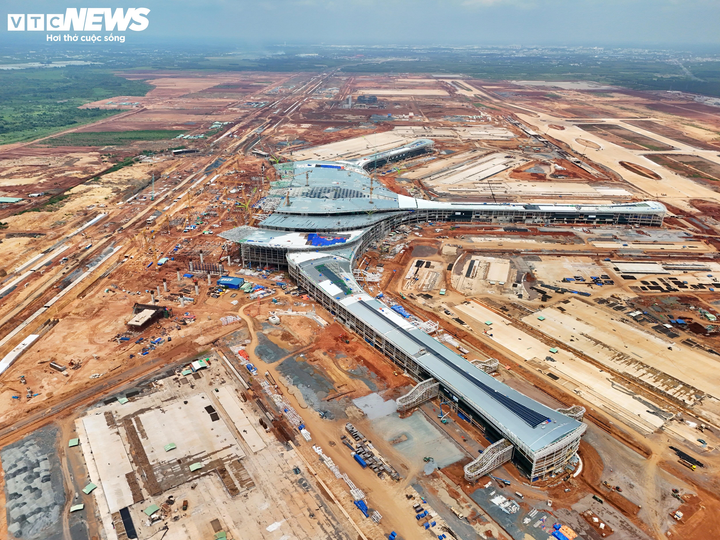
The competitive advantage of Southern industrial real estate will be elevated to a new level with the 2026 launch of Long Thanh Airport and ring roads.
John Campbell, Head of Industrial Services at Savills Vietnam, believes 2026 will be a pivotal year for the Southern Key Economic Region. Large-scale infrastructure will unlock new levels of scale, connectivity, and competitiveness for industrial real estate in the area.
“Infrastructure is not only accelerating development but also reshaping the growth landscape of industrial real estate. As new transportation axes emerge, industrial corridors are expanding beyond traditional core areas, redistributing demand and easing pressure on existing land,” Campbell stated.
In the Southern Key Economic Region, industrial real estate in Binh Duong, Dong Nai, Long An, and Ba Ria-Vung Tau remains central. However, development boundaries are shifting towards new connections to Long Thanh Airport and the Cai Mep-Thi Vai port cluster.
In the second half of 2025, this key economic zone recorded 25,700 hectares of operational industrial land, with an average occupancy rate of around 90%.
Key markets like Binh Duong, Dong Nai, and former HCMC areas have occupancy rates exceeding 90%. In contrast, Long An and Ba Ria-Vung Tau still have room for growth due to new land reserves and strategic infrastructure advantages.
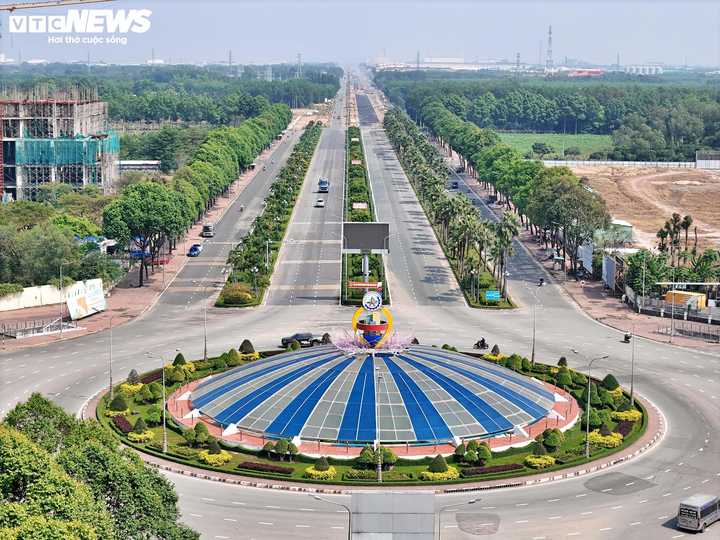
Industrial real estate development boundaries in the Southern Key Economic Region are shifting towards Long Thanh Airport and Cai Mep-Thi Vai Port.
Notably, industrial land rental prices in the region remain high, averaging around $193/m²/lease term, a $10 increase from 2024. Ho Chi Minh City commands the highest rates.
The pre-built factory and warehouse segment also benefits directly from infrastructure development. Currently, the supply of pre-built factories in the region is approximately 11.6 million m², with a 92% occupancy rate and average rents of $4.4/m²/month.
Seaports – A Major Advantage for HCMC’s Economy
According to the 2025 Industrial Focus Report, the heavily invested seaport system and infrastructure are becoming a significant advantage, enhancing the competitiveness of the industrial real estate market in the Southern Key Economic Region, particularly in Ho Chi Minh City.
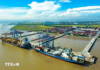
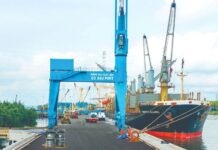
Cat Lai Port and Cai Mep-Thi Vai Port are functioning as essential logistics hubs, connecting the industrial zones of Binh Duong, Dong Nai, and Ba Ria-Vung Tau to global maritime routes.
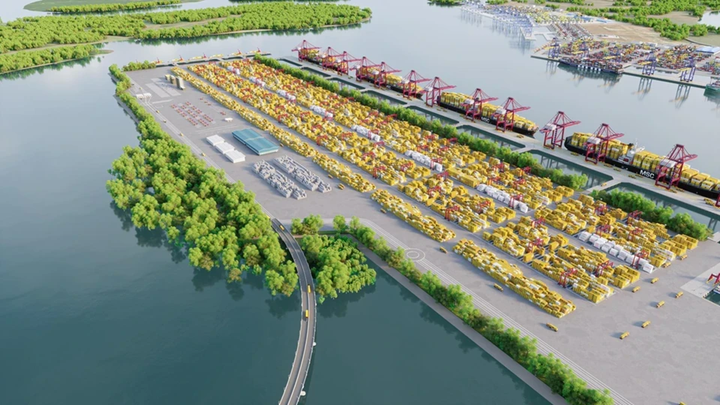
Can Gio Superport is currently in the investor selection phase.
With the principle of “closer to the port, faster to market,” many companies are adjusting their location strategies based on proximity to deep-sea ports and efficient logistics corridors. Ba Ria-Vung Tau, for example, is attracting large-scale tenants due to its direct access to Cai Mep Port and international shipping routes.
Ho Chi Minh City continues to upgrade and invest in seaport infrastructure. In early 2025, the Prime Minister approved the investment policy for the Can Gio International Transshipment Port project, with a minimum investment of VND 50,000 billion ($1.96 billion). According to the HCMC Department of Construction, when operational, 75-80% of Can Gio Port’s cargo will be international transshipments, with the remaining 20-25% being Vietnam’s imports and exports.
Vu Anh Dung, Deputy Head of Urban Development at the HCMC Department of Construction, stated that Can Gio Port is currently in the investor selection phase. This “superport” is expected to drive synchronized infrastructure development in the region, particularly fostering logistics centers and free trade zones connected to the international transshipment port.
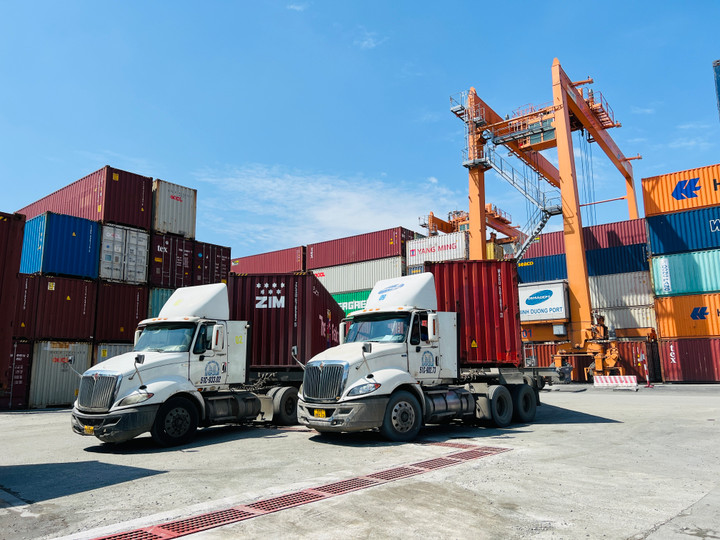
Infrastructure will unlock connectivity and competitiveness for Southern industrial real estate from 2026.
Can Gio Port will be a crucial link in the supply chain, propelling the Southeast region to become Southeast Asia’s top international trading gateway. It will transform the Cai Mep-Can Gio area into a global transshipment hub.
The operation of Can Gio Port is expected to contribute VND 34,000 – 40,000 billion annually to the state budget and create 6,000 – 8,000 jobs.
For Cai Mep-Thi Vai Port, Ho Chi Minh City has developed a plan to further develop it into the country’s largest transshipment port, with regional and global significance. By 2050, the goal is for 20-25% of its cargo to be transshipments, with the remaining 75-80% being imports and exports.
2026 Investment Outlook: Real Estate Sector – Unlocking Massive Growth Potential (Part 2)
A robust influx of FDI is transforming gateway provinces into investment hotspots. Coupled with a plentiful supply of standout projects, this trend is poised to fuel significant growth in the industrial real estate sector in the coming period.
Billion-Dollar Transportation Projects to Create Inter-Regional Coastal Connectivity in Ninh Binh
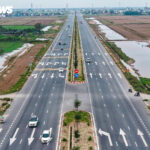
Upon completion, the large-scale coastal transportation project series has established a vital inter-regional connectivity axis, igniting fresh development momentum for Ninh Binh.
Unleashing New Momentum: Simultaneous Groundbreaking of Four Key Infrastructure Projects in South Saigon
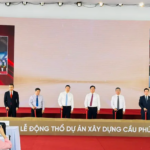
On January 15th, Ho Chi Minh City officially broke ground on four major infrastructure and transportation projects, totaling nearly VND 240 trillion in investment. These projects promise to transform the city’s urban landscape, particularly in the South Saigon area, which is currently undergoing an unprecedented infrastructure revolution.
Hanoi Apartment Prices Surge Over 200% Since 2019

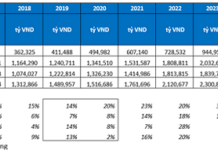
Over the past five years, apartment prices in Hanoi have surged by an average of 26% annually, now standing 200% higher than in 2019. Moving into 2026, condominium prices in Hanoi are expected to continue their upward trajectory, though the rate of increase may moderate compared to previous periods.
Ho Chi Minh City Launches Construction of the Thu Thiem – Long Thanh Railway Line Project

The Thu Thiem – Long Thanh railway line spans approximately 42 kilometers, featuring around 20 stations and a depot. It originates at Thu Thiem Station in Ho Chi Minh City and terminates at Long Thanh Station in Dong Nai, seamlessly connecting to the Long Thanh International Airport.