Recently, at the seminar “Developing Social Housing in Ho Chi Minh City – From Model to Action,” Mr. Truong Anh Tuan, Chairman of the Board of Directors of Hoang Quan Real Estate Consulting – Trading – Services Joint Stock Company (HoSE: HQC), provided significant insights and proposals for the roadmap to achieve social housing development goals.
According to Mr. Tuan, in Ho Chi Minh City alone, Hoang Quan has completed 4 social housing projects with nearly 4,000 apartments. From now until 2030, the company has registered and committed to the Prime Minister to develop 50,000 units, contributing to the national goal of 1 million social housing units.
Previously, by mid-2025, Hoang Quan announced the completion of approximately 10,000 units nationwide, with expectations to deliver at least 5,000 units in 2025 alone.
However, at that time, Mr. Tuan candidly acknowledged the challenges the company faced, ranging from low revenue and profit to issues related to land funds, land-use conversion procedures, and investment licensing.
Nevertheless, at this seminar, the HQC Chairman noted positive shifts in the social housing development environment. “The environment for social housing development has never been as ‘open’ as it is now, from planning and policies to societal and business community consensus,” he stated.
Additionally, Mr. Tuan affirmed that the 1 million social housing units and worker housing program is an entirely achievable goal.
Specifically, for the target of nearly 200,000 social housing units in Ho Chi Minh City, Mr. Tuan believes completion is feasible but requires more robust and city-specific solutions.
Two Major Bottlenecks in Social Housing Development
One of the most significant current bottlenecks, according to Mr. Tuan, is land funds. Specifically, public land allocated for social housing auctions is limited to about 8 projects totaling approximately 10 hectares, while the city’s planning for this segment exceeds 170 hectares. Without swift conversion of public land into specific projects for auction and implementation, achieving the set goals will be challenging.
Beyond public land, Mr. Tuan proposed stronger utilization of private and corporate land. “Most real estate companies and individuals own land; the core issue is establishing suitable mechanisms to convert these land funds into social housing development,” Mr. Tuan explained.
One solution he suggested is allowing companies to contribute capital through land-use rights, based on annual land tax payments. This approach would incentivize companies to participate actively and is seen as the fastest way to create land funds alongside public land.
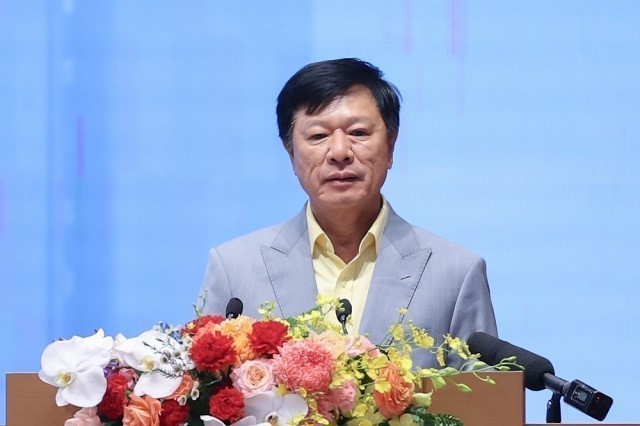
Chairman Truong Anh Tuan highlights bottlenecks in land funds and financial mechanisms.
Beyond land issues, the HQC Chairman identified financial mechanisms as the next critical challenge. Drawing from international experience, he noted that in many countries, banks lend to developers in two phases: a 2-3 year construction phase and a post-completion operational phase lasting 5-30 years.
This approach enables companies to develop robust rental models, generate long-term cash flows, and establish stable rental markets. He believes Vietnam should adopt similar credit mechanisms to promote rental social housing, particularly worker housing.
For buyers, accessing capital remains a significant hurdle. According to Mr. Tuan, under current loan structures, individuals must pay both interest and principal from the outset, with interest ranging from 3-4 million VND/month and principal from 2-3 million VND/month. Given typical worker incomes, many can only afford interest payments, making them wary of loans due to overdue debt concerns.
He proposed implementing rent-to-own loan packages, where individuals pay only rent (equivalent to interest) for the first 5 years, followed by principal payments. Additionally, once projects obtain land titles, banks should increase loan ratios and appraise more accurately, reducing financial pressure and expanding social housing access for low-income earners.
Will Capital and Land Challenges “Break” the Social Housing Giant’s Dream?
HQC was once considered a leader in social housing but has faced capital and land challenges in recent years.
At the 2025 Annual General Meeting, Mr. Tuan stated that to achieve the goal of 40,000 social housing units, Hoang Quan requires approximately 40 trillion VND in investment capital, with a minimum of 10 trillion VND in medium to long-term bank loans. However, this capital can only be disbursed once projects demonstrate feasibility and repayment capability.
“HQC’s challenge is proving project feasibility, from land funds and methods to investment efficiency and capital flows, to access bank funding for both the company and homebuyers,” the HQC Chairman shared.
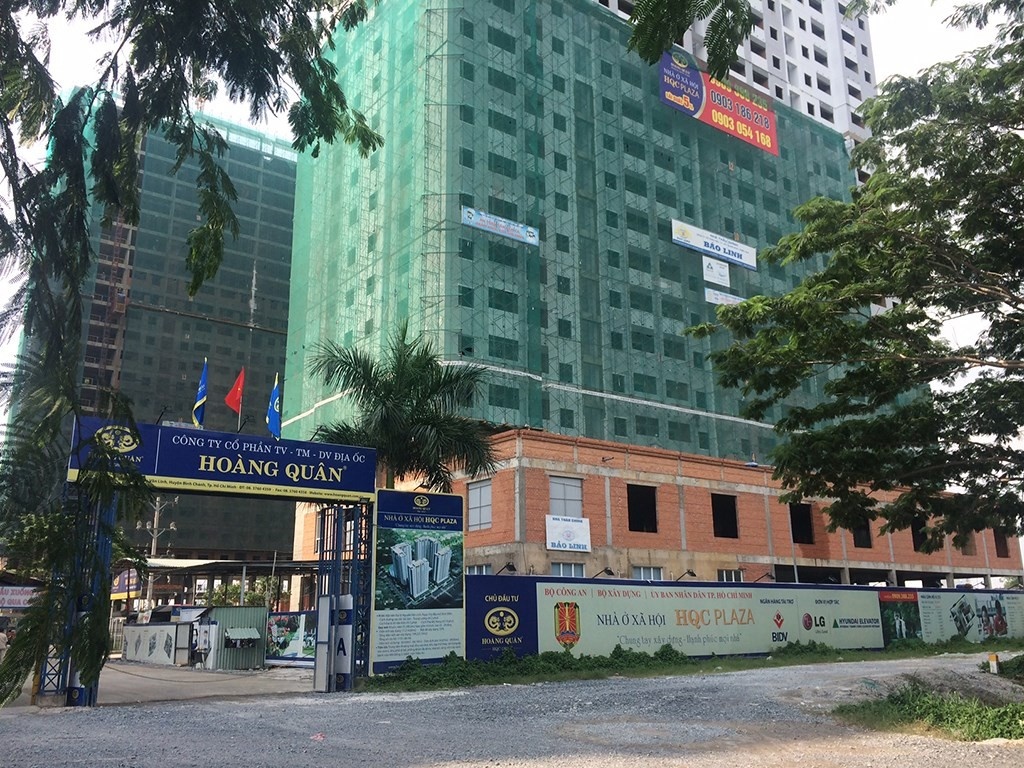
HQC faces tension in both cash flow and capital structure.
In this context, the company’s weak financial performance is particularly notable. In the first 9 months of 2025, Hoang Quan reported only 50 billion VND in revenue and about 18 billion VND in after-tax profit, far below the annual targets of 1 trillion VND in revenue and 70 billion VND in profit.
The company has not yet released its Q4/2025 financial report. If the final quarter lacks significant improvements, 2025 is likely to mark the 10th consecutive year HQC fails to meet its business targets.
HQC also faces tension in both cash flow and capital structure. The cash flow statement shows a continued negative cash flow from operations of over 305 billion VND, with a net cash flow of nearly -15 billion VND after 9 months. Total capital stands at nearly 9.9 trillion VND, but receivables account for over 6 trillion VND (60%), along with 2.35 trillion VND invested in joint ventures and associates.
Conversely, cash on hand is less than 30 billion VND, while inventory exceeds 1.4 trillion VND, placing significant pressure on liquidity. On the capital side, total liabilities are around 4.5 trillion VND, including nearly 1.7 trillion VND in outstanding loans. Interest expenses for the first 9 months of 2025 reached nearly 60 billion VND, further eroding the company’s profits.
Sacombank Logo Unexpectedly Appears at Thaigroup’s Headquarters

Several Sacombank branches have relocated their operations to Thaigroup’s headquarters, which previously served as LPBank’s Southern Office.
Lương Bằng Quang’s Company Faces Imminent License Revocation
Lương Bằng Quang, a renowned singer, has frequently made headlines for his personal life stories, including his transformative plastic surgery and controversial statements, particularly those surrounding his relationship with DJ Ngân 98.
Where in Ho Chi Minh City Do Foreign Professionals Prefer to Rent Real Estate the Most?

Nestled in the vibrant Northeast of Ho Chi Minh City, this thriving hub boasts the highest concentration of professionals, a sprawling network of industrial zones, and a host of pivotal infrastructure projects either under development or nearing completion. Consequently, the demand for rental apartments among experts, engineers, and modern young families in this area is exceptionally high.
Upcoming Launch of the International Financial Center in Vietnam
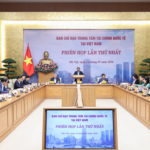
Prime Minister emphasizes the need for Ho Chi Minh City and Da Nang to clearly define their roles and complement each other in the operation of the International Financial Center.
Official Launch of Hoa Sen Home: Partnership Signing and New Strategy Announcement

On January 19, 2026, Hoa Sen Group proudly announced the establishment of Hoa Sen Home Joint Stock Company, inaugurating its headquarters at 72 Nguyen Co Thach, Sala Urban Area. The event also marked the signing of strategic partnerships with key domestic and international collaborators, alongside the unveiling of the company’s new strategic development roadmap.