Mrs. Nguyễn Thị Mai Hạnh, Head of the National Accounts System Department (Statistics Bureau, Ministry of Finance)
Striving for High Growth Goals
Achieving the 2025 economic growth target is a positive outcome, reflecting the resilience and adaptability of Vietnam’s economy. This sets a solid foundation for economic growth in 2026 and beyond. However, entering the new phase of 2026-2030, the economy faces numerous challenges and opportunities. Sustaining and achieving high economic growth goals in the coming years will require extraordinary efforts across the entire economy, along with the convergence of several critical conditions, including macroeconomic stability, growth resources, development quality, and policy implementation capabilities.
First and foremost, maintaining macroeconomic stability is essential. Controlling inflation, ensuring public debt safety, maintaining the economy’s major balances, and implementing flexible and prudent fiscal and monetary policies will create a favorable environment for investment, production, and business activities. This will enhance the economy’s resilience and support sustainable economic growth.
Mobilizing and effectively utilizing resources for growth is crucial. Public investment should continue to play a leading role, focusing on key infrastructure sectors, timely disbursement of public investment capital, especially for national key projects, and improving capital allocation efficiency to avoid waste. Simultaneously, creating a conducive environment for private investment to thrive is essential, as it will become a significant driver of growth. Attracting FDI should be selective, focusing on technology transfer, environmental protection, and strengthening linkages with the domestic economy.
Enhancing growth quality and efficiency is also vital. Economic growth should gradually shift from a model reliant on capital and labor to one driven by productivity improvements, efficient resource allocation, and economic restructuring towards modernity and sustainability.
Additionally, boosting labor productivity and capital investment efficiency through science and technology application and digital transformation is crucial, especially in high-tech sectors. This will increase value-added and improve growth quality. Strengthening market-driven training, particularly in the private sector and high-value industries, will lay the foundation for sustainable growth.
Continuing to refine the market economy institutions, ensuring policy transparency, stability, and consistency, along with close coordination among macroeconomic policies, will create a foundation for growth drivers to operate effectively.
In summary, achieving high economic growth goals in the coming years requires ensuring macroeconomic stability, mobilizing and efficiently utilizing resources, enhancing growth quality, refining institutions, and strengthening the economy’s adaptability. This will guarantee high growth alongside stability and long-term sustainable development.
Prof. Hoàng Văn Cường, Member of the National Assembly’s Economic and Financial Committee
Breaking Through in the Digital Age Requires a Paradigm Shift in Management
International experience shows that no country has escaped the middle-income trap with just average growth. To join the high-income group, a period of double-digit growth is necessary. Vietnam is no exception. The Fourth Industrial Revolution presents an opportunity, as technology gaps narrow and human advantages become more significant.
Vietnam faces a rare historical development opportunity, as the Fourth Industrial Revolution offers a “new starting line” for most nations. In sectors like the digital economy, green economy, artificial intelligence, and automation, the gap between countries is not insurmountable. Those who move faster and focus more effectively will have the potential to break through.
Vietnam’s greatest advantage in this phase is its people. The Vietnamese workforce is intelligent, highly adaptable, and eager to learn. This is a crucial foundation for the country to leverage the new industrial revolution’s opportunities. However, to turn potential into reality, Vietnam must develop through science, technology, and innovation.
The biggest hurdle is not technology but institutions and management mindset. Innovation always involves risk. To achieve something new, experimentation and the possibility of failure must be accepted. In practice, the greatest risk is not technological but decision-making. Officials who dare to think, act, and take responsibility for new approaches are not yet adequately protected by clear mechanisms.
Alongside institutional reforms, infrastructure investment remains essential for development. Today’s infrastructure includes not only roads, airports, and seaports but also digital infrastructure, data centers, national data infrastructure, telecommunications, and information technology. To develop the digital and knowledge economies, digital infrastructure must be invested in comprehensively and proactively.
In today’s multipolar world, Vietnam cannot lead globally but can master its domestic game. From this foundation, Vietnam can deepen its participation in regional and global value chains. A clear development strategy is crucial, identifying sectors and segments where Vietnam can excel, rather than spreading resources thinly.
In a volatile and uncertain world, a wait-and-see approach is not viable. Vietnam needs resilience, flexibility, and determination to break through, but on a stable foundation. Only then can development aspirations become reality.
Dr. Nguyễn Văn Lộc, Economics Expert, University of Economics, Vietnam National University, Hanoi
Awakening the Private Sector’s Economic Potential
Vietnam stands at a historic juncture as it enters 2026 with a $514 billion economy, achieving an 8.02% GDP growth in 2025, surpassing all 15 key targets, and reaching a per capita GDP of $5,026. With ambitions for double-digit growth, Vietnam aims to become the world’s 32nd largest economy. General Secretary Tô Lâm affirms that the nation has the necessary conditions, but leveraging existing resources is hindered by significant bottlenecks, requiring decisive action to make this pivotal year a sustainable development turning point.
Resolution 68, issued by the Politburo on May 4, 2025, marks a historic shift in national economic development thinking. Instead of merely being an important driver, the private sector is now positioned as the leader in the digital and green era, aiming to contribute 55% of national GDP by 2030. The core principle of this resolution is to maximize the release of potential and remove all obstacles to create a transparent business environment where entrepreneurs’ confidence is protected by the highest legal commitments.
As spring arrives, the question is not whether the private sector has a role but how to awaken its full potential to drive economic growth.
Resolution 68 identifies the current credit system’s over-reliance on collateral as the primary barrier to business growth. The government is not only providing 2% annual interest rate support for green and circular projects meeting ESG standards but also establishing a multi-tiered financial system that evaluates businesses based on performance and growth potential rather than physical assets.
The most innovative aspect is the creation of sustainable capital flows through modern tax policies and credit assessments. The government is also institutionalizing the use of tax data and electronic payment histories for credit assessments and upgrading credit guarantee funds to share risks with banks. By reducing institutional risks and fostering state-bank collaboration, social capital will be unleashed, boosting production and enabling private businesses to lead social investment with a stable 58-60% share.
Resolution 68 takes a historic leap by allowing private sector participation in all fields, including previously restricted areas. The state employs contracting and direct procurement for key projects like high-speed rail, semiconductors, clean energy, and digital infrastructure, targeting capable domestic private conglomerates.

Ho Chi Minh City – A Key Growth Hub. Photo: P.V
This mechanism goes beyond task assignment, establishing a level playing field through long-term contracts and reasonable risk-sharing between the state and private entities.
Institutionalizing national aspirations through programs like Go Global and developing 1,000 pioneering enterprises will help Vietnamese businesses compete internationally in challenging sectors like AI and electric vehicles. Protecting entrepreneurs’ rights through civilized economic relations and the principle of presumption of innocence will alleviate concerns, encouraging bold initiatives to achieve the 55% GDP contribution goal by 2030.
Dr. Nguyễn Minh Phong, Member of the Economic Advisory Council, Vietnam Fatherland Front Central Committee
Developing New, High-Tech Production Forces
Vietnam has passed the rapid growth phase driven by a “small base,” similar to other economies. Maintaining high growth becomes significantly harder as the economy grows, as seen in large economies like the U.S., which rarely grow strongly except during post-recession recoveries. Vietnam’s double-digit growth target for 2026-2030 is ambitious but has a solid foundation.
Years of reform have built a strong foundation, from institutions and physical infrastructure to legal frameworks and development orientation. More importantly, Vietnam is gradually forming a new production force. This is not entirely new but an upgrade of the existing force, increasingly integrated with AI, digital technology, the internet, robotics, new materials, clean energy, and advanced production methods.
The quality of the labor force is also improving. The new workforce is more skilled, globally-minded, and better adapted to international value chains. This is crucial for future growth, especially as this trend gains momentum globally.
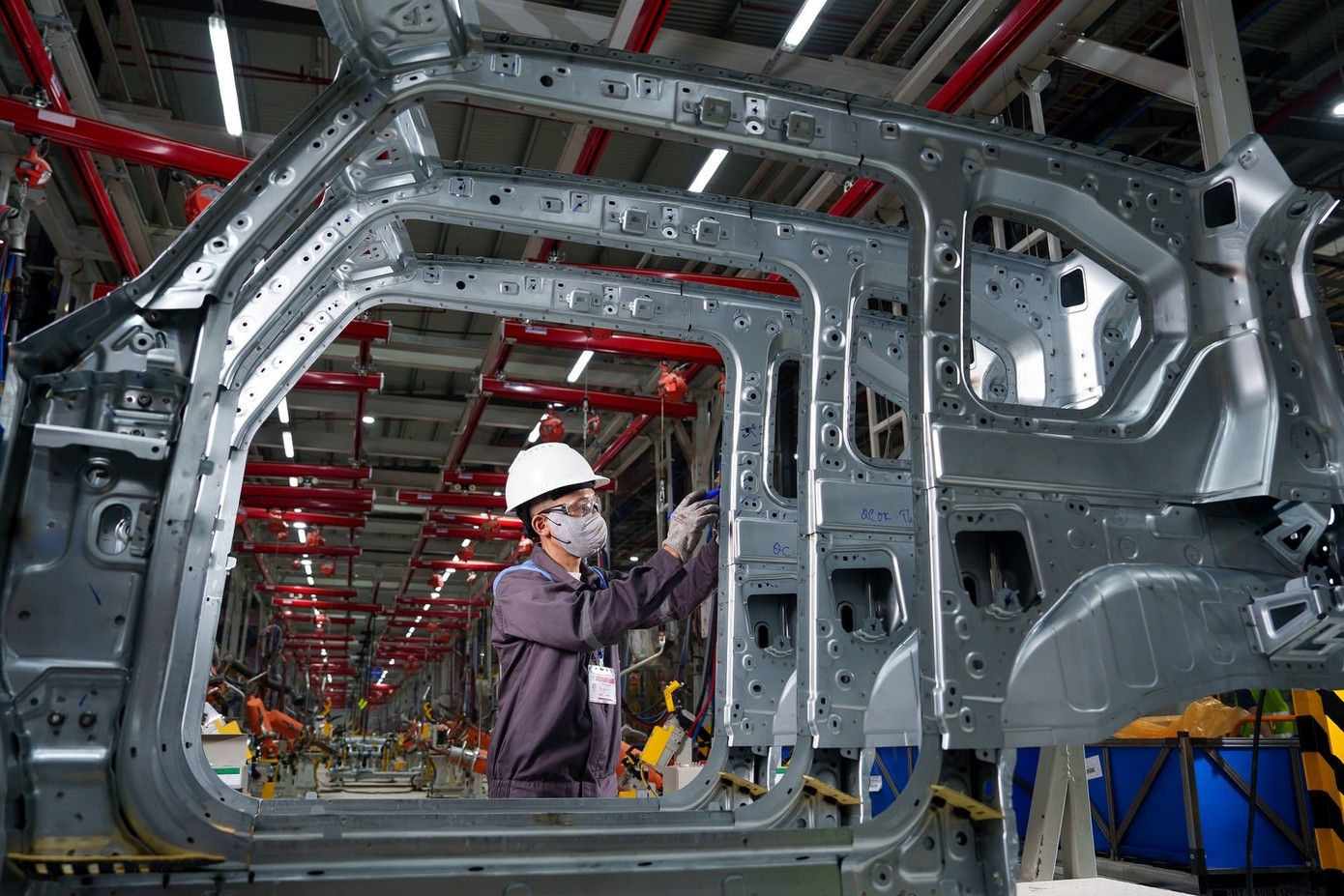
Overcoming Challenges to Achieve Double-Digit Growth in the Coming Phase. Photo: P.V
Developing this new production force is key to overcoming the middle-income trap and achieving double-digit growth. The digital economy and high-tech sectors have consistently shown high growth rates, providing tangible evidence of this direction.
Vietnam is increasing investment, both public and private. Public investment has risen sharply, reaching 30-40% in some periods, focusing on infrastructure, digital transformation, energy transition, and social housing, creating a ripple effect across the economy.
Externally, Vietnam benefits from global supply chain restructuring. Amid geopolitical competition and production shifts from China, Vietnam is an attractive destination for many multinational corporations due to its balanced policies and broad integration.
The private sector is crucial for achieving double-digit growth. Removing barriers, upgrading SMEs, and encouraging millions of households to become businesses will add significant growth momentum. When private businesses aspire to grow and are free from institutional risks, they will drive new growth. This is key to realizing Vietnam’s double-digit growth goal in the coming years.
However, high growth must be stable and sustainable. The challenge is to grow rapidly without excessive inflation, bad debt, corruption, or waste. These major directions will be further clarified in upcoming documents, especially after the 14th Party Congress, to be institutionalized into laws, action programs, and specific government policies.
Dynamic Start to $1 Trillion Goal: Vietnam’s Jan Half-Month Trade Hits Over $39 Billion

Vietnam’s international trade activities kicked off 2026 with explosive growth, setting a strong foundation for the year’s ambitious targets.
The Digital Currency Market Poised for Major Growth by 2026, Anticipating ETF Channel Launch
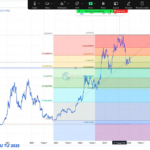
Looking ahead to the digital currency market in 2026, experts predict that a weakening US dollar, the global shift in reserve assets, and the growing trend of asset tokenization will collectively fuel the momentum of the digital currency market.
By the End of 2025, Stock Market Capitalization Will Nearly Double Compared to 2020

In his keynote address at the 14th National Party Congress, Minister of Finance Nguyen Van Thang revealed ambitious plans for Vietnam’s financial landscape by 2025. These include upgrading the stock market, with a targeted 1.9-fold increase in market capitalization compared to 2020, as well as establishing and operationalizing an International Financial Center and next-generation free trade zones.
Digital Assets from 2026 and Beyond: Proactive Integration, Risk Management, and Development for National Interests

Starting in 2026, the central challenge will no longer be whether to develop the digital asset market, but rather how to do so in a way that maximizes innovative potential while ensuring absolute systemic security, safeguarding the legitimate rights of citizens, and maintaining national financial stability.
2026 Investment Outlook: Real Estate Sector – Unlocking Massive Growth Potential (Part 2)
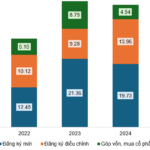
A robust influx of FDI is transforming gateway provinces into investment hotspots. Coupled with a plentiful supply of standout projects, this trend is poised to fuel significant growth in the industrial real estate sector in the coming period.