During its 31st session, the Hanoi People’s Council approved the Master Plan for the Capital with a visionary 100-year outlook. This plan outlines comprehensive measures to address existing challenges and bottlenecks in the capital city.
To enhance urban order and development, Hanoi will adopt a multi-polar, multi-center urban model, coupled with a multi-layered, multi-tiered structure. This approach aims to distribute the population, production spaces, services, and infrastructure more efficiently, thereby alleviating pressure on the core urban area.
According to the Hanoi People’s Committee, the plan emphasizes vertical development—or “spatial resource exploitation”—to ensure growth without compromising heritage sites, water bodies, or green spaces.
The city will also undertake urban restructuring to revolutionize its architectural landscape, housing, heritage preservation, and conservation. This initiative seeks to create a new planning framework, fundamentally resolving infrastructure bottlenecks and fostering a sustainable, smart, and green urban environment.
Urban restructuring will focus on areas within the Ring Road 3, prioritizing the inner Ring Road 1 and Ring Road 2 zones.
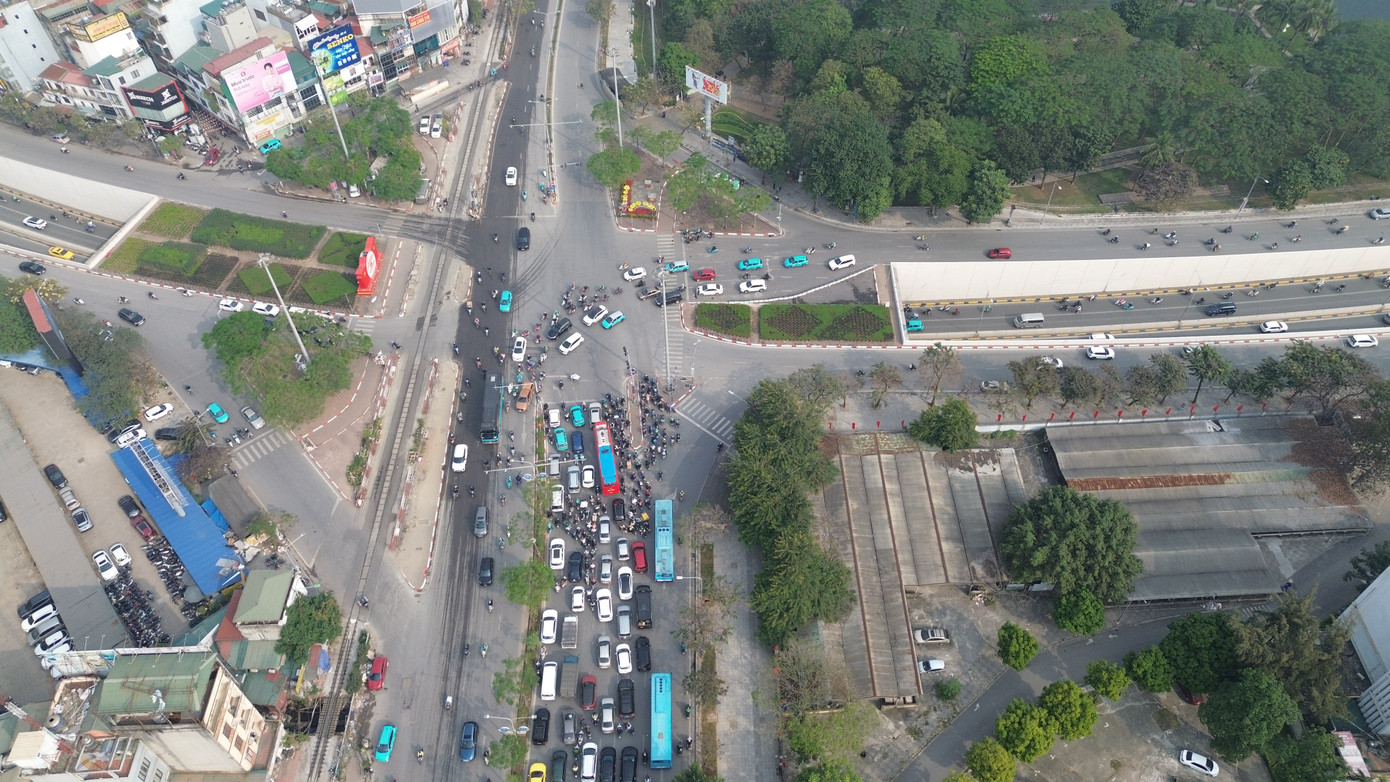
Hanoi plans to decentralize its inner-city population to ease congestion.
Restructuring efforts will integrate preservation and restoration of historically, culturally, and architecturally significant areas, including: Ba Dinh Political-Administrative Center (134.5 ha); Hoan Kiem Lake and its surroundings; the Old Quarter (36 Streets); the French Quarter; West Lake and its environs; the Red River banks; and other unique zones.
The city emphasizes that urban restructuring must be underpinned by modern infrastructure planning and synchronized investment.
Infrastructure restructuring will feature multi-tiered transportation systems, public transit-oriented development (TOD), and underground infrastructure combined with large water reservoirs to mitigate flooding.
Land use and spatial restructuring will prioritize high-value commercial and service projects in central areas, such as financial hubs and premium offices. The “Compact-Green” model will encourage vertical development to free up ground-level space. Surplus land from reduced construction density will be allocated to parks, greenery, water bodies, and public amenities.
Residential Relocation Zones
Hanoi’s plan includes population decentralization to reduce inner-city pressure. Between 2026–2035, 200,000 residents along the Red River, 200,000 near West Lake, and 42,000 within Ring Road 3 will be relocated.
From 2036–2045, an additional 26,730 in the Old Quarter, 23,000 in the French Quarter, and 370,000 from other Ring Road 3 areas will be moved, totaling over 860,000 relocations by 2045.
Specific area plans include:
Ba Dinh Political-Administrative Center and Hoan Kiem Lake Area: Preserving and enhancing architectural landscapes, such as the Thang Long Imperial Citadel and Trang Tien Plaza. Expanding public squares, adding green spaces, and redeveloping public and service facilities to establish a political, economic, financial, and commercial hub.
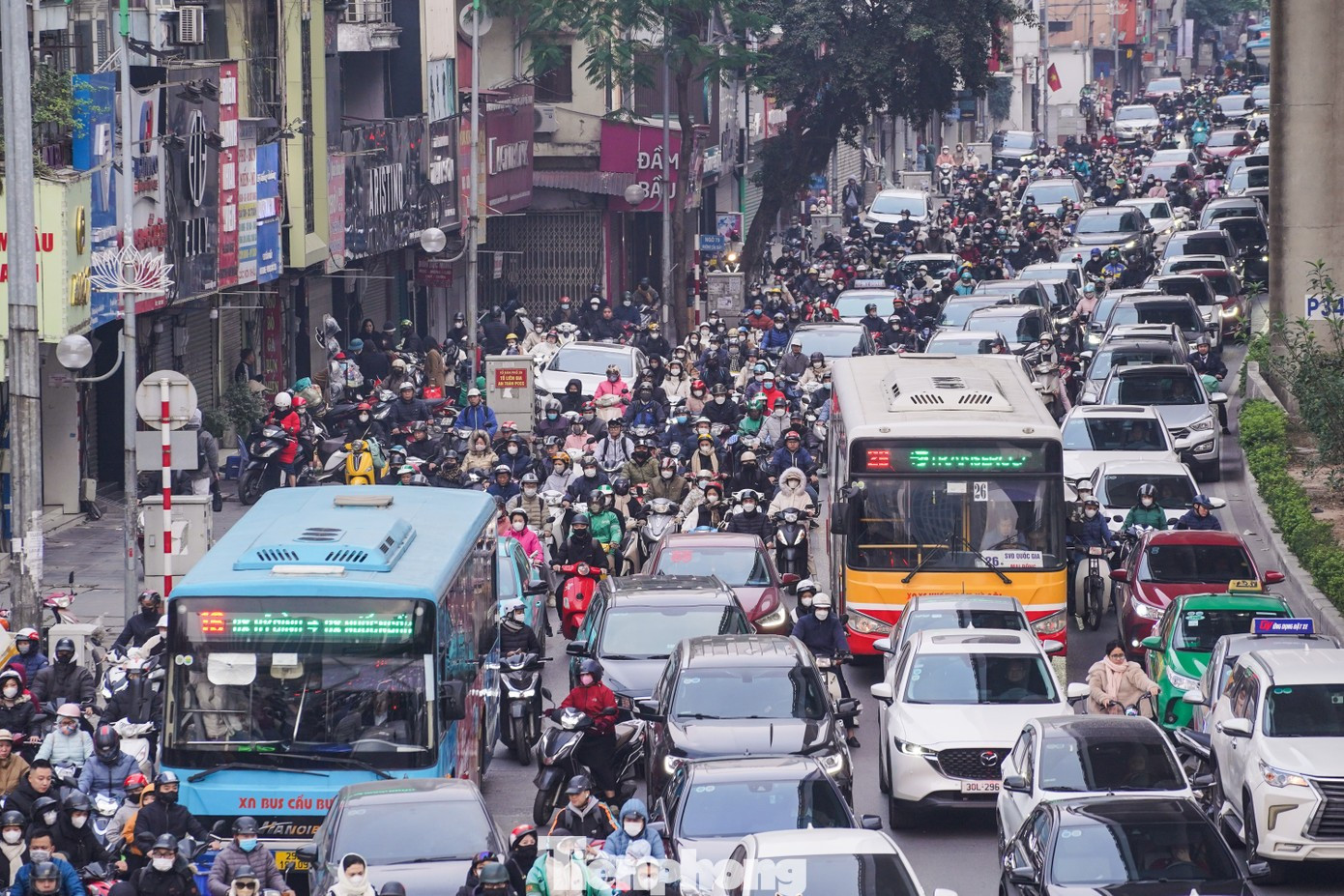
Year-end traffic congestion in Hanoi.
Old Quarter: Preserving architectural and cultural heritage, transforming it into a community-based tourism symbol. Promoting street economics, night markets, and culinary culture, while creating pedestrian zones and creative spaces.
French Quarter: Conserving French-era spatial and architectural characteristics, blending preservation with new construction for harmonious development.
West Lake and Red River Areas: Preserving cultural and historical sites, and comprehensively restructuring existing residential areas.
Other Areas: Full-scale urban restructuring, large-scale clearance for infrastructure and spatial redesign, preserving historical sites, and developing new urban centers.
Architect Tran Huy Anh (Standing Member of the Hanoi Association of Architects) notes that inner-city decentralization is a long-standing goal, essential for expanding urban space and reducing core area strain. However, large-scale relocation requires careful planning for employment, education, healthcare, and other social issues.
Anh emphasizes that decentralization remains a guideline, necessitating detailed timelines, area-specific plans, and transparent communication with residents.
Relocation Timeline for Urban Restructuring
Phase 2026–2035:
Hoan Kiem Lake Area (81 ha): 80% renovation, 20% public facility restructuring.
Red River Area (1,800 ha): 35% renovation, 65% restructuring. Relocating 200,000 residents, requiring 900 ha for resettlement. Post-restructuring land use: 30% transport/greenery, 40% commercial, 30% housing.
West Lake Area (463 ha): 35% renovation, 65% restructuring. Relocating 200,000 residents, requiring 900 ha for resettlement. Post-restructuring land use: 30% transport/greenery, 40% commercial/hotels, 30% housing.
Ring Road 3 Pilot (130 ha): 30% renovation, 70% restructuring. Relocating 42,000 residents. Post-restructuring land use: 30% transport/greenery, 20% commercial/hotels, 50% housing.
Implementing “Village in the Street” projects in Van Phuc, Bat Trang, Trieu Khuc, Cu Da, and Tay Tuu.
Phase 2036–2045:
Old Quarter (81 ha): 60% renovation, 40% core restructuring. Relocating 26,730 residents, requiring 120 ha for resettlement. Post-restructuring land use: 30% transport/greenery, 70% commercial/hotels.
French Quarter (200 ha): 70% renovation, 30% restructuring. Relocating 23,000 residents, requiring 130 ha for resettlement. Post-restructuring land use: 40% transport/greenery, 60% commercial/hotels.
In total, over 860,000 residents inside Ring Road 3 will be relocated across both phases.
Hanoi Relocates Over 860,000 Inner-City Residents: Livelihood Concerns and the Challenge of Supporting Services
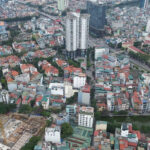
As 860,000 residents relocate from Hanoi’s inner city, the demand for new housing, schools, healthcare, and employment opportunities will surge. To address this, Hanoi authorities must promptly disclose the relocation timeline and designated areas, enabling residents to prepare and plan accordingly.
West Lake Waterfront Property Prices Hit Nearly 2 Billion VND per Square Meter
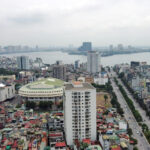
Not only are property prices soaring in the Old Quarter, but the real estate market around West Lake is setting new records, with some townhouses listed at nearly 2 billion VND per square meter. This unprecedented surge continues to astonish Hanoi’s property market in the early days of 2026.
Relocation Plan for Over 860,000 Residents in Hanoi
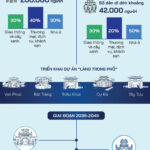
By 2045, Hanoi plans to relocate over 860,000 residents from the Ring Road 3 area as part of its urban restructuring initiative.
New Construction Cost Standards for Housing and Land-Attached Projects in Hanoi
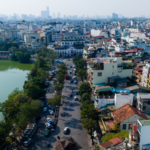
The newly issued construction cost standards for houses, residential buildings, and land-attached structures in Hanoi will serve as the basis for calculating compensation for affected parties during state land reclamation.
Redefining Southern Vietnam’s Investment Hub: Long Thanh Airport and Cai Mep Port
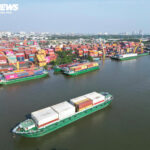
In the Southern Economic Region, the boundaries of industrial real estate development are shifting along the connectivity corridors leading to Long Thanh Airport and the Cai Mep – Thi Vai Port Cluster.