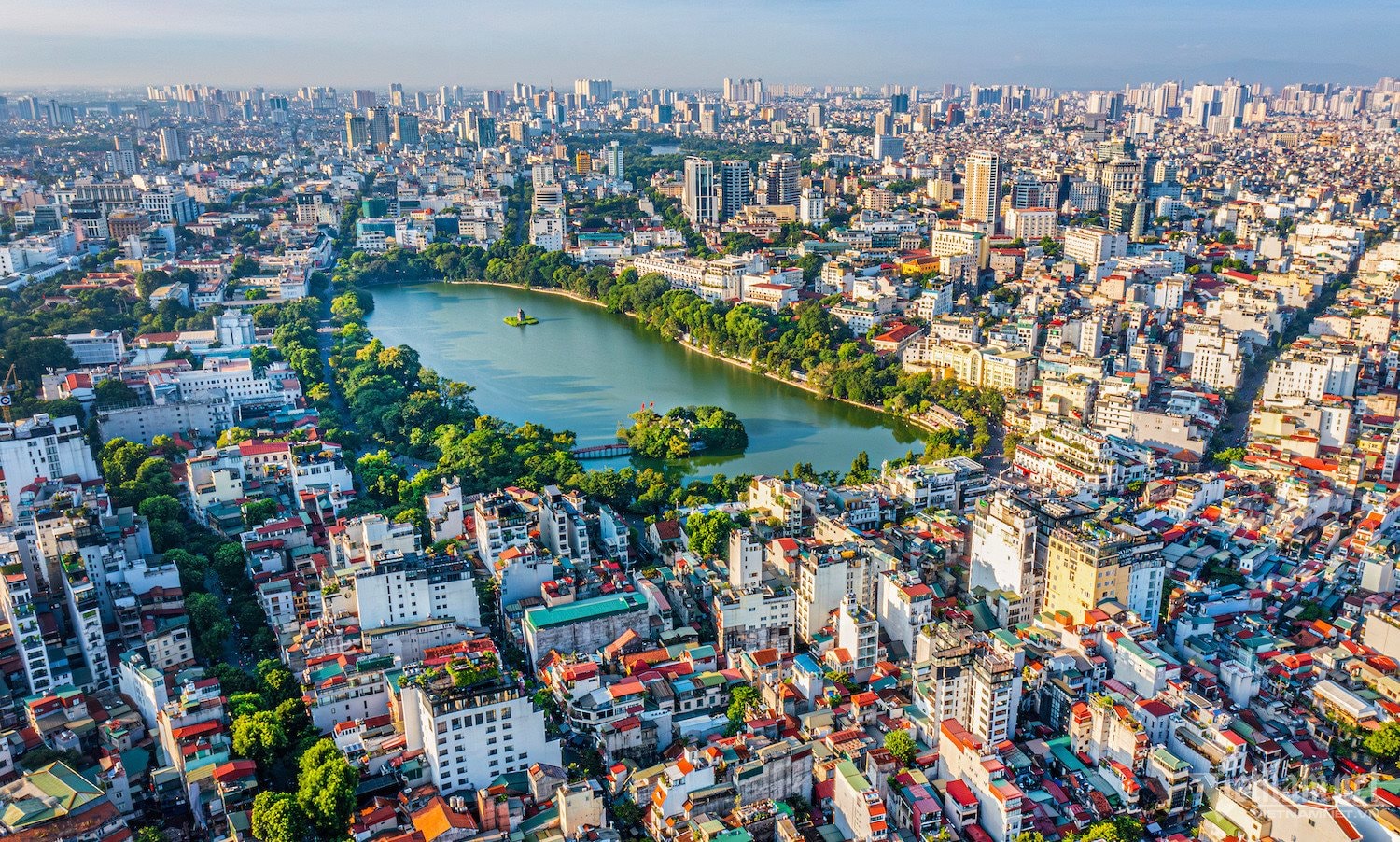
Recently, during the 31st session, the Hanoi People’s Council adopted a Resolution on adjusting the Housing Development Program for Hanoi from 2021 to 2030.
According to the resolution, the overarching goal is to limit the development of apartment buildings in new commercial and social housing projects within the historic inner-city areas (except for renovation and reconstruction projects, and resettlement housing). This aims to minimize population growth and infrastructure overload.
Additionally, new housing and urban area projects must be planned and constructed as smart, civilized, modern, green, and digitally integrated developments, adapting to climate change. These projects must include synchronized social infrastructure (healthcare, education, community centers) and technical infrastructure (water supply, drainage systems, electric vehicle charging stations, etc.).
The city will also develop multifunctional urban areas (commercial housing, social housing, resettlement housing, and housing for high-tech workers). Major urban projects must align with Hanoi’s 100-year Capital Master Plan. Housing development must ensure fairness, meet new construction and renovation needs, and enhance residents’ quality of life, maintaining consistent construction quality across all housing types.
Hanoi will focus on urban renewal projects, including the renovation and reconstruction of old apartment buildings to ensure safety, urban beautification, and sustainable development. Efforts will be made to eliminate temporary and substandard housing, supporting low-income households in upgrading their homes to meet the “three solid” criteria (solid foundation, walls, and roof).
Notably, the resolution sets ambitious targets: From 2021 to 2030, Hanoi aims to develop 255 million m² of housing, equivalent to approximately 1,821,700 units, raising the average housing area to at least 40 m² per person.
From 2031 to 2035, the city plans to complete 127.5 million m² of housing, increasing the average area to at least 45 m² per person. By 2030, all housing is expected to be solid or semi-solid, eliminating substandard structures.
For social housing, Hanoi targets a minimum of 144,000 units from 2021 to 2030 (24,000 from 2021 to 2025 and 120,000 from 2026 to 2030), with 500,000 units by 2035. Social housing will serve multiple purposes, flexibly transitioning between social, commercial, and resettlement housing through the City Development Investment Fund.
For apartment renovations, Hanoi aims to complete 1.5 million m² (20,000 units) of old apartment reconstructions by 2030, with all 2,160 apartment buildings renovated by 2035.
The city encourages residents to build or renovate solid homes, projecting an additional 45 million m² (300,000 units) of self-built housing from 2021 to 2030. Support programs will continue for vulnerable groups, including veterans, the poor, and those affected by natural disasters.
By 2030, the minimum housing area will be 8 m² per person, aligning with Decree 100/2024/NĐ-CP on social housing standards.
Social Housing Tycoon Proposes New Initiative Following 50,000-Unit Commitment

The Chairman of HQC believes that most real estate companies and individuals already own land. The key challenge lies in establishing an appropriate mechanism to convert these land reserves into affordable housing developments.
Infrastructure Giant Proposes $20 Billion Project to Alleviate Traffic Congestion at Eastern Gateway of Vietnam’s Most Populous City
This project is seamlessly integrated with the urban development strategy following the TOD (Transit-Oriented Development) model at the Hang Xanh intersection area.
Official Launch of Hoa Sen Home: Partnership Signing and New Strategy Announcement

On January 19, 2026, Hoa Sen Group proudly announced the establishment of Hoa Sen Home Joint Stock Company, inaugurating its headquarters at 72 Nguyen Co Thach, Sala Urban Area. The event also marked the signing of strategic partnerships with key domestic and international collaborators, alongside the unveiling of the company’s new strategic development roadmap.
Ho Chi Minh City Invests in 77 Key Transportation Projects, Totaling VND 1,780 Trillion

According to the Department of Construction, from 2026 to 2027, Ho Chi Minh City will focus on implementing 77 key transportation projects and works, with a total investment of approximately VND 1,780 trillion.
North Ninh Announces Affordable Housing Sales Across Three Projects, Starting at Over 12 Million VND/m²
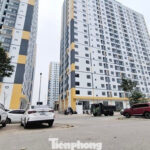
The Department of Construction in Bac Ninh Province has announced the sale, lease, and rent-to-own options for nearly 1,000 social housing units across three projects. With prices starting at just over 12 million VND per square meter, these homes offer an affordable living opportunity for low-income earners and laborers.