












At the 31st session, the Hanoi People’s Council approved the Capital’s Master Plan with a 100-year vision.
A key highlight that has garnered significant public attention is the city’s plan to restructure its urban landscape, aiming to revolutionize architectural design, housing, heritage preservation, and conservation.
As part of the planning solutions, Hanoi will implement residential restructuring and population relocation to ease pressure on the inner city. According to the roadmap, from 2026 to 2035, Hanoi will relocate 200,000 people from the Red River area, 200,000 from West Lake and its surroundings, and 42,000 from certain streets within the Ring Road 3.
From 2036 to 2045, Hanoi will relocate 26,730 people from the Old Quarter, 23,000 from old neighborhoods, and 370,000 from other areas within Ring Road 3 to further restructure the urban landscape.
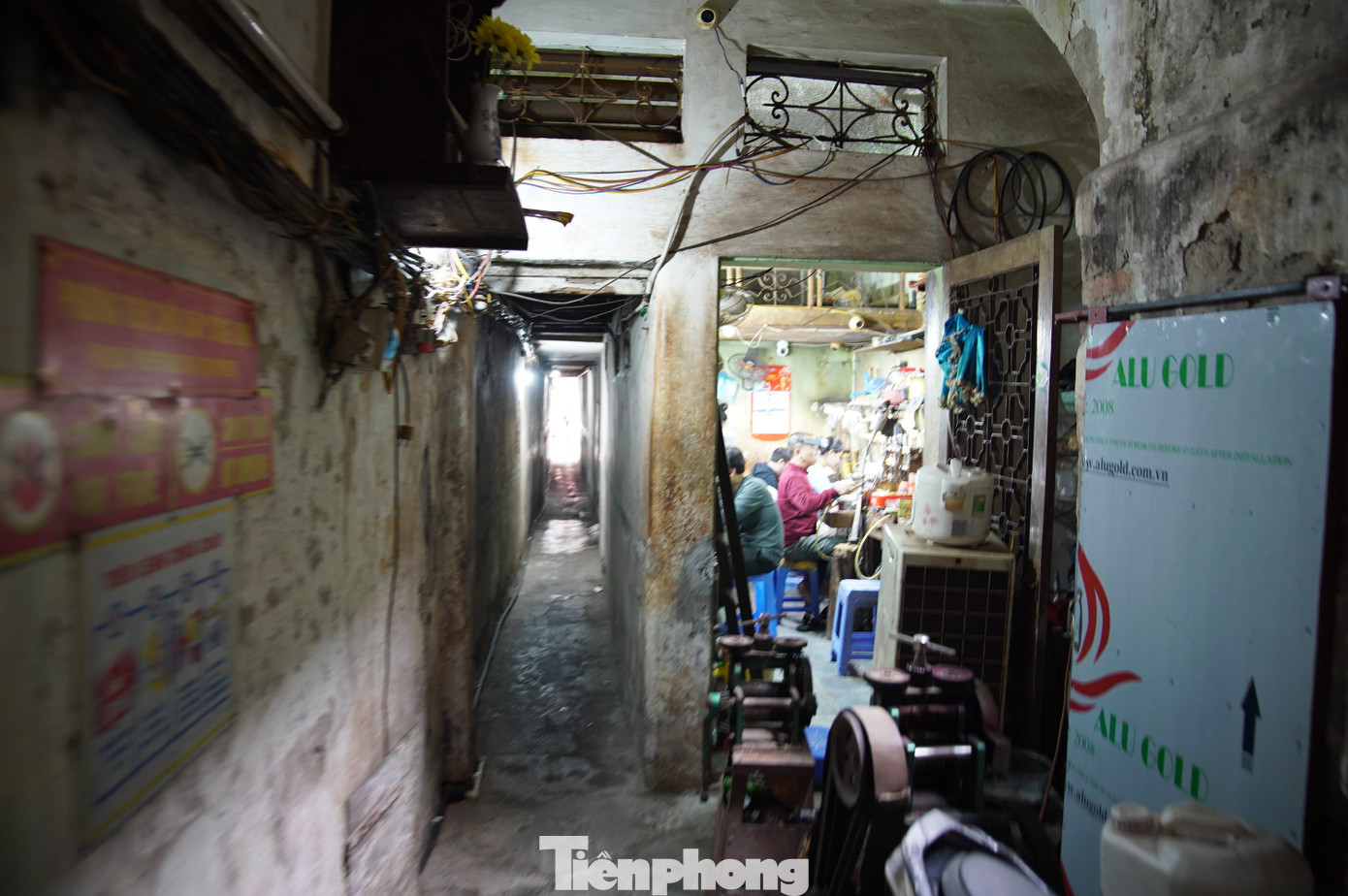
The densely populated Old Quarter, where many residents still live in cramped conditions.
Since 1998, the Hanoi People’s Committee has advocated for relocating residents from the Old Quarter to reduce population density and infrastructure strain. However, the relocation plan was only officially approved in January 2013.
Under this plan, the Old Quarter’s population density is set to decrease from 823 people/ha in 2010 to 500 people/ha by 2020. The Hoan Kiem District’s Old Quarter will require the relocation of over 6,500 households, totaling approximately 27,000 people.

Mrs. Thoa conducts her business in a 7m² room at 49 Hang Bac.
Located in a deep, sunless alley, Mrs. Phan Thi Kim Thoa (49 Hang Bac) has lived here for 30 years and has no intention of moving. Her house consists of two rooms: a 7m² front room for business and a 10m² room deeper in the alley for living.
According to Mrs. Thoa, life in the Old Quarter is convenient, with eateries and markets just steps away. Additionally, she sells clothing, ensuring a steady income.
“Years ago, Hoan Kiem District officials surveyed and proposed relocation plans, but nothing has progressed. If the government insists on relocation, I won’t object, but we need solutions for our businesses. Everyone in this alley relies on small-scale trading for income,” Mrs. Thoa shared.
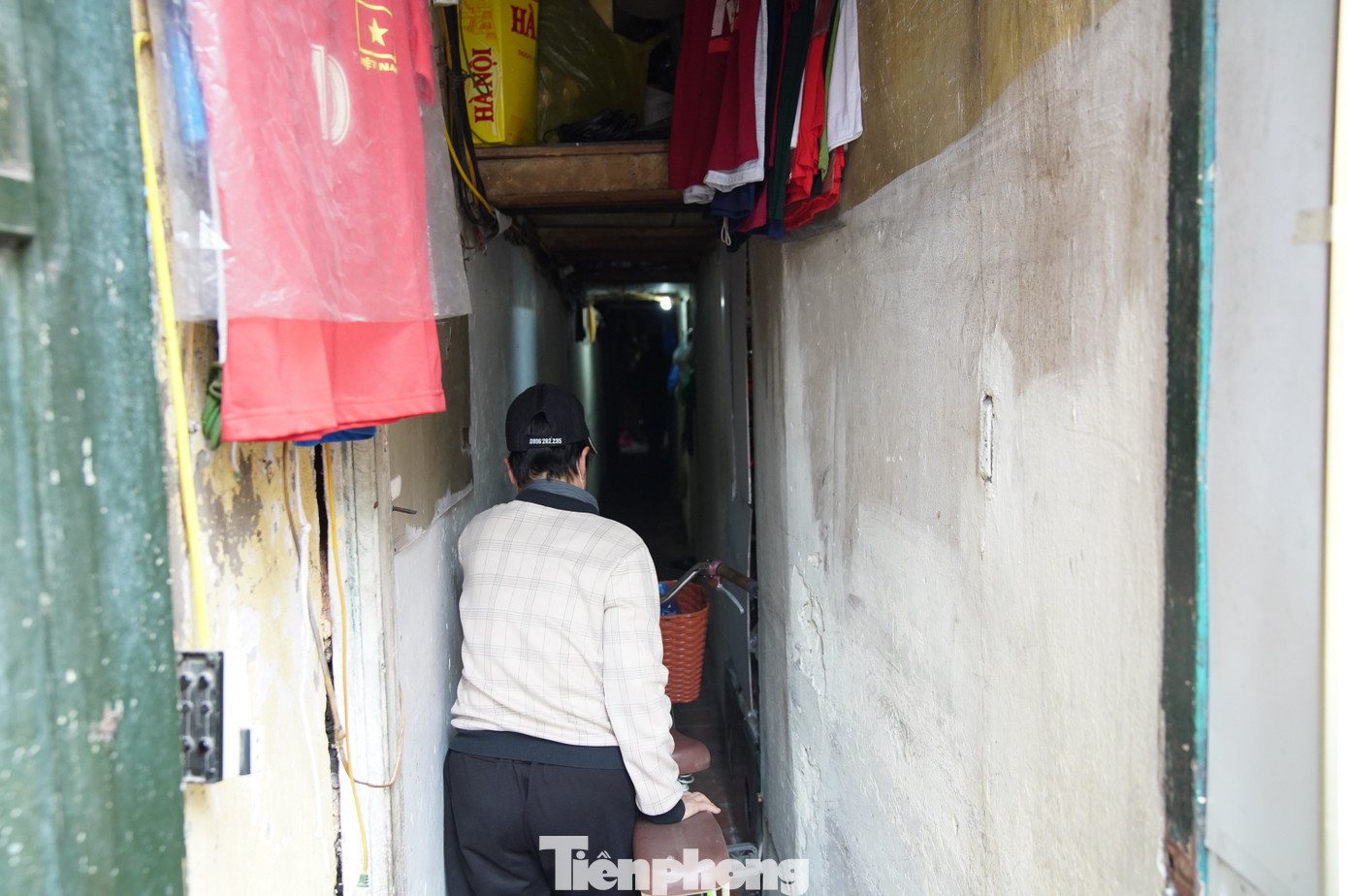
The narrow alley at 49 Hang Bac can barely fit a bicycle.
Owning a storefront at 38 Hang Ca, Mrs. Khanh’s family has lived here for four generations. The 3-meter ground floor is divided between her two sons for their hardware business, while three generations reside upstairs.
Regarding relocation, Mrs. Khanh noted, “Home is where the heart is, especially for the elderly. Moving would be challenging, and adjusting to a new environment and schools for the children would be difficult. However, if the government decides to proceed, we’ll comply, provided there’s adequate compensation and stable resettlement.”
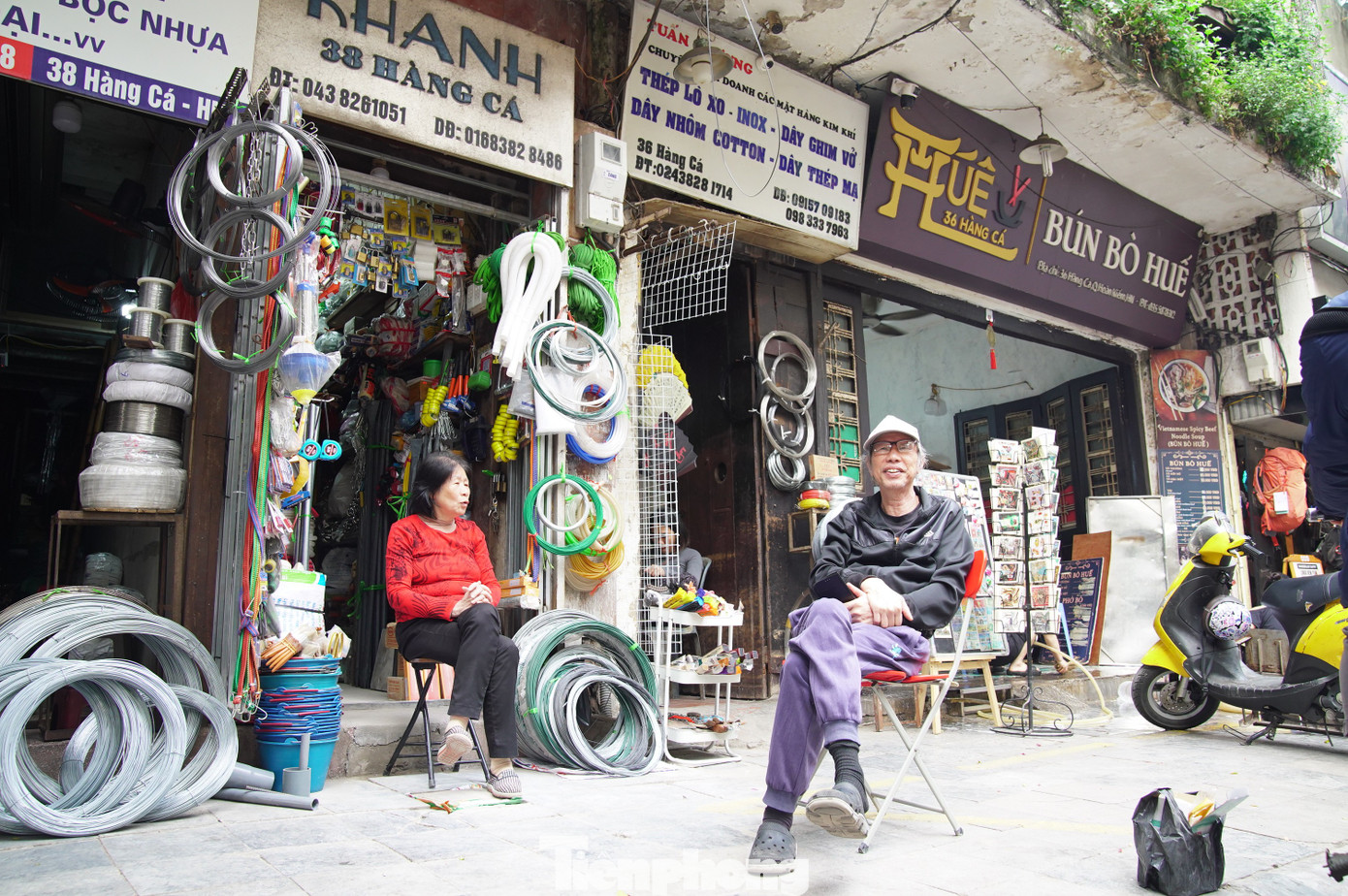
Mrs. Khanh resides at 38 Hang Ca.
A former Hoan Kiem District leader noted that despite the Old Quarter relocation plan being approved decades ago, implementation has faced numerous challenges.
The plan is divided into two phases. Phase 1, starting in Q4/2013 and ending in Q4/2016, aimed to relocate approximately 1,153 households. In 2015, the Hanoi People’s Committee approved the construction of a relocation urban area in Viet Hung Ward, Long Bien District, to support this phase.
Phase 2 is expected to allocate 30 hectares for relocating 5,020 households after Phase 1 concludes. The entire relocation plan was slated to end by 2020.
However, both mandatory relocation groups (residents near historical sites, schools, etc.) and voluntary groups (residents in dilapidated homes under 5m²) have faced obstacles in fully implementing the plan.
According to the former leader, the main issue lies in policy mechanisms, as the Housing Law lacks specific provisions for pure relocation (without land clearance). Additionally, the Viet Hung resettlement area has faced delays due to height restrictions related to Gia Lam Airport, requiring multiple planning adjustments to seek approval for high-rise buildings.
A representative from the Hoan Kiem District People’s Committee stated that the Old Quarter relocation plan has been temporarily halted, with no further implementation currently underway.
Urban Restructuring in Hanoi: Detailed Relocation Zones Announced
According to the 100-year Capital Master Plan for the 2026-2045 period, Hanoi aims to relocate over 860,000 inner-city residents to facilitate urban restructuring and address congestion issues. However, careful planning is essential, as numerous challenges must be tackled, including employment, education, healthcare, and other critical social welfare concerns.
Hanoi Relocates Over 860,000 Inner-City Residents: Livelihood Concerns and the Challenge of Supporting Services
As 860,000 residents relocate from Hanoi’s inner city, the demand for new housing, schools, healthcare, and employment opportunities will surge. To address this, Hanoi authorities must promptly disclose the relocation timeline and designated areas, enabling residents to prepare and plan accordingly.
West Lake Waterfront Property Prices Hit Nearly 2 Billion VND per Square Meter
Not only are property prices soaring in the Old Quarter, but the real estate market around West Lake is setting new records, with some townhouses listed at nearly 2 billion VND per square meter. This unprecedented surge continues to astonish Hanoi’s property market in the early days of 2026.
Relocation Plan for Over 860,000 Residents in Hanoi
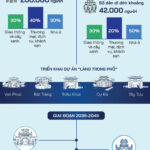
By 2045, Hanoi plans to relocate over 860,000 residents from the Ring Road 3 area as part of its urban restructuring initiative.
New Construction Cost Standards for Housing and Land-Attached Projects in Hanoi
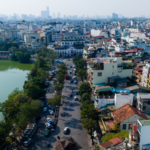
The newly issued construction cost standards for houses, residential buildings, and land-attached structures in Hanoi will serve as the basis for calculating compensation for affected parties during state land reclamation.