
















The Hanoi People’s Council recently approved a resolution outlining the key components of the Capital’s Master Plan, which boasts a visionary 100-year horizon.
According to the plan, Hanoi aims to fundamentally restructure its urban landscape, sparking a revolution across multiple domains: architecture, urban aesthetics, housing, heritage preservation, and more.
In tandem, Hanoi seeks to establish a new planning framework to unlock land resources, foster fresh development values, and decisively tackle long-standing infrastructure bottlenecks. This paves the way for the capital’s transformation into a green, smart, and sustainable city.
Speaking with VietNamNet, Architect Trần Huy Ánh, Standing Member of the Hanoi Association of Architects, emphasized that the 100-year Master Plan is imperative in the current context. It concretizes the directives of General Secretary Tô Lâm.
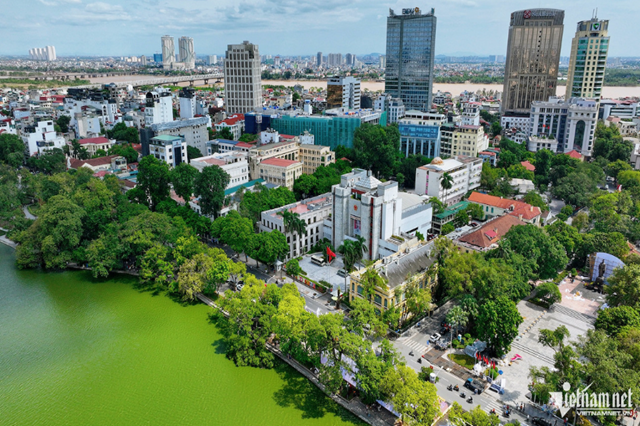
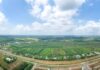
The 100-year Master Plan opens a new vision for Hanoi. Photo: Hoàng Hà
|
“In line with the directives, Hanoi must lead by example, despite existing constraints from previous plans. This demands a fresh perspective and innovative approaches,” Mr. Ánh noted.
According to Mr. Ánh, initial details of the plan reveal significant shifts from past objectives, notably the establishment of urgent timelines to progressively realize the plan, rather than merely setting long-term goals.
From another perspective, Architect Đào Ngọc Nghiêm, former Director of the Hanoi Department of Architecture and Planning and Vice Chairman of the Vietnam Urban Development Planning Association, pointed out that Hanoi has undergone nine planning iterations.
In 2008, Hanoi expanded its administrative boundaries, followed by the launch of a new plan in 2011.
Recently, Hanoi concurrently developed two major plans: the Hanoi Capital Plan for 2021-2030, with a vision to 2050, and the General Plan for the Capital to 2045, with a vision to 2065. Both were approved by the Politburo and the Prime Minister in December 2024.
“Currently, the city is integrating these two plans into a unified framework. The Party Committee mandates that the new plan have a 100-year vision, with strategic, large-scale directives,” Mr. Nghiêm stated.
According to Architect Đào Ngọc Nghiêm, while the 2024-approved plan identified five growth poles, five spatial axes, and economic corridors with five radial axes, the new 100-year vision plan outlines nine growth poles and nine economic corridor spaces.
Numerous large-scale projects and issues are incorporated into the plan, such as the Red River scenic boulevard and population redistribution adjustments. This marks Hanoi’s first highly integrated plan, encompassing all sectors and ensuring alignment with the national master plan.
“This plan opens a new vision for Hanoi. I hope it will provide a unified perspective, offering a fresh outlook for the capital, especially as we approach the 100th anniversary of the nation’s founding,” Mr. Nghiêm expressed.
How to Realize the Vision?
However, to actualize the 100-year vision plan, Architect Đào Ngọc Nghiêm, former Chief Architect of Hanoi, identifies three major challenges that must be addressed.
First is the integration of legacy plans to achieve breakthroughs without disrupting established foundations.
Second is securing resources to execute large-scale goals and projects.
Third is fostering inter-regional collaboration between Hanoi and neighboring provinces within the Capital Region.
“For instance, Hanoi proposes a 40km Red River axis, while Hưng Yên suggests extending it to 60km. Other spatial axes also require close coordination with adjacent localities,” Mr. Nghiêm illustrated.
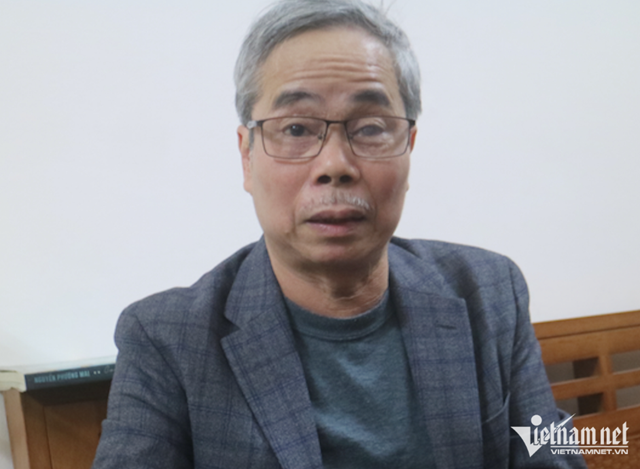 Architect Trần Huy Ánh. Photo: N. Huyền
|
Meanwhile, Architect Trần Huy Ánh believes that while a 100-year vision is essential, defining specific spaces will be challenging due to the inherent uncertainties of urban development, including climate change, natural disasters, infrastructure evolution, and global socio-economic shifts.
“With so many variables, many nations opt for goal-oriented directives rather than prematurely fixing spatial frameworks. Incomplete information and tools can hinder development if spaces are rigidly defined too early,” Mr. Ánh analyzed.
A key objective of the 100-year Master Plan is to definitively address long-standing infrastructure bottlenecks, such as traffic congestion, environmental pollution, urban flooding, and water scarcity, which have persisted for over two decades.
According to Mr. Ánh, Hanoi should address immediate challenges to set long-term goals, fostering consensus and practical development momentum.
“Hanoi’s decision to develop the Red River scenic axis without constructing railways or roads within the river, while gradually relocating residents from flood-prone areas, exemplifies this approach. It addresses current needs while embodying a long-term vision,” Mr. Ánh emphasized.
N. Huyền
– 05:00 30/01/2026
Northern Investors’ “Southern Expansion”: Unlocking New Growth Opportunities in Ho Chi Minh City’s Thriving Western Hub

The recent “Infrastructure Focus – Investment Highlights” event in Hanoi has painted a vivid picture of capital shifting from the North to the Southern market. Among the standout destinations is the Western Gateway of Ho Chi Minh City (formerly Long An), with the LA Home urban area emerging as a focal point. This area is drawing significant attention due to its strategic advantages, leveraging both infrastructure development cycles and an integrated eco-industrial urban model.
Hanoi Unveils Ambitious $240 Billion Investment Plan to Revamp 10 Urban Districts
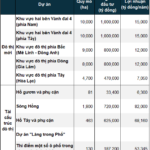
On the morning of January 27, 2026, during the 31st specialized session, the Hanoi People’s Council provided feedback on the 100-year vision Master Plan for the Capital.
Bình Dương’s Legacy: Tailored Luxury Real Estate Wave Sweeps Through the Region

Bình Dương is entering a new era of development, where the advantage is shifting from mass-market projects to tailored solutions that cater to the unique tastes and lifestyles of specific customer segments.
Why Has Hanoi’s 28-Year Plan to Relocate 27,000 Residents from the Old Quarter Stalled?
The Hanoi Old Quarter population relocation project, approved in 1998, remains largely unimplemented due to a combination of objective and subjective challenges.
Urban Restructuring in Hanoi: Detailed Relocation Zones Announced
According to the 100-year Capital Master Plan for the 2026-2045 period, Hanoi aims to relocate over 860,000 inner-city residents to facilitate urban restructuring and address congestion issues. However, careful planning is essential, as numerous challenges must be tackled, including employment, education, healthcare, and other critical social welfare concerns.