In the post-pandemic economic landscape of the ASEAN region, Vietnam continues to emerge as a beacon of growth and long-term potential. Following a robust recovery in 2022, Vietnam’s economy has sustained a positive growth trajectory in subsequent years, despite global economic uncertainties. This trend underscores a stabilizing economic foundation, while also heightening the need for structural reforms to maintain momentum.
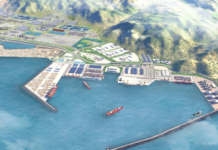
Alongside economic growth, Vietnam is embarking on an unprecedented wave of large-scale infrastructure investment. Over 3,000 kilometers of highways are under construction, alongside key projects in aviation, maritime ports, and urban infrastructure, such as Tan Son Nhat Airport’s Terminal 3, Noi Bai Airport’s Terminal 2, Long Thanh International Airport, Hon Khoai Port, and the Can Gio Sea-Crossing Bridge. These initiatives aim not only to alleviate immediate traffic pressures but also to strategically reshape the nation’s economic development landscape.
Infrastructure: The Bedrock of Sustainable Growth
Commenting on the current scenario, Mr. Su Ngoc Khuong, Senior Director of Investment at Savills Vietnam, believes Vietnam is at a pivotal “window of opportunity.” He emphasizes that the period from 2016 to 2030 is critical, as infrastructure has evolved from a supporting factor to a mandatory foundation for long-term growth. Failure to capitalize on this moment with substantial, well-planned infrastructure investment risks derailing the economy’s development trajectory in the coming years, as connectivity lags behind expansion.
Data from the General Statistics Office (GSO) and international research organizations compiled by Statista reveals Vietnam’s GDP growth from 2022 to 2025 reflects a steady recovery and stabilization. After an 8% growth in 2022, GDP in 2023 is projected at 5.1% amid global economic weakness, rebounding to 7.1% in 2024 and reaching 8.02% in 2025. These figures position Vietnam among the region’s fastest-growing economies.
Alongside GDP growth, quality improvements are evident. According to ADB and GSO, Vietnam’s per capita GDP has risen steadily, from approximately $3,700 in 2022 to nearly $5,026 by 2025. This reflects expanding incomes and domestic market size, driving increased demand for transportation, logistics, urban infrastructure, and public services.
In this context, Mr. Khuong stresses that the key requirement is not just infrastructure investment but synchronized, end-to-end development to ensure resource efficiency and long-term optimization. Highways, ring roads, airports, and seaports must be integrated into a unified framework to maximize value and avoid fragmented investment effectiveness.
Synchronized Connectivity for Capital Optimization and Development Space
Infrastructure’s impact extends beyond transportation and logistics, significantly influencing trade, investment, and real estate. In recent years, alongside public investment, new-generation trade agreements, particularly the EVFTA, are reshaping Vietnam’s position in the global supply chain.
By 2025, total FDI inflows into Vietnam are expected to reach approximately $300 billion. Notably, European investment is shifting toward high-value sectors such as technology manufacturing, electronics, advanced processing, and logistics, rather than traditional labor-intensive industries. The EVFTA’s phased elimination of import tariffs on over 99% of goods exported to the EU by 2027 is anticipated to further enhance Vietnam’s appeal to long-term investors.
However, experts note that trade agreement benefits will only be fully realized with capable transportation and logistics infrastructure. Seaports, airports, warehousing, and inter-regional connectivity are critical to reducing logistics costs, enhancing competitiveness, and enabling high-quality capital flows.
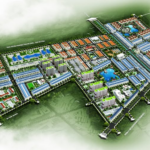
From an urban development and real estate perspective, Mr. Khuong views transportation infrastructure as a catalyst for new growth hubs. Improved infrastructure diminishes geographical barriers, enabling residents to live farther from urban centers while maintaining convenient connectivity. This trend fosters satellite cities, industrial zones, and new residential areas, alleviating pressure on major cities and enabling more rational resource allocation.

Dr. Su Ngoc Khuong emphasizes that transportation infrastructure is a catalyst for new growth hubs.
While applauding the current scale and commitment to infrastructure, Mr. Khuong highlights the need for special mechanisms and innovative solutions to ensure efficient project execution. National infrastructure projects require prioritized access to capital, materials, and localized decision-making, coupled with clear accountability. Amid concurrent implementation of multiple key projects, flexibility and inter-agency coordination will determine the overall investment program’s success.
Looking ahead to 2026-2027, Mr. Khuong sees this period as a critical test of the current infrastructure strategy’s implementation and effectiveness. “The most crucial keyword for Vietnam’s infrastructure in the coming years is connectivity,” he asserts, “end-to-end, synchronized, and efficient connectivity to optimize socio-economic benefits.”
In this context, infrastructure transcends physical structures, becoming the foundation for a new growth cycle. With strategic, timely investment, infrastructure will serve as a lever for sustainable, in-depth economic development, enhancing Vietnam’s competitiveness, attracting long-term capital, and improving citizens’ quality of life.
Nam Long (NLG) Plunges in Revenue and Profit Despite Inventory Reduction of Over 9.3 Trillion VND: What’s Unfolding?

In 2025, Nam Long (NLG) faced a challenging business landscape, marked by significant declines in both revenue and profit. This downturn coincided with the company’s aggressive efforts to manage a substantial inventory backlog, which exceeded 9.3 trillion VND compared to the beginning of the year.
BAF’s Q4 Pig Sales Surge 73% Amidst Challenging Livestock Industry Conditions
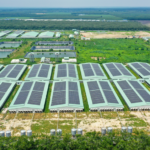
In 2025, BAF Vietnam Agriculture JSC (HOSE: BAF) aggressively expanded its livestock operations by launching 13 new farms, increasing feed mill capacity, and intensifying training efforts. Despite industry challenges, hog sales volume and revenue surged 140% and 155% year-over-year, respectively.
Industrial Real Estate Under Pressure: Navigating Land Price Challenges and Emerging Competitive Landscapes

Vietnam’s industrial real estate sector is experiencing rapid growth, attracting the most institutional investors in the region, according to JLL Vietnam’s Managing Director. However, with rising land prices and costs, Vietnam must enhance its non-financial factors to maintain its competitive edge.
Prime Minister’s Directive: Him Lam, Donacoop, D2D, and Others to Commence 14 Social Housing Projects in Dong Nai by Q1/2026

The launch of numerous social housing projects at the beginning of 2026 sets the stage for the province to achieve its goal of constructing over 8,000 social housing units in 2026, paving the way for a total of 65,000 units by 2030.
FPT Launches Billion-Dollar Subsidiary to Develop $2B Digital Technology Park in Hanoi
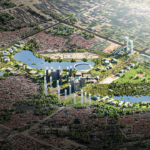
Nestled in the vibrant districts of Tây Tựu and Phú Diễn, a groundbreaking 200-hectare digital and mixed-use technology park is set to redefine innovation. With a staggering investment of over $2 billion, spearheaded by FPT Corporation, this visionary project is poised to become the cornerstone of Hanoi’s thriving creative and technological ecosystem.