

















FPT Chairman Truong Gia Binh revealed to Nikkei that the company is leveraging the global semiconductor supply chain shift amid escalating U.S.-China tensions.
“We are in the process of obtaining approval for chip assembly, testing, and manufacturing facilities, aiming to commence operations in the near future,” stated Mr. Binh during the interview, without specifying a timeline.
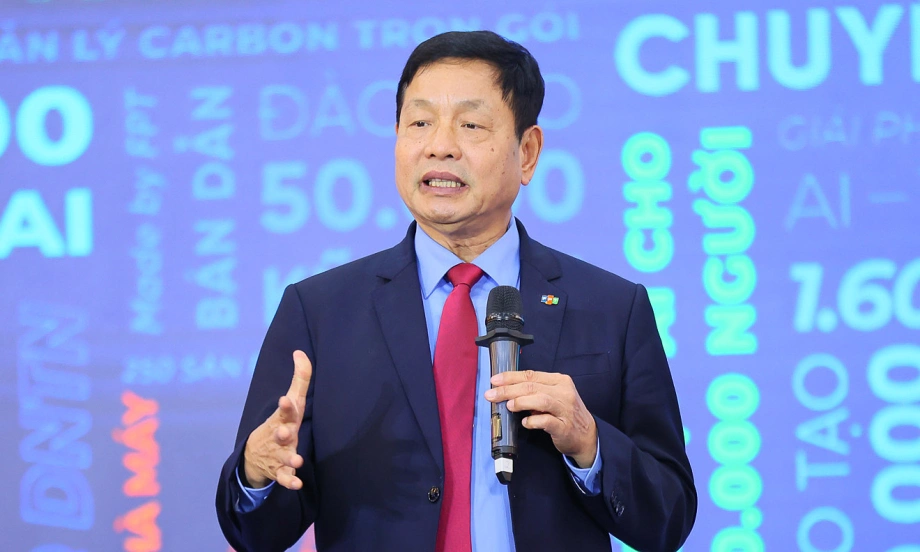 FPT Chairman Truong Gia Binh
|
Unlike the complex front-end process involving wafer circuit printing, back-end chip manufacturing includes wafer dicing, packaging, assembly, and final testing—stages with lower technical barriers. While foreign companies like Intel operate back-end chip facilities in Vietnam, no Vietnamese-owned plant currently exists.
This strategic move marks FPT’s significant shift from its core software outsourcing business, which fueled its growth over the past decade. In 2024, FPT’s consolidated revenue is projected at 63 trillion VND (2.4 billion USD), with net profit reaching 8 trillion VND—a 2.3x and 4.9x increase, respectively, over the last ten years.
Da Nang has emerged as FPT’s strategic hub, boasting 19 universities and approximately 100,000 students—a talent pool deemed more accessible than Hanoi or Ho Chi Minh City. Beyond FPT, numerous domestic and international firms are flocking to this coastal city, tripling chip-related companies to 25 and AI firms to over 40 in the past two years.
U.S. tech giants like Synopsys and Marvell Technology have established bases here. Vietnam’s VSAP LAB is also constructing a 1.8 trillion VND R&D center for chip packaging technology. Local officials reveal that American heavyweights such as Nvidia, Intel, and Qualcomm are exploring investment opportunities.
Da Nang launched incentives this year to attract semiconductor and AI companies, including five-year corporate and personal income tax exemptions, land use benefits, and R&D cost subsidies for qualifying projects.
FPT leverages its educational ecosystem, with over 60,000 students nationwide. “Curricula are shifting from IT to advanced fields like semiconductors and AI,” emphasized Mr. Binh. In March, FPT opened a chip R&D center in Da Nang to attract top talent. “FPT’s infrastructure in Da Nang spans education to business,” he affirmed.
FPT’s plan aligns with Vietnam’s national strategy to establish one front-end and ten back-end chip plants by 2030, train 50,000 professionals, and generate annual industry revenue of 25 billion USD.
Alongside FPT, CT Group announced a back-end chip plant in Ho Chi Minh City, slated for 2027 with a 100 million-unit capacity. Viettel has also expressed interest in semiconductors.
However, no Vietnamese company has ventured into front-end manufacturing—a high-tech field where the government offers up to 10 trillion VND in subsidies for plant construction.
– 15:57 18/09/2025
The Weakening US Dollar: Opportunities and Challenges for Emerging Economies?
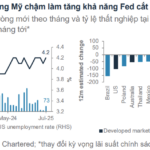
Standard Chartered forecasts a weaker USD over the next 6–12 months, predicting the DXY index to drop to around 96 as the Federal Reserve initiates rate cuts. This scenario presents opportunities for exchange rate stability, easing import inflation pressures, and attracting capital inflows into Asia. However, it also poses challenges for export competitiveness and capital flow risks should market expectations reverse.
Proposed Gold Sales Tax: Threshold Set at 1 Ounce or More

Experts recommend establishing a clear tax threshold for gold transactions. They propose that only sales of 1 tael or more should be subject to taxation. Smaller transactions, such as the sale of 1-2 tael of accumulated gold, would fall below this threshold and remain tax-exempt.
Unveiling Vietnam’s Top 5 Innovative Solutions: Waste-to-Energy, Drones, AI in Media, and Healthcare Revolution

It’s remarkable how these solutions prioritize sustainability, encompassing not only economic viability but also social and environmental responsibility. This demonstrates the long-term vision and commitment of Vietnamese businesses to their communities and the planet.
Prime Minister Criticizes 29 Ministries, Agencies, and 12 Localities for Below-Average Disbursement Rates

According to reports, 18 ministries, central agencies, and 30 localities have yet to fully allocate the capital plans assigned by the Prime Minister, totaling nearly VND 38,400 billion. By the end of August 2025, 29 ministries, agencies, and 12 localities recorded disbursement rates below the national average.
Today’s Pepper Price (17/9): Stable Rates, Starting at 148,000 VND/kg

Domestic pepper prices on September 17th remained stable, hovering between 148,000 and 151,000 VND per kilogram.