



















The Ministry of Justice is reviewing a draft resolution by the National Assembly’s Standing Committee on urban classification, prepared by the Ministry of Construction.
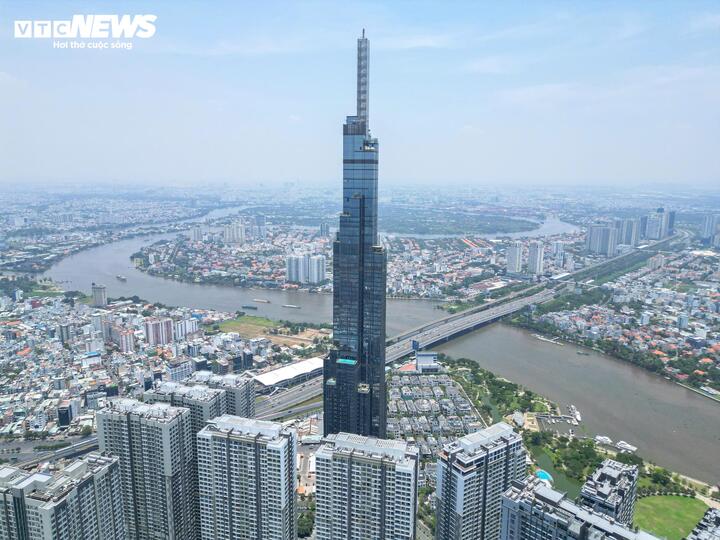
Aerial view of Ho Chi Minh City. (Photo: Lương Ý)
The Ministry of Construction proposes amendments to the urban classification criteria, including: centrally-affiliated cities, areas planned for central affiliation, provincial urban areas, and areas designated for ward establishment and special zones.
The classification system comprises three tiers: I, II, and III, excluding special and V categories. The provincial tier I classification is omitted to prevent overlap.
Regarding urban types and systems, the draft resolution designates Hanoi and Ho Chi Minh City as special urban areas.
Centrally-affiliated cities (excluding Hanoi and Ho Chi Minh City) are classified as tier I. Provinces planning to establish centrally-affiliated cities must meet tier I criteria.
Provinces and centrally-affiliated cities with defined urban boundaries in their urban plans, consisting of independent wards or clusters of wards and communes, are categorized as follows: areas serving as urban centers are classified as tier II, while standard urban areas are tier III.
Wards and areas planned for ward establishment must meet tier II or III urban development standards.
Concerning urban area classification, the draft resolution specifies that urban areas within provinces and centrally-affiliated cities are defined by approved urban master plans.
Classification of these urban areas is based on their development level, requiring at least one ward to meet the corresponding urban development standard.
Classification criteria are tailored to urban types, development realities, and specific urban characteristics, ensuring quality, smart, interconnected, efficient, and sustainable urban growth.
Special zones with approved urban plans and development investments are classified according to their corresponding urban area type.
Newly formed urban areas must have a minimum population of 20,000, a population density of at least 300 people/km², a non-agricultural labor ratio of at least 40%, and meet tier III urban area standards.
The Ministry of Construction also proposes streamlining urban classification criteria from five to three groups: role, location, and socio-economic development conditions; urbanization level; and infrastructure and spatial organization development. New standards for green cities, smart cities, and climate change adaptation are introduced.
The draft decree innovates evaluation methods, clearly defining provincial-level standards tied to urban roles within provinces, regions, and nationally, and ward-level standards focused on public services and local governance. Only tiers I, II, and III are evaluated, excluding special and V categories.
Regional and specific factors are considered, allowing for reduced standards in population, density, and non-agricultural labor ratios for mountainous, border, island, Mekong Delta, ancient capital, and UNESCO heritage areas, ensuring flexibility and feasibility.
Additionally, the draft amends recognition authority, delegating more power to local governments: the Prime Minister recognizes special categories; the Ministry of Construction recognizes tier I; and provincial People’s Committees recognize tiers II, III, and wards. The government details procedures, adhering to the principle of “local decision-making, local responsibility.”
iPhone 17 Pro Max Sells Out, Vietnamese Enthusiasts Rush to Secure Early Delivery

Many are eager to spend extra millions to be among the first to own the latest iPhone 17 Pro Max.
Lotte Officially Terminates the Thu Thiem Eco Smart City Project

The Department of Finance revealed this information during a press conference on Ho Chi Minh City’s socio-economic status held on the afternoon of September 18th.
Unlocking Export Growth Through Free Trade Agreements: Navigating Opportunities and Challenges

Free Trade Agreements (FTAs) signed by Vietnam serve as more than just trade instruments; they are powerful catalysts for institutional reform and enhancing the nation’s competitive edge.
From Master Planning to Every Green Space: Nam Long Group’s Commitment to Sustainable Development
At Nam Long Group, sustainable development is at the core of our mission. We are dedicated to creating urban communities where residents thrive in harmony with nature, foster meaningful connections, and enjoy an elevated quality of life.
What Benefits Does Vietnam Reap When the Fed Cuts Interest Rates?

Should the Fed opt to cut interest rates in the upcoming meeting, Vietnam’s macroeconomic landscape and financial markets will face a rare opportunity, creating a conducive environment for stabilizing exchange rates, easing monetary policy, and fostering synchronized growth.