During the Hanoi Civil Defense Command’s debriefing on October 11th, Director of the Hanoi Department of Agriculture and Environment, Nguyen Xuan Dai, reported on the erosion of the Hanoi-Thai Nguyen railway embankment in Trung Gia commune. The erosion caused water to flow into the Mo Bat canal and then into the Cong River, while another basin diverted water to Da Phuc commune, resulting in severe flooding in both areas. Trung Gia, being a low-lying area, saw 15 villages severely affected.
“Over 4,000 households were impacted, but both communes responded promptly, preventing any casualties. However, 700 hectares of rice fields in Trung Gia and 900 hectares in Da Phuc were submerged,” stated the department’s leader.
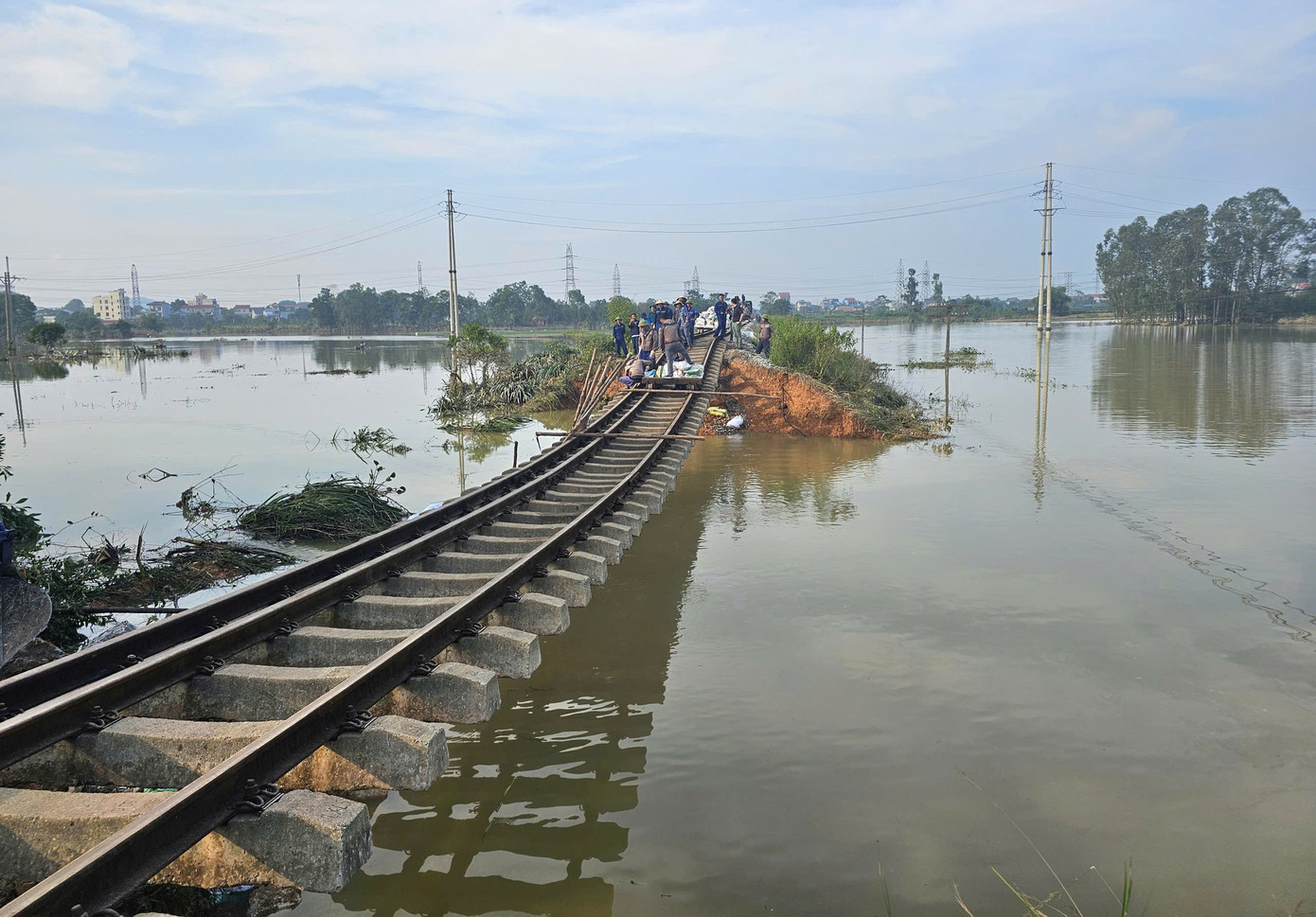
Erosion of the Hanoi-Thai Nguyen railway embankment
To address the issue, Mr. Dai proposed that the Hanoi People’s Committee invest in constructing a drainage system through the railway to divert water downstream during emergencies. He also emphasized the need to upgrade all 45 pumps in the area in the near future.
Furthermore, the recent flood highlighted weaknesses in the dyke system. “It is essential to raise the dyke’s crest by an additional 50cm to ensure safety,” Mr. Dai added.
Regarding the residents living outside the dyke, the Director mentioned that approximately 800 households in Trung Gia were severely flooded. After the flood, these residents expressed their desire to relocate inside the dyke, prompting Mr. Dai to propose their resettlement to safer areas.
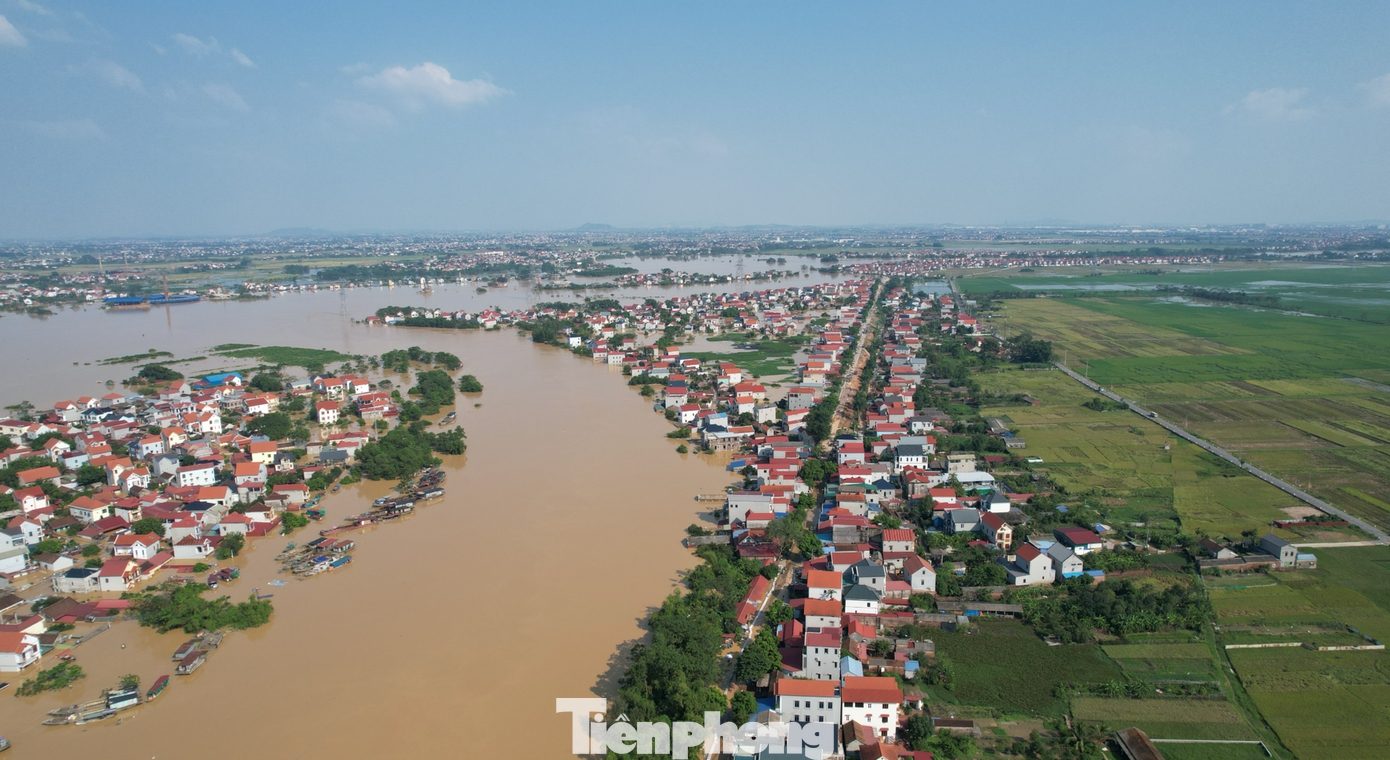
Hundreds of households outside the Cau River embankment were deeply flooded
Vice Chairman of the Hanoi People’s Committee, Nguyen Manh Quyen, supported the Department’s proposal. He confirmed that the city had surveyed the flooded areas outside Trung Gia’s dyke and was planning to include this area in the resettlement program. The city, along with local authorities, aims to relocate residents to new, stable, and sustainable housing.
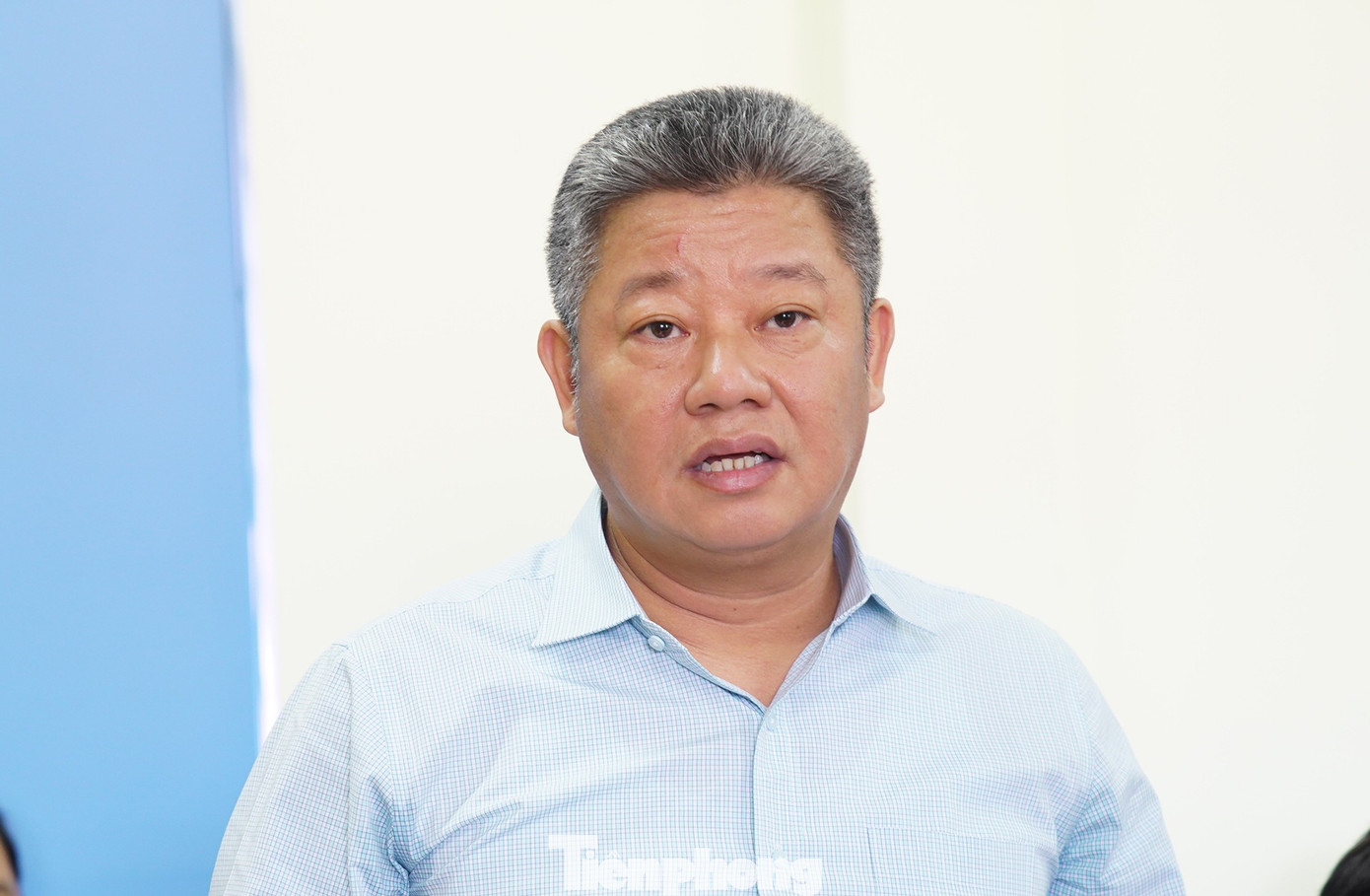
Vice Chairman Nguyen Manh Quyen discusses the situation at the meeting
Nguyen Hong Minh, Secretary of the Da Phuc Commune Party Committee, added that while the commune was focusing on flood control along the Cau River, a landslide occurred on the railway on the evening of October 9th. This caused water from the Cau River to overflow into the Cong River, flooding Trung Gia and Da Phuc, the lowest-lying areas.
Mr. Minh further stated that on the night of October 9th, the Prime Minister and Hanoi leaders issued urgent directives to address the situation. The Hanoi-Thai Railway Company is actively repairing the eroded section of the Hanoi-Thai Nguyen railway in Trung Gia commune to prevent further damage.
Hanoi Plans to Build Culvert Across Troubled Railway, Relocating 800 Households Inside the Dyke
Following the historic flooding, Hanoi’s Director of Agriculture and Environment, Nguyen Xuan Dai, has proposed constructing a drainage system through the eroded railway line. Additionally, plans are underway to relocate 800 households outside the dyke to safer areas within, ensuring stable living conditions.
Fuel Shortage Crisis in Thai Nguyen: Residents Line Up with Plastic Cans to Buy Gasoline for Generators

Despite the floodwaters receding, many residents in Thai Nguyen remain without electricity, forcing them to purchase gasoline and use generators to clean their homes. The high demand has led to long lines at gas stations as people wait to secure fuel.
Chairman of Hanoi Demands Continuous Updates on Flood-Prone ‘Hotspots’

The Chairman of the Hanoi People’s Committee has directed relevant departments to ensure seamless and continuous communication regarding the overall situation, developments, and resolution outcomes of critical flooding hotspots. This initiative aims to comprehensively lead and manage disaster response and recovery efforts across the city.
Activating the Whole Sector: Prioritizing Dam Safety and Essential Supplies for Typhoon Response
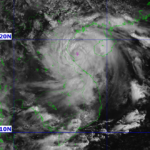
Amid the extremely perilous situation posed by Typhoon No. 5, with its intense strength and wide-reaching impact, the Ministry of Industry and Trade sprang into action. On August 23 and 24, 2025, the Ministry issued two urgent dispatches, mobilizing the entire industry to implement swift and decisive disaster response measures with the utmost urgency and proactivity.
The Charm of Hue’s Floods: Evacuating Hundreds of Households
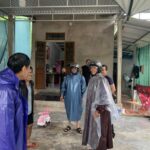
Recent heavy rains have placed Thua Thien Hue province on high alert for potential severe flooding, especially in the lowlands along major rivers such as the Huong and Bo Rivers. The entire province has been mobilized to evacuate hundreds of households from high-risk landslide areas to safer grounds.