













On October 24th, the Da Nang People’s Committee hosted a seminar titled “Building Da Nang’s Urban Rail System: Vision, Challenges, and Sustainable Solutions.”
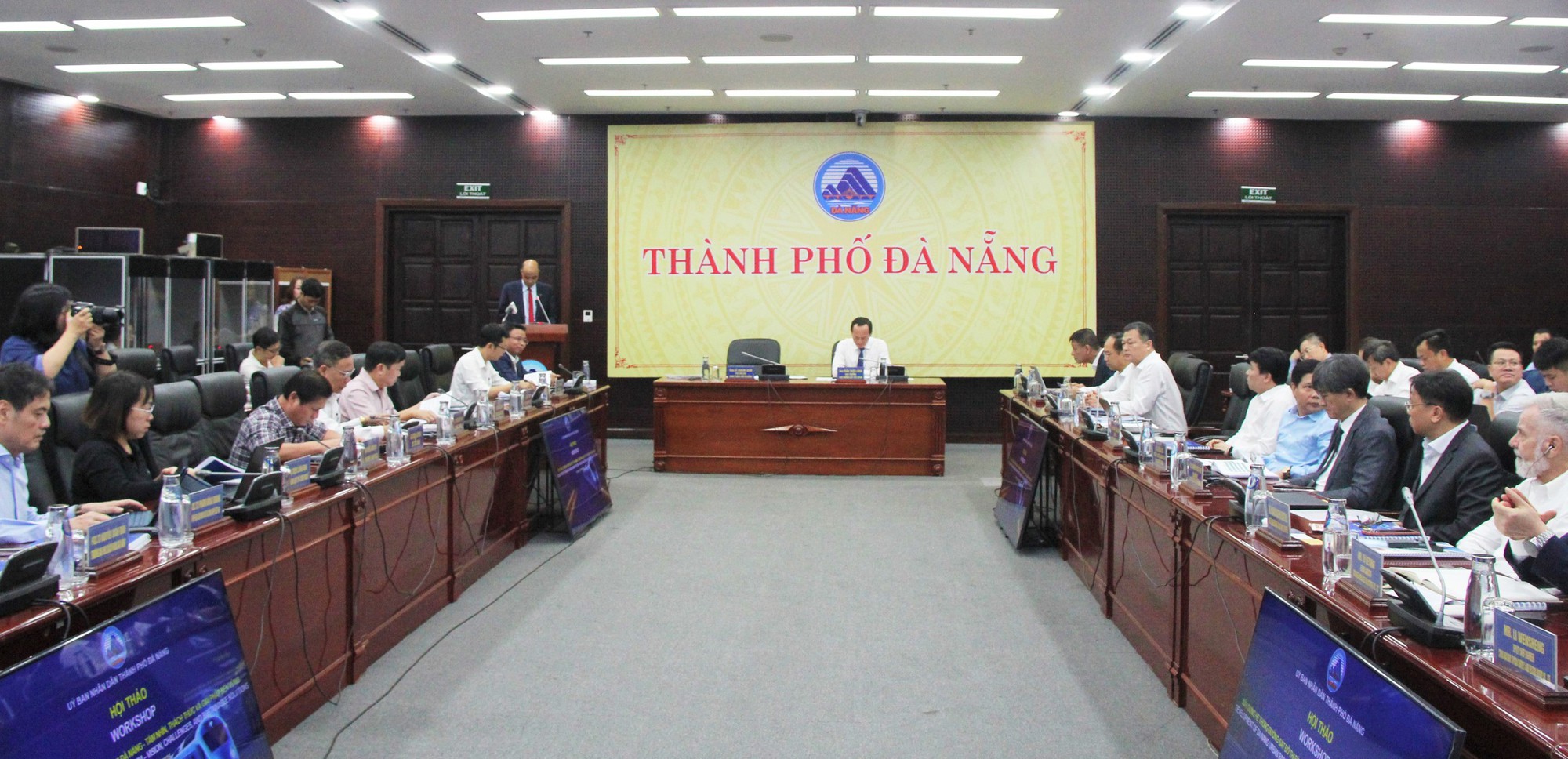
Numerous experts contributed insights at the Da Nang Urban Rail System Development Seminar.
Speaking at the seminar, Vice Chairman of the Da Nang People’s Committee Le Quang Nam highlighted that the merger of Da Nang and Quang Nam provinces opens up vast development opportunities in urban planning, tourism, and logistics. However, alongside these opportunities, the city faces mounting traffic pressures and increasing mobility demands, necessitating a breakthrough in modern, environmentally friendly public transportation infrastructure.
According to Mr. Nam, Da Nang aims to position urban rail as the backbone of its smart transportation network, connecting the city center with Hue, Quang Ngai, and other Central Highlands provinces to form a regional urban chain. This system will seamlessly integrate with BRT, electric buses, bike-sharing services, and major transportation hubs, ensuring that every urban area is within 500 meters of a metro station.
“The principle is to ensure that every urban point is within 500 meters of a metro station, and no more than 2 kilometers in suburban areas. Transfer times between transportation modes should not exceed 5 minutes,” Mr. Nam stated.
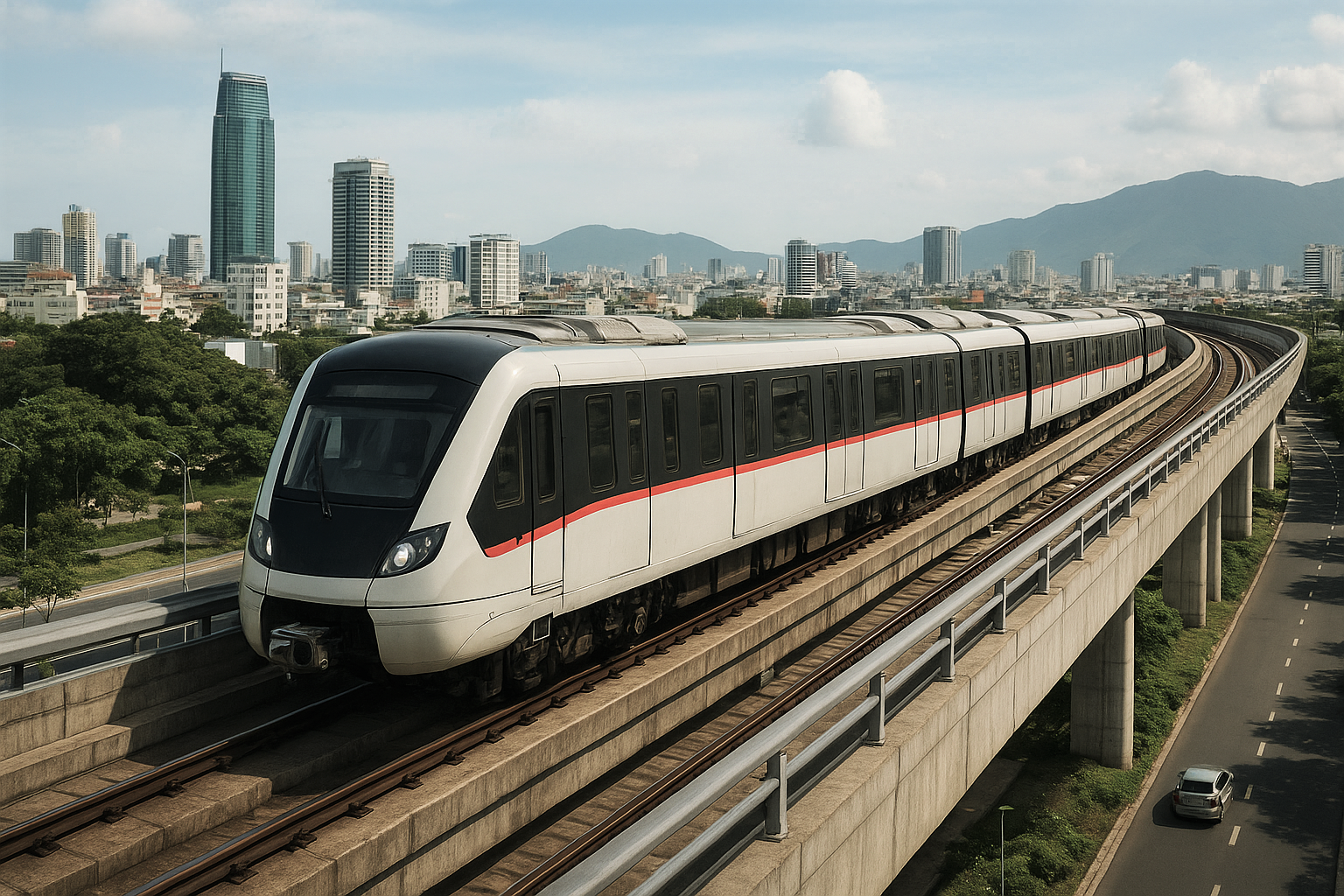
Da Nang prioritizes private investment in urban rail projects through the PPP model (Image: AI)
Deputy Director of the Department of Construction Luong Thach Vy outlined the master plan, which includes 16 urban rail lines totaling over 204 kilometers, divided into two investment phases from now until 2045.
Among these, two priority projects are the Da Nang – Hoi An – Tam Ky – Chu Lai line and the connection line between the high-speed railway station and the city center.
Da Nang plans to mobilize three funding sources: public investment, ODA, and private capital, with a focus on attracting private investment through the PPP model and developing urban areas following the TOD (Transit-Oriented Development) approach, centered around public transportation.
Contributing to the discussion, a representative from Shenzhen’s rail system (China) noted that Da Nang’s planning aligns with current trends but suggested optimizing the network in the southern region and maintaining a transportation land ratio of 23-26%, with public transportation accounting for 10-25%.
The expert also emphasized that to achieve sustainable integrated transportation development, Da Nang should establish a multi-layered, multi-model rail network, closely integrated with land-use planning. The development of Da Nang’s urban rail system also requires central government support through special mechanisms and policies, similar to those in Hanoi and Ho Chi Minh City.
Top 5 Da Nang Real Estate Projects Approved for Over $960 Million in Capital Mobilization
The Department of Construction of Da Nang City has unveiled a list of five real estate projects eligible to raise capital, totaling over 22.2 trillion VND.
Da Nang Plans 16 Urban Rail Lines Spanning 204 Kilometers
Da Nang has identified the development of an urban railway system as a strategic breakthrough, aiming to create a smart, green, and interconnected city within the Central region of Vietnam.
Chinese Conglomerate Eyes Investment in Metro Rail Linking Da Nang and Hoi An
China Railway No. 4 Survey and Design Institute Group Co., Ltd. seeks partnership with Da Nang to invest in urban rail development.
Da Nang Residents Alert: Stay Informed and Prepared
Recently, the Government Information fanpage issued a warning regarding a fraudulent document falsely attributed to the People’s Committee of Da Nang City.
Cẩm Lệ Industrial Cluster Completed but Left Unused

After nearly five years since its groundbreaking, the Cam Le Industrial Cluster (located in Cam Le Ward, Da Nang City), with a total investment of over 250 billion VND, remains unutilized and has yet to be put into operation.