


















According to experts, the era of speculative real estate waves has passed. Projects relying on rumors, lacking legal clarity, and with incomplete infrastructure now struggle to find buyers. In contrast, projects with clear legal frameworks, well-developed infrastructure, and genuine residential demand continue to attract interest.
Mr. Nguyễn Ngọc Quang, a seasoned real estate investor in Hanoi, notes that while investors once profited simply by entering the market, today’s market is highly segmented. Those with long-term vision, who choose projects with solid legal foundations and strategic locations, still have profit potential. However, those expecting quick flips are likely to face capital lock-ins.
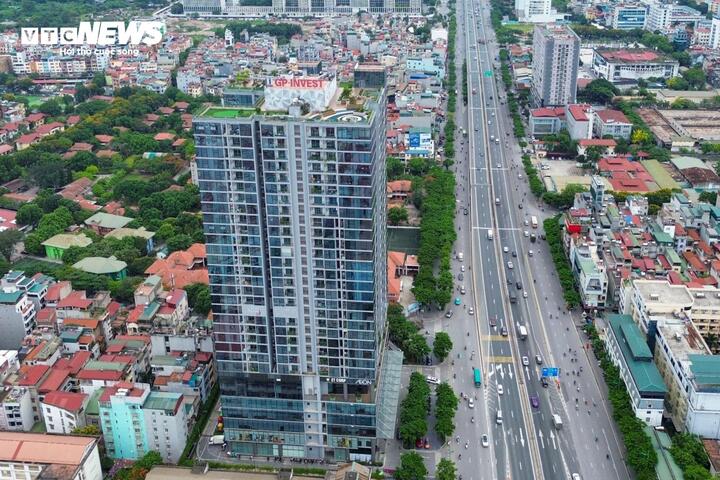
The era of speculative real estate waves is over. (Illustrative image: Minh Đức)
“Today’s market clearly favors genuine buyers over speculative investors. The ‘golden age’ of flipping is over. Long-term asset retention, focusing on legal compliance, infrastructure, and amenities, is now the safer path,” shares Mr. Quang.
He explains that current property prices across all segments are high, eliminating past opportunities for doubling assets. Investors must adopt long-term strategies or shift their investment focus to new areas.
Mr. Nguyễn Văn Đính, Vice Chairman of the Vietnam Real Estate Association, identifies three key factors limiting short-term speculative investments:
First, stringent credit controls and legal regulations from the State Bank hinder quick buy-and-sell transactions.
Second, high lending rates of 9–11% annually make speculative borrowing risky.
Third, buyers now prioritize genuine residential needs and long-term liquidity, with small investors becoming more cautious after many faced capital lock-ins.
Mr. Đinh Minh Tuấn, Director of PropertyGuru Vietnam, attributes the decline in speculative investing over the past two years in the Southern region to market stabilization and increased transparency.
Additionally, banks’ tightened policies and reduced capital flow to real estate have challenged investors’ ability to recycle funds.
Government regulations on project approvals, credit controls, and anti-speculation measures have also played a role.
“The market’s recent challenges—reduced liquidity, price drops, and cautious buying behavior—have further dampened speculative activity,” notes Mr. Tuấn.
He adds that investors are shifting to long-term, stable strategies. Limited supply in recent years, coupled with steady demand from genuine buyers and rental investors, has reduced speculative opportunities.
Mr. Phạm Đức Toản (EZ Property) predicts that from 2026 onward, increased supply will balance the market. Only well-timed, well-located projects will yield sustainable returns. Investors will favor mid-term strategies, holding assets for 2–3 years until infrastructure matures.
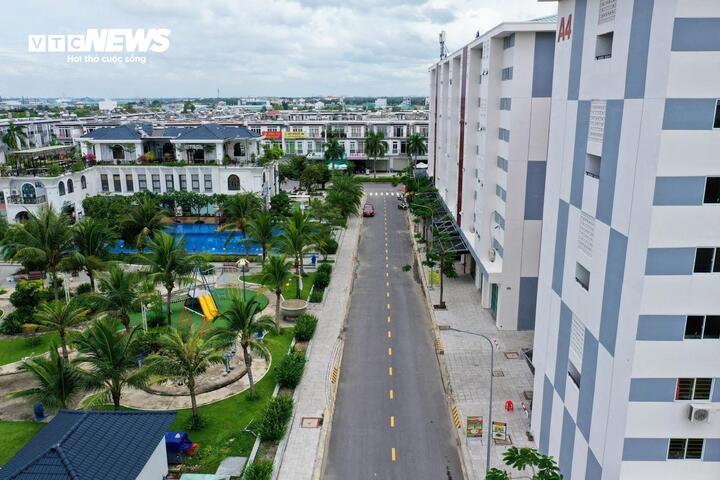
Only high-quality projects generating cash flow attract investors. (Illustrative image)
Conversely, some buyers still exhibit FOMO (Fear of Missing Out) during large-scale launches, often overlooking their financial limits in pursuit of promotions.
Ms. Đỗ Thị Thu Hằng, Senior Director at Savills Hanoi’s Advisory and Research Department, notes that after years of price increases, expectations of doubling profits are unrealistic.
Returns are now measured in percentages, requiring investors to carefully consider investment regions, cash flow, and exit timing.
“To achieve significant profits, investors must anticipate emerging administrative centers where real housing demand will arise, such as in newly merged provinces,” advises Ms. Hằng.
High-Quality Projects Attract Investment
Experts agree that only projects with strong legal foundations, reasonable pricing, and cash flow potential can attract investors today.
Mr. Nguyễn Anh Quê, Chairman of G6 Group, outlines four critical criteria for buyers: transparent legal status, stable planning, fair pricing, and realistic cash flow potential. These serve as a guide in the market’s restructuring phase.
Overall, the market is shifting from defensive to selective reinvestment. While new capital inflows are steady rather than explosive, they focus on real value.
Mr. Nguyễn Thế Điệp, Vice Chairman of the Hanoi Real Estate Club, highlights positive effects of the shift from speculation to value investing: prices align more closely with utility, reflecting true supply-demand dynamics and reducing irrational fluctuations.
Transparency and market confidence are strengthened as clear legal frameworks and project information enable better risk assessment.
“Investors should thoroughly research legal aspects, invest only in fully permitted projects, monitor infrastructure plans, and focus on areas with upcoming transportation and public utility projects.”
“They should also carefully calculate cash flow, set clear capital recovery timelines, and diversify portfolios to avoid overconcentration in one asset type or region,” recommends Mr. Điệp.
The Backbone Route: Ring Road 3’s Technical Opening Delivers a Double Boost to Southern Economic Zones
The nearly 15km elevated section of the Ring Road 3 in Ho Chi Minh City’s eastern segment is set to achieve technical completion on December 19, 2025, marking the most anticipated infrastructure boost for real estate investors in this phase.
Vingroup Stock Adjustment: A Real Estate Group’s Market Test
The current market dynamics surrounding Vin Group stocks are setting the stage for a critical test within the real estate sector. By late October 2025, nearly all monitored stocks had relinquished their short-term upward trajectories, marking a pivotal shift in investor sentiment.
Market Pulse 03/11: Blue-Chip Stocks Rebound, VN-Index Regains Green Territory
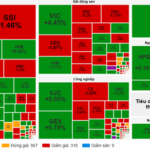
A robust recovery signal emerged during the final moments of the morning session, propelling the VN-Index to swiftly rebound and reclaim positive territory. At the midday break, the VN-Index surged by over 12 points (+0.74%), reaching a strong 1,651.76 points. Meanwhile, the HNX-Index lagged, closing at 264.15 points, down 0.64%. Market breadth remained balanced, with 317 gainers, 327 decliners, and 957 unchanged stocks.
Unveiling the Lender Behind Cuong ‘Do La’s Company’s Billion-Dollar Loan

Quoc Cuong Gia Lai JSC has secured significant financial support through loans from key individuals closely associated with the company. Specifically, the company borrowed 507 billion VND from Ms. Lai Thi Hoang Yen, the daughter of QCG’s Chairman, Mr. Lai The Ha. Additionally, Mr. Lau Duc Duy, the brother-in-law of Mr. Nguyen Quoc Cuong (known as Cuong ‘do la’) and the CEO of QCG, provided a loan exceeding 527 billion VND.
Revealed: Real Estate Giant Pays Employees Nearly $1,700 Monthly Salaries

The average monthly income of employees in several real estate companies ranges from 13 to nearly 37 million Vietnamese dong.