


















For mortgage loans, most banks offer an introductory promotional interest rate, typically ranging from 6 to 24 months. This initial period helps borrowers ease their financial burden and serves as an attractive incentive for potential customers.
Mortgage terms at banks are highly flexible, extending up to 30 years. This flexibility allows borrowers to spread out their loan payments, reducing monthly repayment pressure.
Banks collect both principal and interest on a monthly basis, using a reducing balance method:
Total Monthly Payment = Monthly Interest + Monthly Principal Repayment
Where:
Monthly Principal = Original Loan Amount / Number of Months
First Month’s Interest = Original Loan Amount × Monthly Interest Rate
Second Month’s Interest = (Original Loan Amount – Principal Paid) × Monthly Interest Rate
Subsequent months follow the same pattern, calculated on the remaining balance.
To qualify for a mortgage, borrowers must be Vietnamese citizens aged 18–75, possess full civil capacity, have a stable income to service the debt, and maintain a clean credit record with no overdue payments to financial institutions.
A critical requirement is the collateral asset, which must be real estate valued at or above the loan amount. The property must be legally owned by the borrower or guarantor, with all valid legal documentation in place.
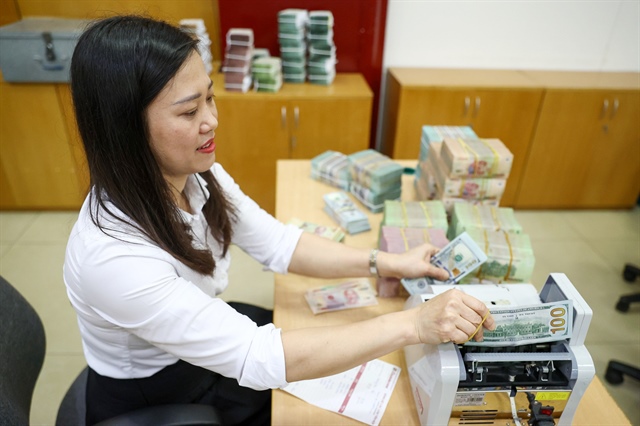 Illustrative Image: Phạm Hải |
Before committing to a loan, borrowers should thoroughly research banks’ mortgage packages, including interest rates, terms, fees, and eligibility criteria, to select the most suitable option.
Once informed, prepare the required loan application documents as per the bank’s guidelines. These documents are essential for the bank’s evaluation and approval process.
Required Documents for mortgage loans include:
Valid ID of the borrower and guarantor (if applicable); residence registration or temporary residence permit; proof of income.
Proof of income comprises: Employment contract or work confirmation; latest 3-month bank statements; personal income tax declaration (if available).
For collateral verification, banks require: Property ownership certificate; legal documents confirming ownership (for jointly owned assets).
Additional documents may include: Loan purpose declaration; marital status confirmation.
Submit the completed application in person at a bank branch or online via the bank’s website.
Upon receipt, the bank evaluates the application and collateral to assess eligibility, repayment capacity, property value, and loan feasibility.
If approved, the bank issues a credit agreement, a legally binding contract outlining both parties’ obligations. Funds are disbursed upon signing.
Tuân Nguyễn (Compiled)
– 07:00 08/11/2025
Vietcombank Grants Largest Energy Sector Credit Facility in Vietnam’s History to Petrovietnam

On the afternoon of October 7, 2025, the Vietnam Oil and Gas Group (Petrovietnam) and the Joint Stock Commercial Bank for Foreign Trade of Vietnam (Vietcombank) signed two credit agreements totaling over $1 billion. These agreements will fund the development and exploitation of gas fields in Block B&48/95 and Block 52/97, as well as the construction of the Block B – O Mon gas pipeline project.
Unveiling Anomalies: Lawyer Highlights Irregularities in $5 Billion Loan Debt Forgiveness Case

The recent ruling by the People’s Court of District 7 (Ho Chi Minh City), which declared the credit and mortgage contracts between VPBank and client Trần Hồng Sơn null and void, effectively freeing Mr. Sơn from a debt exceeding 5 billion VND, has sparked widespread debate. Legal experts highlight numerous irregularities, suggesting the verdict may violate procedural laws, lack legal basis, and compromise objectivity.
“Eximbank Supports Customers Post-Storm Yagi with Special Interest Rate Discounts”

To support our customers affected by Typhoon Yagi, Eximbank is offering a special interest rate discount program. We stand with our customers during this challenging time as they recover and stabilize their businesses.
The Real Estate Credit Milestone: Surpassing 3 Quadrillion VND for the First Time, Accounting for Over 1/5 of the Economy’s Total Outstanding Debt

The outstanding credit balance for the real estate sector as of May-end stood at VND 3,019 trillion, marking an increase of over VND 133,000 billion since the beginning of the year.
Indictment: Bank Employee in Ho Chi Minh City Accused of Embezzling 8 Billion VND of Customer’s Disbursed Funds

As the primary loan officer, Luong Hoang Gia exploited his position to gain access to customers’ Internet Banking login credentials under the pretext of providing consulting services. Gia then collaborated with a criminal syndicate in Cambodia to orchestrate unauthorized withdrawals from these compromised accounts.