
















Vietnam’s real estate market is increasingly demonstrating its significant role, attracting considerable attention from citizens, investors, and policymakers alike.
According to the General Statistics Office, the construction and real estate sectors have contributed an average of 10% to the country’s GDP in recent years. Specifically, the real estate sector directly accounts for approximately 3.5%, contributing an average of 0.5 percentage points to GDP growth.
However, the average contribution of the construction and real estate sectors to Vietnam’s GDP is only about 50% compared to other countries in the region. The scale of real estate relative to total economic assets stands at around 21%, significantly lower than the 35% ratio observed in developed nations. This indicates ample room for medium and long-term market development.
The market still exhibits signs of unsustainability
Despite its growth, the market’s development still shows signs of unsustainability, particularly the mismatch between product structure and affordability for the population.
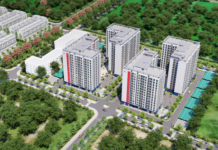
Over the past three years, housing supply has surged, but the supply structure remains imbalanced. Most new supply is concentrated in high-end, large-value projects catering to investment needs, including speculative activities.
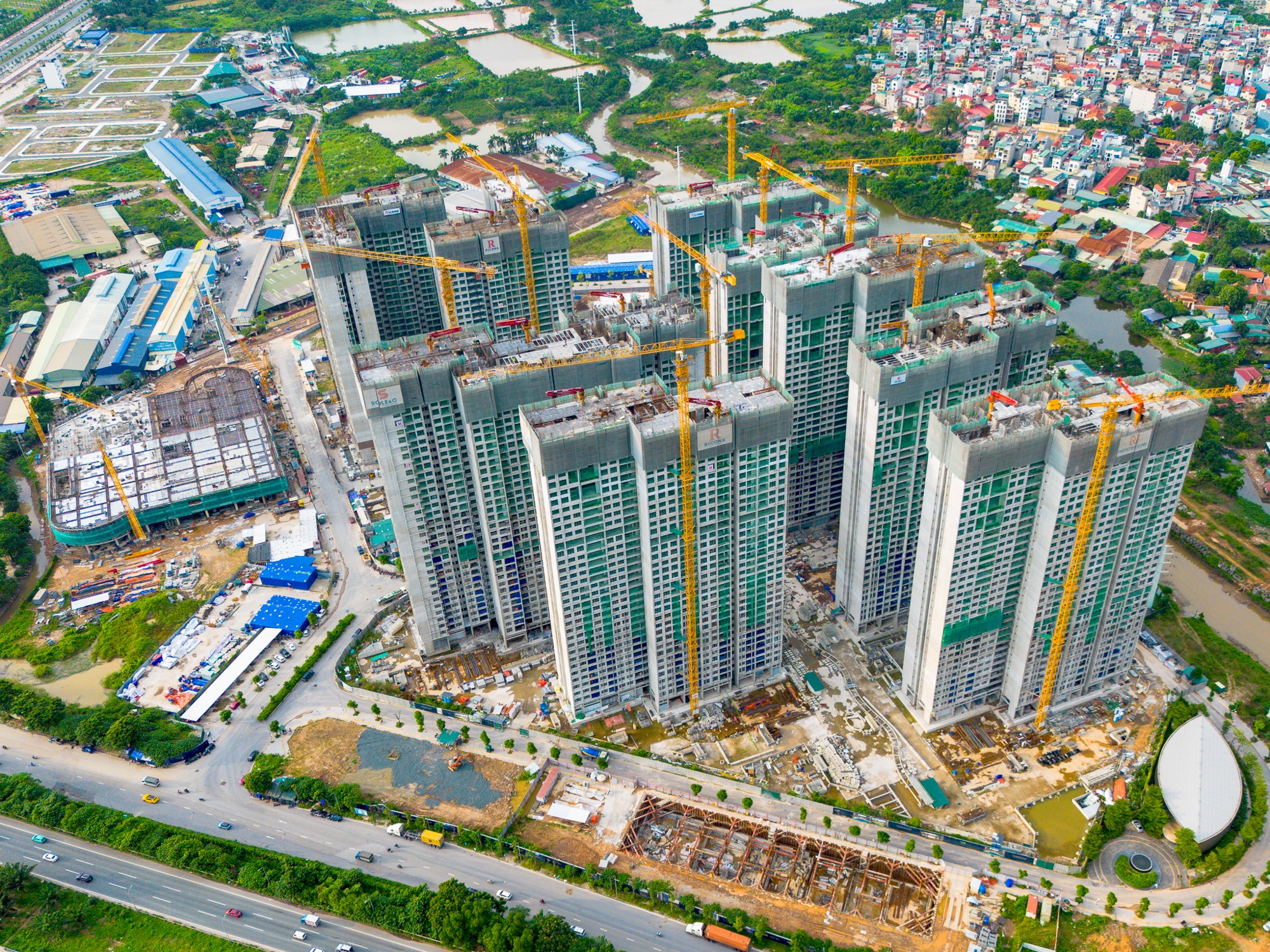
Housing supply has increased significantly, but the supply structure remains imbalanced.
Even in suburban areas, expected to offer affordable housing, actual prices are significantly higher than the average income of residents, only “relatively lower” compared to central areas. Meanwhile, the market’s largest demand lies in the affordable housing segment.
This supply-demand mismatch has driven up housing prices, particularly apartment prices in major cities, setting new price levels that far exceed actual income growth. This not only reduces housing accessibility for the majority but also increases the risk of a price bubble.
Assuming house prices and incomes remain constant, housing accessibility is declining sharply. For a two-bedroom urban apartment priced at around 5 billion VND, a high-income family earning 50 million VND per month would need about 8 years if they spent their entire income, and 25 years if adhering to the principle that housing costs should not exceed one-third of income.
Under this principle, even social housing, designed for low-income urban residents, is no longer “affordable,” with prices around 1.5 billion VND for a 60 sqm unit. Even households with the maximum income according to eligibility criteria—40 million VND per month—would need to save for about 10 years. In reality, this figure is much higher when using loan options.
Consequently, the gap between asset-owning and non-asset-owning groups is increasingly fixed, as real estate growth primarily enriches those who already own assets. Meanwhile, most people feel “poorer” despite economic growth, as housing costs rise faster than incomes. Those with initial financial and asset advantages tend to hold more real estate as an accumulation and investment tool, continuing to “get richer” due to land value increases, while those without housing face long-term rental risks, despite income improvement efforts.
Without timely solutions, the wealth gap will not only widen but also risk becoming “fixed” across generations, posing a significant challenge to social welfare goals, urbanization strategies, and national sustainable growth.
Solutions are needed to “brake” the rapid growth of house prices
Therefore, VARS believes that to ensure the real estate market continues to grow without risking itself or the economy, solutions are needed to “brake” the rapid growth of house prices.
The most critical solution is to increase the supply of affordably priced housing. When supply is sufficient, market prices will naturally adjust according to real supply-demand dynamics.
First, accelerate the completion of guiding documents for the new legal system, alongside enhancing local authorities’ enforcement capacity. Simultaneously, increase decentralization and local authority in policy adjustments, ensuring flexibility by region, time, and alignment with socio-economic development goals, as well as infrastructure and urban development levels.
Land clearance bottlenecks must also be addressed transparently and efficiently, reducing implementation times for businesses while safeguarding citizens’ rights. Reviewing the abolition of the 5.4%/year surcharge on late land use fee payments for cases where land allocation/lease decisions were made before August 1, 2024, but land prices were not yet determined, and promptly issuing clear, stable land use fee calculation methods will help reduce project development costs, thereby creating room for house price reductions.
Second, diversify capital channels for the real estate market to reduce reliance on bank credit. Restructure the corporate bond market to become an effective medium and long-term capital source. Simultaneously, promote the establishment of the National Housing Fund and develop Real Estate Investment Trusts (REITs).
Third, social housing and income-appropriate housing projects must be prioritized in planning and supported by incentive mechanisms. Urban development must be linked with transport infrastructure, particularly ring roads, metros, and highways, to expand urban space and reduce land price pressure in central areas. Concurrently, develop a professional rental market to reduce the mindset that “owning a home is necessary for a stable life.”
Fourth, research and establish criteria and standards for monitoring and early warning of real estate market dynamics, providing a basis for evaluating, classifying, and supervising market participants. Through this index system, management agencies can promptly detect “anomalies,” such as speculation, supply-demand imbalances, abnormal price increases, or localized liquidity declines, to implement appropriate intervention and adjustment measures. Establishing this proactive monitoring mechanism will help prevent risks and stabilize the market early on, rather than addressing issues only after they become apparent and cause uncontrollable chain reactions.
Additionally, accelerate the construction and completion of a unified, synchronized, and transparent national land, housing, and real estate market database. This will serve as critical information infrastructure for state management agencies, research organizations, and businesses to monitor, analyze, forecast, and manage the market promptly and accurately.
Creating an open, interconnected data system among ministries, sectors, and localities—including information on planning, transactions, values, legal status, and land use changes—will not only enhance monitoring and policy-making efficiency but also increase transparency, reduce risks, prevent speculation and price manipulation, and protect the legitimate rights of citizens and businesses.
Why You Should Never Borrow More Than 50% of Your Home’s Value

Real estate brokers caution: Borrowers should limit loans to a maximum of 50% of the property’s value, avoid over-reliance on debt, and prioritize projects from reputable developers with proven financial and legal credibility, especially for future-built homes, to mitigate risks effectively.
Capital Flow Shifts: Northern Investors’ Quest for Profitable Territories

In the context of the Northern market entering a phase of diminishing profit margins, investment capital is now significantly shifting towards the South, an area recognized for its substantial growth potential and long-term profitability. Savvy investors are increasingly focusing on regions with ample room for yield expansion.
Long Xuyên: The Untapped Niche Market for Savvy Investors

As prime real estate markets in major cities and coastal tourist hubs like Nha Trang, Quy Nhon, and Da Lat approach saturation, with soaring prices and shrinking profit margins, savvy investors are increasingly pivoting toward niche markets that offer genuine value and more sustainable growth potential.
How Much Should You Borrow from the Bank to Buy a House?

According to experts, leveraging financial tools to purchase a home is becoming increasingly popular. However, buyers should carefully consider their loan-to-value ratio to ensure financial security.
Vietnam’s Real Estate Market Enters a New Growth Cycle

Mr. MacGregor, Managing Director of Savills Vietnam, predicts that the market over the next decade will be shaped by three key drivers: a stable and transparent legal framework, robust FDI inflows, and infrastructure boom unlocking peripheral markets, thereby boosting affordable housing supply and logistics.