















Forecasting Market Volatility in Gold, Stocks, and Real Estate
Forecasting Market Volatility in Gold, Stocks, and Real Estate
Experts at the seminar highlighted Vietnam’s emergence as a “rising star” in Asia, boasting a nearly $500 billion economy, macroeconomic stability, and impressive growth momentum, despite global uncertainties stemming from geopolitical tensions and the US-China trade war.
The National Assembly has set a 2026 GDP target of 10% or higher, with per capita GDP reaching $5,400-$5,500. However, achieving this requires a 20% credit injection—double the economic growth rate. This poses risks of capital flowing into secondary markets like stocks and gold, potentially creating bubbles.
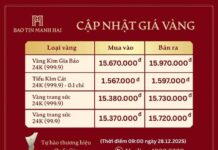
Dr. Nguyen Tri Hieu, Director of the Global Financial and Real Estate Market Research and Development Institute, predicts global gold prices could surge to $5,000/ounce next year due to persistent global instability and loose monetary policies. Trinh Ha from Exness Investment Bank agrees, noting the historically low gold-to-S&P 500 ratio, though gold may enter a 5-10 year correction cycle if stocks rebound strongly.

Event Overview
Regarding real estate, experts express concern over high prices (24-30 times income in Hanoi) and credit levels at 30% of GDP, similar to China in 2015-2016. While growth is expected in 2026, significant risks loom by year-end or in 2027. Government intervention is needed to lower prices and regulate future property sales.
The stock market is viewed positively, with capitalization exceeding 100% of GDP and high liquidity. Prospects are bright, fueled by potential Fed rate cuts in 2026 (projected 0.25% in December 2025), boosting US markets and global sentiment. Upgrading Vietnam’s market status from frontier to emerging could attract tens of billions in capital, but investors must choose portfolios wisely to avoid losses despite overall market gains.
Digital Assets and Credit Upgrades: New Capital Opportunities
The seminar also emphasized the rise of digital assets as a “new frontier,” following Resolution 05/2025/NQ-CP recognizing cryptocurrencies and enabling pilot projects to manage up to $200 billion in transactions, attracting international capital.
Nguyen Minh Hoang from the Vietnam Blockchain Association noted that Vietnam has approximately 17 million crypto asset accounts, peaking at 20 million. From July 2024 to June 2025, crypto transaction volumes surpassed $200 billion.
Resolution 05 pursues dual objectives, reflecting the government’s vision. Regulatory bodies aim to bring the market out of the gray area, enhancing investor protection and mitigating fraud and money laundering risks. Simultaneously, the resolution allows Vietnamese companies to issue new tokens—blockchain-based digital certificates—to attract foreign investment.
This innovative funding channel complements traditional methods like stock and bond issuances, connecting Vietnamese businesses with international capital swiftly and efficiently.
Giap Van Dai, CEO of Nami Foundation, remarked, “Blockchain fosters a freedom economy, where transparency and equality enable all participants—users, businesses, and regulators—to interact seamlessly. With trust ‘programmed,’ financial activities become more transparent, supply chains more verifiable, and corporate governance more sustainable and accountable.”
Experts also highlighted the significance of upgrading Vietnam’s credit rating to Investment Grade, potentially reducing capital costs by 1.5-2% and attracting $250-$280 billion annually for infrastructure from 2025 to 2030.
Vu Viet Linh from Maybank Investment Bank predicts Vietnam (currently BB+) could achieve this by 2028 (optimistically) or 2030 with institutional improvements (via Resolutions 66 and 68), strengthened banking operations, and enhanced foreign reserves. Lessons from Indonesia and the Philippines suggest stock markets could surge in the two years surrounding an upgrade, indicating Vietnam’s current market uptrend may be only halfway through its cycle.
Despite optimism, experts caution against risks from a US economic downturn, high inflation, USD volatility, and stablecoin fluctuations. Digital assets may experience sharp volatility, necessitating regulated platform trading to mitigate legal and security risks.
Diverse asset allocation strategies are recommended to balance yield and safety. Market fluctuations in stocks, gold, real estate, and digital assets underscore the need for informed portfolio adjustments aligned with risk tolerance. Experts advise investors to diversify and closely monitor Fed actions, the State Bank of Vietnam, and policy shifts.
Expert Analysis: Assessing the Current Appeal of Gold, Stocks, Real Estate, and Digital Assets as Investment Channels

On the morning of November 13th, the seminar “The Allure of Asset Classes,” organized by the Finance and Investment Newspaper, garnered significant attention from experts and investors alike.
Unlocking Genuine Value in Real Estate: The T&T Group Philosophy

Steadfast in its commitment to authentic real estate development, T&T Group has left an indelible mark through a series of high-quality projects, showcasing its strategic vision and robust capabilities in crafting enduring value.
Aqua City by Novaland: Over 2,400 Units Eligible for Transfer

The Department of Construction of Dong Nai Province has confirmed that the residential units within the Aqua City project fully comply with legal requirements, land regulations, technical infrastructure standards, and the adjusted 1/500 detailed planning. As of October 2025, nearly 2,400 properties at Novaland’s Aqua City are authorized for sales contract signing.
Unlocking the Secrets: Why East Saigon Apartments Consistently Boast High Liquidity and Buyer Benefits
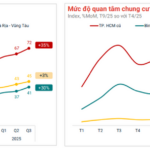
The strategic development of a financial hub, coupled with robust infrastructure, high-quality supply, and significant price appreciation potential, positions Eastern Ho Chi Minh City as the leading investment destination in the region, attracting substantial capital inflows.
The Era of Real Estate Flipping is Over

The real estate market holds immense potential and room for growth. However, experts note a shift towards sustainable development, moving away from short-term speculation to long-term investment strategies.