According to data from the Vietnam Association of Seafood Exporters and Producers (VASEP), Vietnam’s shrimp exports in October 2025 reached $498 million, a 26% increase compared to the same period last year. This marks one of the highest monthly export values recorded this year.
From the beginning of the year to October, Vietnam’s shrimp export turnover reached $3.9 billion, a 22% increase compared to the same period in 2024.
In terms of product structure, whiteleg shrimp continues to dominate with $2.5 billion, accounting for nearly 65% of the total 10-month export turnover. This product group has seen the highest growth rate due to its competitive pricing, large production volume, and alignment with consumer preferences in major markets.
Alongside whiteleg shrimp, black tiger shrimp remains a strategic export item for Vietnam, achieving $385 million in export turnover in the first 10 months of 2025, representing nearly 10% of the total. Black tiger shrimp exports have remained stable, primarily driven by sustained demand in Japan and the high-value segments in China, such as large-sized and eco-friendly shrimp.
Other shrimp categories reached $991 million, a significant increase year-on-year, reflecting the trend of businesses expanding into deep-processed and frozen products, optimizing factory efficiency, and targeting high-value market segments.

Regarding export markets, in the first 10 months of 2025, Vietnam’s shrimp exports saw growth across most major markets. Asia emerged as the strongest growth driver for Vietnam’s shrimp exports.
China and Hong Kong (China) were the standout performers, reaching $1.1 billion, a 64% increase year-on-year. In October alone, this market recorded $140 million, maintaining its leading position both monthly and cumulatively.
Notably, Taiwan (China) experienced robust growth in October, with exports reaching $12 million, an almost 80% increase compared to October 2024. This highlights the expansion potential in the Asia-Pacific region.
This growth indicates improving regional demand due to economic recovery and Vietnam’s geographical advantage. It also reflects businesses’ market diversification strategies amid U.S. tariff challenges.
The CPTPP bloc imported over $1 billion worth of Vietnamese shrimp in 10 months, a 33% increase year-on-year. October alone saw $121 million in exports. This bloc provides stability for Vietnamese shrimp exporters, thanks to consistent demand in Japan, Canada, and Australia.
The U.S. market achieved $702 million in 10 months, a 9% increase year-on-year, with October recording $114 million. The EU market imported $53 million in October and $487 million in the first 10 months of 2025, a 20% increase year-on-year.
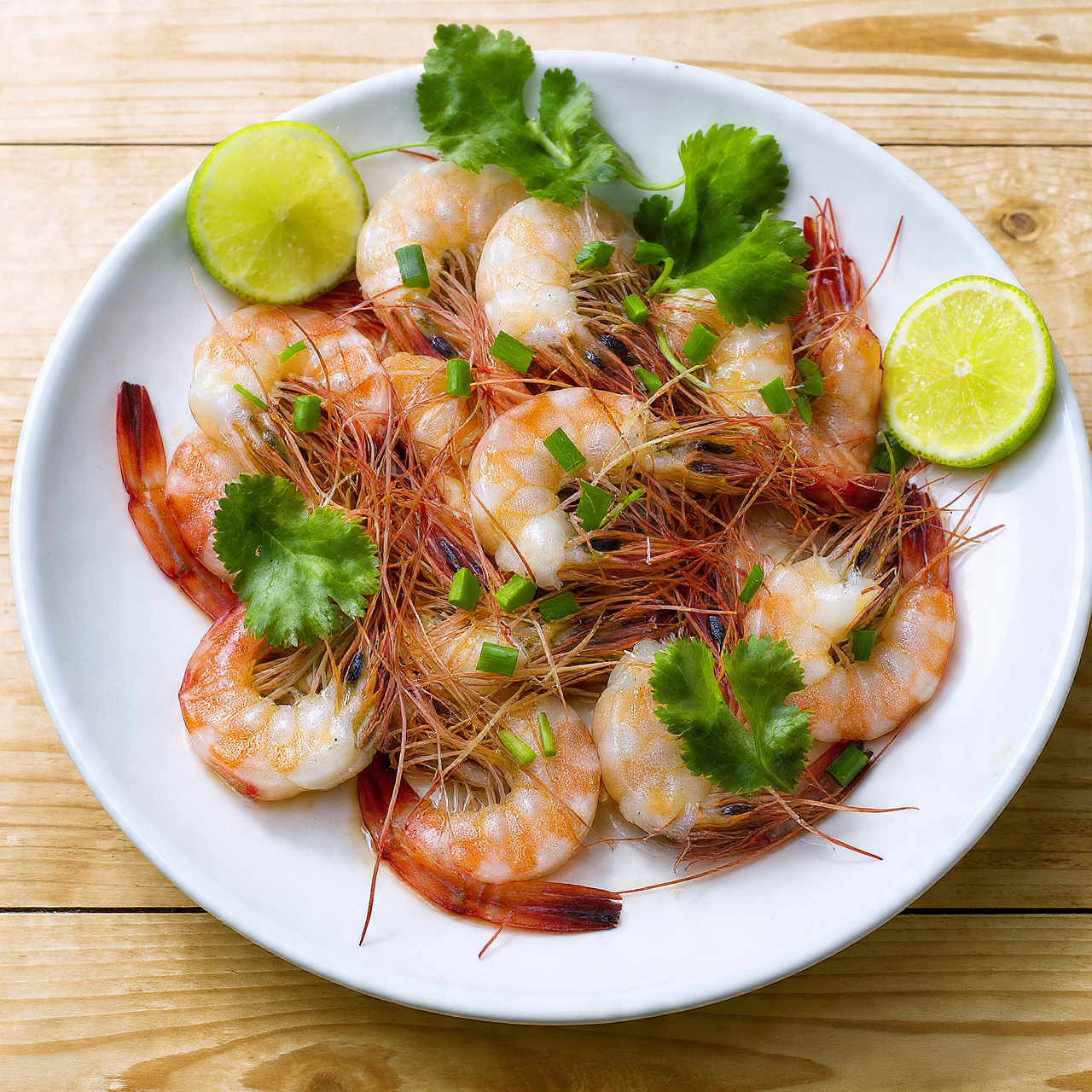
AI-generated illustration
Moving into the final quarter, shrimp exports are expected to slow down. The primary reasons include pressure from tariffs and trade defense measures imposed by the U.S., Vietnam’s second-largest export market. These factors are increasing production costs, reducing competitiveness, and hindering new contract signings.
According to VASEP, if businesses continue to optimize high-value products, maintain quality, and diversify markets, the slowdown’s impact can be mitigated. However, the overall trend suggests that Q4 2025 growth will be slower or decline compared to the mid-year months.
The U.S. and China Race to Tap Vietnam’s $4 Billion Rare Earth Treasure: Leveraging World-Leading Processing Technology

In October alone, this product generated nearly $500 million in revenue.
Vietnam’s Hidden Goldmine: A Billion-Dollar Industry China is Actively Pursuing, While the World Farms, Only Vietnam Creates

This Vietnamese product has dominated the global export market for over two decades, commanding an impressive 90% market share.
Vietnam’s Agricultural Exports to the U.S. Poised for Growth with Reciprocal Tax Exemption

The U.S. decision to waive retaliatory tariffs on select products, including coffee, tea, tropical fruits, and spices, presents a significant opportunity for Vietnamese agricultural exports. This move is poised to substantially boost the presence of Vietnamese farm produce in the American market.
Vietnam’s Underwater ‘Treasure’ Outshines Catfish and Tuna: Exports Surge Over 300% as Competitors Face U.S. Tariffs Exceeding 50%
This product has generated over $57 million in revenue since the beginning of the year.
Vietnam Among Emerging Markets Resilient to US Tariffs
A recent study by risk consultancy Verisk Maplecroft reveals that major emerging economies, including China, Brazil, and India, are well-positioned to weather U.S. tariff pressures with relative ease.