On November 30, Vietnam Airlines announced that its entire fleet of Airbus A320 and A321 aircraft had successfully completed the required software updates as mandated by Airbus and the Vietnam Civil Aviation Authority. The updates were finalized six hours and fifty-nine minutes ahead of the deadline on November 30, 2025, at 23:59 UTC (November 29, 23:59 Vietnam time). Following the update, all aircraft resumed normal operations.
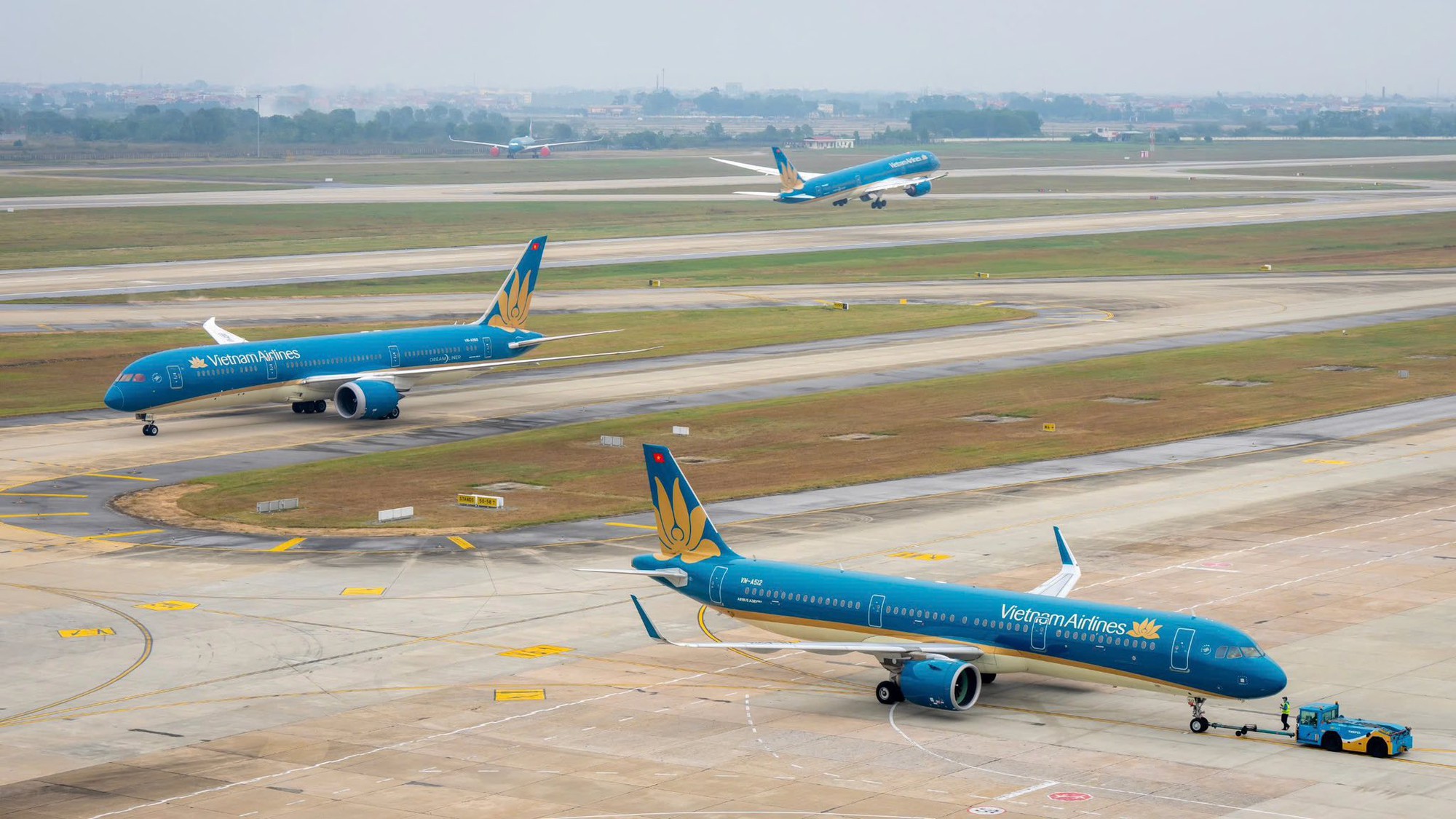
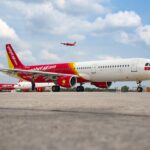
Vietnam Airlines aircraft at Noi Bai International Airport (Hanoi)
Airbus’s technical directive was issued to ensure maximum safety for global operations. Upon receiving the notification, Vietnam Airlines promptly activated its technical procedures and coordinated efforts across its three main technical centers: Noi Bai, Da Nang, and Tan Son Nhat. The process was executed swiftly with full support from the manufacturer, including tools, software, and guidelines.
Close collaboration between technical, operational, and flight management teams enabled Vietnam Airlines to complete the requirements ahead of schedule, minimizing disruptions to flight schedules. On November 29 and 30, the airline’s operations proceeded smoothly, fully complying with the Vietnam Civil Aviation Authority’s safety standards.
Previously, at 23:00 on November 28 (Vietnam time), Airbus issued an urgent Alert Operator Transmission (AOT), and the European Union Aviation Safety Agency (EASA) released Emergency Airworthiness Directive (EAD) No. 2025-0268-E. This directive required airlines operating Airbus-manufactured aircraft, including A319, A320, and A321 models, to replace equipment or update the ELAC (Elevator and Aileron Computer) software. The update was to be completed before the first flight on November 30, 2025, at 06:59 Vietnam time.
In Vietnam, 81 out of 169 A320 and A321 aircraft were affected, with Vietjet accounting for 69 of these. On the night of November 28, Vietnamese airlines proactively initiated technical procedures, working overnight to complete the software updates. The process, taking approximately one hour per aircraft, caused minimal disruption to flight schedules.
6,000 Airbus Aircraft Worldwide Affected
European aerospace giant Airbus issued an urgent safety update on November 28 after identifying a potential threat to the safe operation of approximately 6,000 A320 aircraft worldwide. The issue was linked to solar radiation during geomagnetic storms, which could compromise the aircraft’s software and impair pilots’ ability to provide accurate positioning information.
“Analysis of a recent event involving an A320 Family aircraft revealed that strong solar radiation, occurring during geomagnetic storms, could corrupt critical flight control data,” stated Airbus in a notification from its headquarters in Toulouse.
The issue was reportedly discovered following an emergency landing of a JetBlue A320 last month. The aircraft, flying at an altitude of over 10,600 meters, suddenly dropped to 7,600 meters, injuring 15 passengers. The flight, originally from New Jersey to Florida, was diverted for an emergency landing.
Galaxy Tab A11+ Now Available for Purchase, Starting at VND 6.69 Million

Samsung unveils the Galaxy Tab A11+, starting at just $299, designed for users seeking a reliable device that seamlessly handles studying, light work, and multimedia entertainment for years to come.
Vietnam Airlines Deputy Planning Director: We Do Not Squeeze Out Private Enterprises

Vietnam Airlines is strategically focusing on two key customer segments. The first targets those seeking a full-service experience, while the second maintains its dual-brand approach by operating a low-cost carrier (LCC) to cater to budget-conscious travelers who may not afford full-service options.
Vietjet Air Announces Exciting News for Millions of Passengers
Officially from November 25, 2025.
State-Owned Enterprises Advocate for ‘Special Mechanisms’ to Lead and Pioneer

State-owned enterprises such as Vietnam Airlines and Mobifone have proposed the implementation of tailored, flexible, and specialized mechanisms for investment approval. These measures aim to empower these companies to fulfill their role as leading, pioneering entities across various sectors.
Toyota’s Latest Move: Buyers Set to Escape the ‘Outdated New Car’ Dilemma

Toyota Motor is extending the sales cycle of its core vehicle models from the current 7 years to 9 years, focusing on electrification and sustaining product value.