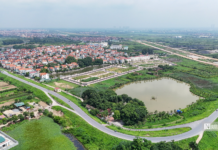









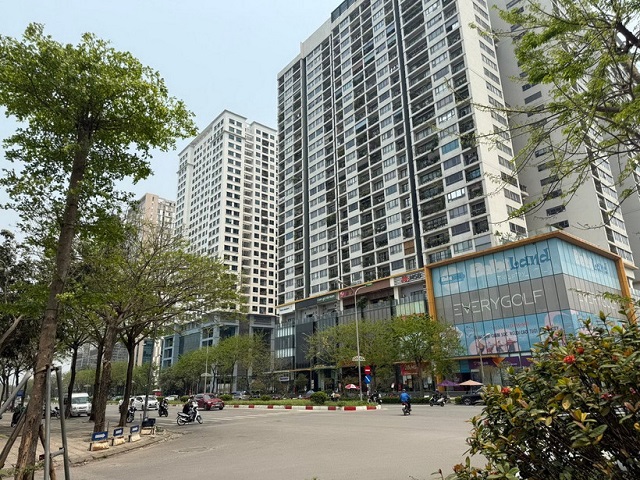
Illustrative image (Vietnam+)
|
The Hanoi People’s Council has recently approved a new land price list, set to take effect from January 1, 2026. This move aims to enhance transparency in land management and align land prices more closely with market rates, as mandated by the 2024 Land Law.
However, the significant increase in land prices in suburban areas is creating a “double burden” for residents and real estate businesses. This shift makes affordable housing even more unattainable for low-income earners and slows the market’s recovery.
Rising Costs, Fading Homeownership Dreams
Generally, residents support adjusting land prices to reflect market values, as it ensures fair compensation during land clearance, reduces complaints, and expedites public investment projects.
Yet, the substantial price hike, especially in suburban districts, not only alters land-related financial obligations but also broadly impacts livelihoods, production, the real estate market, and housing accessibility for various groups.
Mr. Dang Van Nghiem, from Dong Anh district (Hanoi), shared: “The land price increase means higher taxes, fees, and charges for land registration, subdivision, or transfer. Now, if my family wants to divide land for our children or handle inheritance, the additional costs will be significant.”
With the new prices rising 2-6 times compared to the old list, many suburban residents struggle to meet their financial obligations.
Mr. Dao Khac Trong, from Soc Son district (Hanoi), noted, “I estimated the land use fee at around 80 million VND, but it has skyrocketed to over 400 million VND with the new prices.”
Many residents in districts like Hoai Duc, Dong Anh, Thanh Oai, Dan Phuong, Thanh Tri, Thuong Tin, and Hong Van also expressed shock at the hundreds of millions in fees required for land procedures.
Residents urge the city to consider reducing registration fees, waiving certain charges for land certificates, or extending payment deadlines for low-income households, workers, and young families in suburban areas. This would help alleviate the “cost shock” associated with land procedures.
According to legal expert Nghiem Thi Hang from Vu Linh Law Firm (Hanoi Bar Association), the primary concern is the increased financial burden for land procedures. The sharp rise in land prices, particularly in suburban areas (expected to increase by 25-26%, with some locations nearing 30% compared to current rates), worries many about soaring costs for procedures like land-use purpose changes, land registration, or transfers.
If land prices rise, the land use fees, taxes, and charges residents must pay will also increase, directly affecting this large group.
Additionally, suburban farming households are concerned that higher land prices could lead to increased non-agricultural land use taxes, registration fees, or land-use conversion costs. These expenses directly impact their ability to sustain production, especially for small-scale farmers—as noted by legal expert Nghiem Thi Hang.
Cost Overruns from the Start
While the new price list is seen as necessary to align land prices with market rates, it also raises concerns about financial burdens, potential real estate price hikes, and pressure on businesses.
Explaining the “double burden,” real estate expert Pham Gia Hiep stated that real estate companies face higher investment costs (burden 1) while their capital recovery and sales potential decline (burden 2), leading to greater financial and operational risks.
This decision brings significant worries, placing them in a challenging situation, hence the term “double burden.” For residents, especially low- and middle-income earners, the dream of owning a home for a stable life becomes increasingly distant as the new land prices take effect.
Rising housing prices further reduce accessibility for most residents, particularly middle- and low-income groups. This could lead to higher inventory levels and sales challenges for businesses.
Cash flow stagnation and increased bank loan pressures slow the recovery of Hanoi’s real estate market—shared Mr. Pham Quang Hiep.
Echoing this view, Ms. Nguyen Ngoc Bich, Director of Nam Binh Real Estate Company, noted that the most immediate burden is the surge in input costs for all real estate projects in the city.
Specifically, land clearance compensation costs have risen sharply. The land price list serves as the legal basis for determining compensation when the state acquires land for commercial projects.
As land prices increase, so does compensation, significantly raising initial investment capital. This not only increases financial strain but also risks prolonging land clearance if compensation remains unsatisfactory, severely affecting project timelines.
Moreover, land use fees and land rent also rise with the new prices. These are financial obligations businesses must fulfill when allocated land or changing land use purposes for projects.
These increased costs directly raise product prices, reducing expected profit margins for developers and posing significant financial balancing challenges, especially for commercial housing and urban development projects.
Hanoi’s new land price list is a crucial step toward market transparency and alignment with actual prices. However, the substantial increases in suburban areas have raised concerns about financial burdens for residents and businesses.
To ensure policy effectiveness, a reasonable implementation timeline is needed, along with support measures for vulnerable groups, small businesses, and agricultural producers. Enhancing transparency and community dialogue is essential to minimize negative impacts and foster social consensus./.
Nam Giang
– 14:04 01/12/2025
Unmet Demand: The Vast Opportunity in Vietnam’s Senior Care Real Estate Market
The current elderly care system is still in its infancy, with fewer than 30% of communes and wards offering support models for seniors. Nationwide, the number of specialized care centers remains under 100, highlighting significant gaps in meeting the growing needs of the aging population.
Record-Breaking Revenue: Hanoi Surpasses Golden Era with Over 120 Trillion VND in Collections

This marks the highest record ever achieved by Hanoi in this field.
T&T Homes Unveils Its First Sales Gallery in Ho Chi Minh City

On November 28, 2025, T&T Homes, the esteemed real estate brand under T&T Group, proudly unveiled its first Sales Gallery in Ho Chi Minh City. This milestone signifies a new chapter in the brand’s expansion into the Southern market, while reinforcing its commitment to delivering standardized consulting services and elevating customer experiences through cutting-edge technology and advanced virtual reality simulations.
Luxury Condos in Ho Chi Minh City Hit Staggering 450 Million VND/m² Mark

Despite luxury and high-end apartment projects in Ho Chi Minh City reaching staggering prices of 120-200 million VND per square meter, with some even hitting 450 million VND, interest has surged by 168% in the past quarter.
Stunning Home Prices: Projects Surge by 100 Million to 500 Million VND/m² in Just a Few Years

HUBA Vice President Phan Đình Tuệ highlights the staggering surge in housing prices, noting that many condominium projects once priced at 100 million VND per square meter now command up to 500 million VND per square meter.