













Hàng Mã Street (formerly part of Hàng Mã Ward, Hoàn Kiếm District, now under Hoàn Kiếm Ward) stretches approximately 339 meters, located about 1 kilometer south of Đồng Xuân Market and 700 meters north of Hoan Kiem Lake. It stands as one of Hanoi’s bustling ancient commercial streets, renowned for traditional goods such as paper offerings, paper crafts, and children’s toys.
Ahead of festivals, numerous shops along the street transform with vibrant, eye-catching decorations—from Mid-Autumn lanterns and Christmas trees to the pervasive red hues of Lunar New Year. The radiant lights from lantern shops, festive decor, and celebratory colors create a captivating scene, drawing both tourists and locals eager to capture the moment.
As evening falls and the street glows with brilliance, visitor numbers surge, cementing Hàng Mã as a premier shopping and photo destination in the capital.
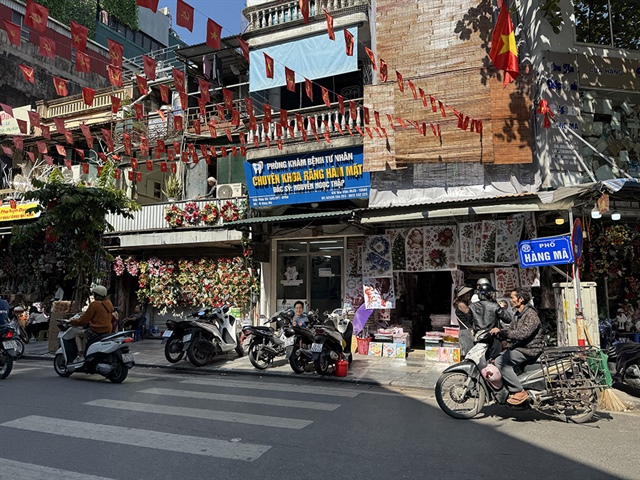
Hàng Mã Street, a historic commercial hub in Hanoi. Photo: D.A |
Surveys reveal that shops on Hàng Mã Street typify the Old Quarter’s charm with their compact size, narrow layouts, and close proximity. Most spaces are maximized for display, often extending goods onto the sidewalk to attract passersby.
The high density of businesses keeps the area perpetually lively, underscoring the “prime real estate” nature of central Hanoi. Rental and sales listings for properties on Hàng Mã Street remain scarce.
Small shops ranging from 20–35 square meters typically rent for 25–45 million VND/month, with rates climbing 30–50% during peak festival seasons. Medium-sized spaces of 50–80 square meters fetch 50–80 million VND/month, while larger properties over 100 square meters command 100–180 million VND/month or more.
In an interview, Mr. Hoàng Kim (from Vua mặt phố channel) noted that Hàng Mã’s street-front properties average around 800 million VND/square meter (excluding asset value). Prices vary based on frontage and feng shui considerations.
Prices have risen; two months ago, the average was 770 million VND/square meter. Some 5–6 story buildings with elevators and wide frontages now reach 1–1.2 billion VND/square meter.
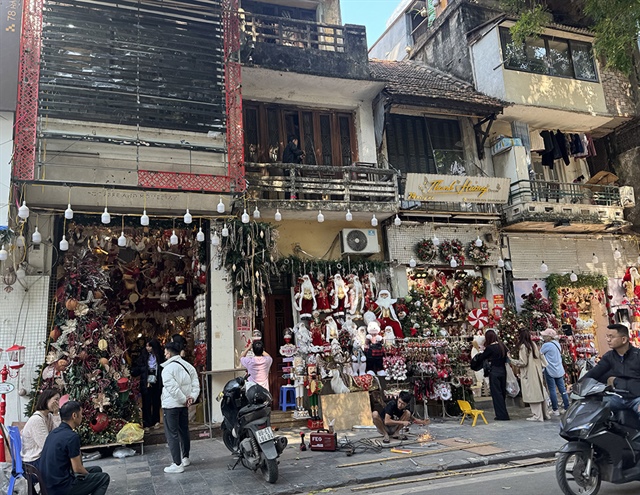 Christmas season trading on Hàng Mã Street. Photo: D.A |
A 4-story, 45-square-meter property on Hàng Mã Street is listed at 42 billion VND (over 900 million VND/square meter). Its prime location and high commercial density make it ideal for various business ventures or leasing opportunities.
Homes in alleys, typically accessed via 3–5 meter lanes, are priced lower than street-front properties but remain expensive relative to the broader market, ranging from 150–500 million VND/square meter.
Despite steep property prices, Hàng Mã remains a pivotal commercial hub. High profits from seasonal goods, coupled with year-round tourist appeal, sustain its attractive investment returns.
Shops here see revenue triple during Mid-Autumn, Christmas, and Lunar New Year. Even small 20–30 square meter kiosks achieve significant sales during peak seasons. Wealthy investors often acquire central properties like those on Hàng Mã to maximize returns and ensure steady cash flow.
Urban renewal efforts are underway on Hàng Mã Street. Overhanging canopies and decorative encroachments have been removed, restoring clean, pedestrian-friendly sidewalks. Experts predict continued growth in the Old Quarter’s real estate market, including Hàng Mã.
Duy Anh
– 06:00 01/12/2025
Navigating the Dual Burden: Implications of New Land Pricing Policies Taking Effect
The newly released land price list for 2026 has sparked concerns over soaring costs, potentially impacting residents, businesses, and Hanoi’s real estate market.
Record-Breaking Revenue: Hanoi Surpasses Golden Era with Over 120 Trillion VND in Collections

This marks the highest record ever achieved by Hanoi in this field.
Proposed Abolition of Market-Based Land Valuation Starting 2026
“Implementing the Ministry of Finance’s proposed land price table guidelines will streamline the process, allowing for swift and efficient adjustments using the K coefficient. This approach eliminates restrictions on the frequency of adjustments when resolving land use fees,” stated Dr. Pham Viet Thuan, Director of the IEEr Institute.
Hanoi Allocates Infrastructure Budget for Standalone Social Housing Projects

Continuing the agenda of the 28th session, on the morning of November 27th, the Hanoi People’s Council delegates voted to adopt a resolution outlining the use of budget funds for investing in the construction of essential technical infrastructure frameworks and social infrastructure within independent social housing projects across Hanoi.
Hanoi Investors Shift Focus to Ho Chi Minh City’s Real Estate Market
Why are Hanoi investors increasingly turning to real estate in Southern provinces, particularly Ho Chi Minh City?