

















The Ho Chi Minh City Department of Construction has submitted feedback on the draft technical standards for apartment buildings, addressing the growing demand for electric vehicle charging stations and the current regulatory gaps.
According to the department, apartment designs currently follow QCVN 04:2021/BXD, which lacks a clear definition of electric vehicle charging stations. Critical aspects such as basement placement, ventilation and smoke extraction requirements, safety distances from gasoline-powered vehicles, the number of charging units, and wiring standards remain unspecified.
The standards only broadly mention parking areas without detailing charging station locations or quantities. Additionally, there are no specific fire safety regulations for charging equipment and electric vehicles, particularly lithium-ion batteries in enclosed basements. This creates challenges for authorities during design reviews, project acceptance, and approval of additional charging units in existing buildings.
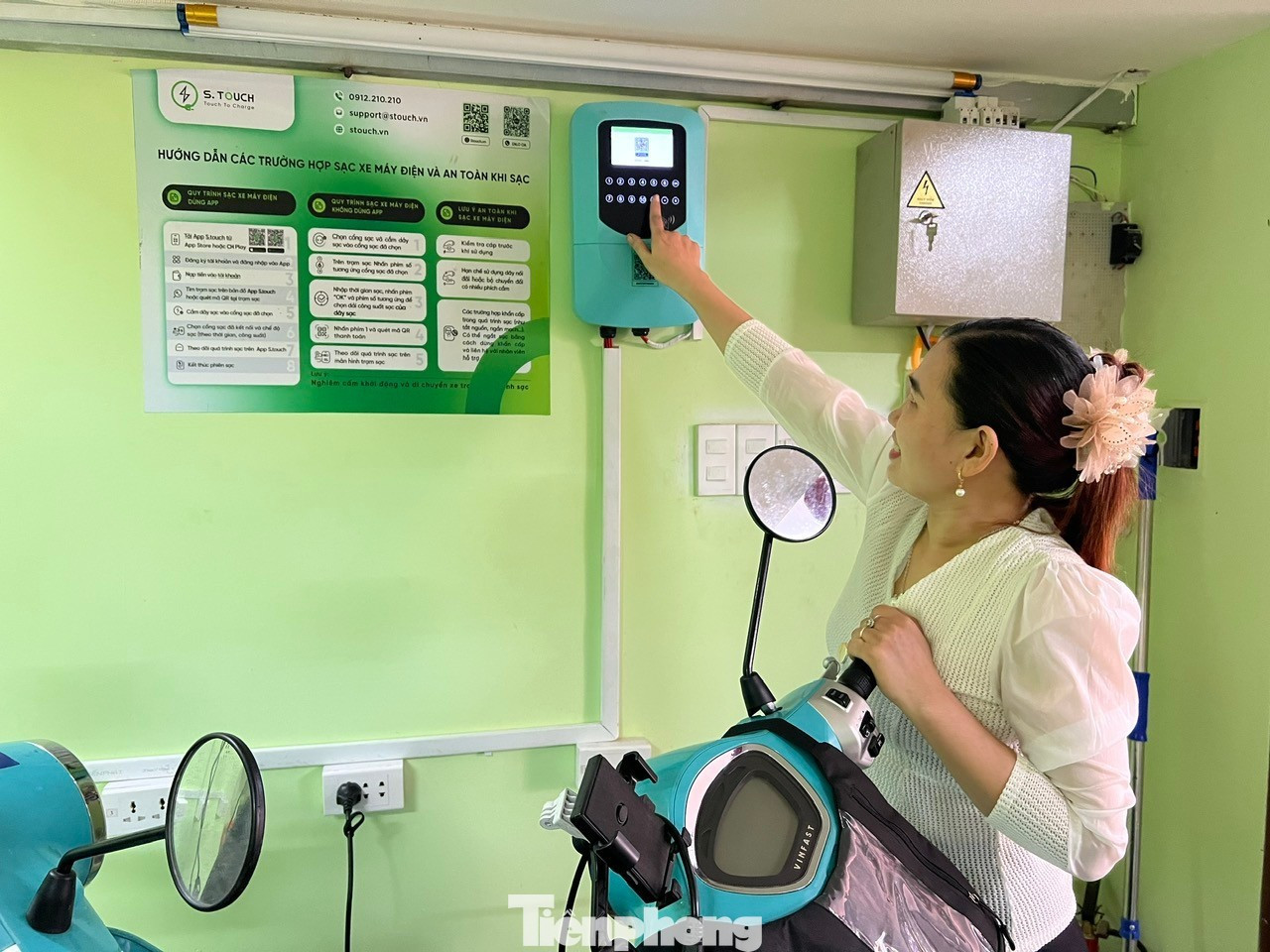
An electric vehicle charging point. Photo: Uyên Phương
To strengthen the legal framework, Ho Chi Minh City recommends that the Ministry of Construction adopt international standards such as IEC 61851, IEC 62196, and NFPA 70, which are widely used globally. The city also calls for specific standards for charging stations in all building types, rather than the current general parking area guidelines.
The Department of Construction suggests adding provisions to apartment management regulations regarding repairs, modifications, and design changes—including charging station installations—to minimize disputes between developers, management, and residents.
Beyond apartment buildings, Ho Chi Minh City urges the Ministry of Construction to provide detailed guidance on constructing or adding charging stations in other structures, considering land use, planning metrics, and technical safety requirements.
Legally, the department proposes amending the Construction Law to exempt charging stations from permits if they are treated as internal equipment that does not affect structural integrity or functionality, while fully complying with fire safety and environmental regulations.
Under the proposal, Ho Chi Minh City will establish low-emission zones in the central area (bounded by 15 bridges and 20 major roads) and in Cần Giờ and Côn Đảo districts.
These zones will restrict or ban high-emission vehicles, particularly heavy diesel trucks, cars not meeting Emission Standard Level 4, and motorcycles not meeting Emission Standard Level 2.
Conversely, vehicles using clean, green, and environmentally friendly energy, along with official, priority, or specially permitted vehicles, will be allowed in these zones.
Starting in 2026, the city plans to restrict ride-hailing and commercial vehicles using non-compliant gasoline or diesel fuels in the central low-emission zone. A pilot program will also limit substandard emission vehicles on Rừng Sác Road (from Bình Khánh ferry to Duyên Hải Road).
From 2027 to 2030, the city will conduct widespread motorcycle emission inspections. This will lead to restrictions on cars below Emission Standard Level 4 and motorcycles below Emission Standard Level 2 in the city center, with the restricted area expanding to include Bình Khánh, An Thới Đông, Cần Giờ, and Thạnh An communes.
Hanoi Offers Up to VND 5 Million Subsidy for Electric Motorbike Switch, Free Public Transport Fares Included

Hanoi is set to launch an unprecedented, large-scale support package to encourage citizens to transition to electric motorbikes.
VinFast Electric Vehicle Charging Stations Proliferate Across Ho Chi Minh City’s Core Areas
Ho Chi Minh City aims to deploy 750 to 1,338 charging stations across parking lots, shopping centers, and major transportation hubs over the next five years.
Leading Automotive Brand Expands Electric Vehicle Charging Network in Vietnam
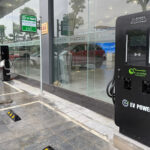
Following Ford and Geely’s recent initiatives, Omoda & Jaecoo has become the latest automotive manufacturer to install charging stations at their dealerships, catering to customers purchasing electric vehicles in Vietnam.
Western Bus Station Considers Investment in Electric Vehicle Charging Station
Western Bus Station Joint Stock Company (HNX: WCS) is set to seek shareholder approval for expanding its business operations, including venturing into “investment and operation of electric vehicle charging stations.”
MWG Leadership Visits VinFast Factory, Prepares to Transform Retail Chain into Thousands of EV Charging and Battery Swapping Stations

“The collaboration between VinFast, V-GREEN, and Thế Giới Di Động marks a significant milestone in building a comprehensive electric vehicle ecosystem, driving the transition to green energy, and fostering the development of smart infrastructure for Vietnam’s future,” stated MWG’s leadership.