Ho Chi Minh City Accelerates Phu My 2 Bridge Project
Ho Chi Minh City is intensifying efforts to expedite key infrastructure projects, with a particular focus on the Phu My 2 Bridge. According to the latest directive from Vice Chairman of the City People’s Committee, Mr. Bui Xuan Cuong, the Department of Finance will collaborate closely with Masterise Group to streamline processes and shorten investment preparation time. The ultimate goal is to ensure the project is ready for groundbreaking by January 15, 2026.
This date holds significant political importance, as it coincides with the 14th National Congress of the Communist Party of Vietnam, underscoring the city’s commitment to developing its Group A transportation network.
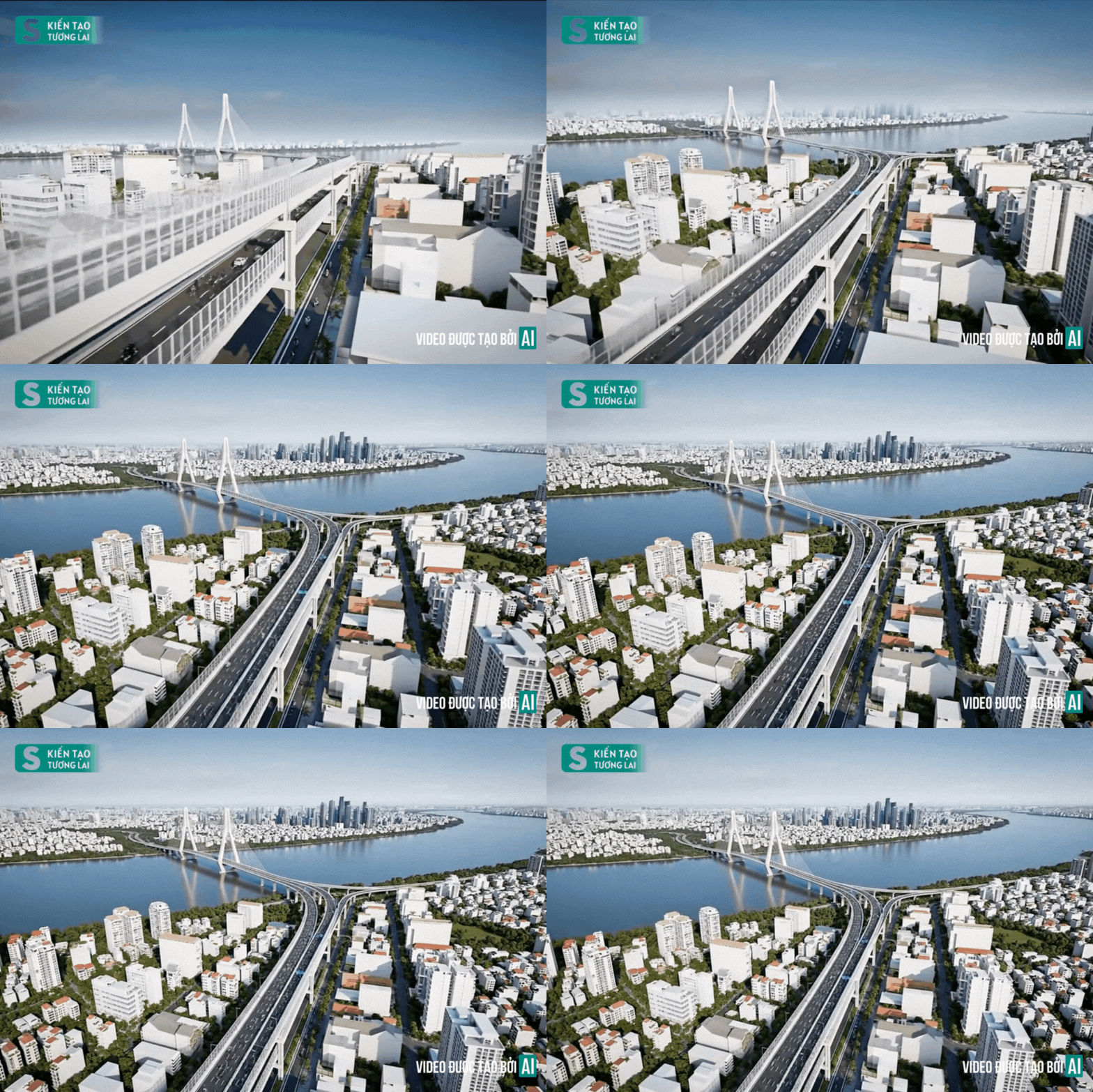
AI-generated illustration of the two-tier bridge and road system in Ho Chi Minh City, based on official designs from the city’s Department of Construction.
Previously, the Ho Chi Minh City People’s Committee Office announced conclusions from a meeting between city leaders and Dong Nai Province officials regarding infrastructure planning and development connecting the two regions. The key agreement was the implementation plan for the Phu My 2 Bridge, a strategic component of the Southeast Region’s transportation network.
Under the newly approved plan, Ho Chi Minh City and Dong Nai Province will divide the project into two independent components to facilitate investment preparation and execution. This approach is expected to optimize resources, expedite land clearance, and ensure project timelines are met.
Ho Chi Minh City will oversee the Phu My 2 Bridge component, including the main bridge, access roads, and all land clearance within its jurisdiction. The project will be executed through a public-private partnership (PPP) model, suitable for its large-scale investment and complex technical requirements.
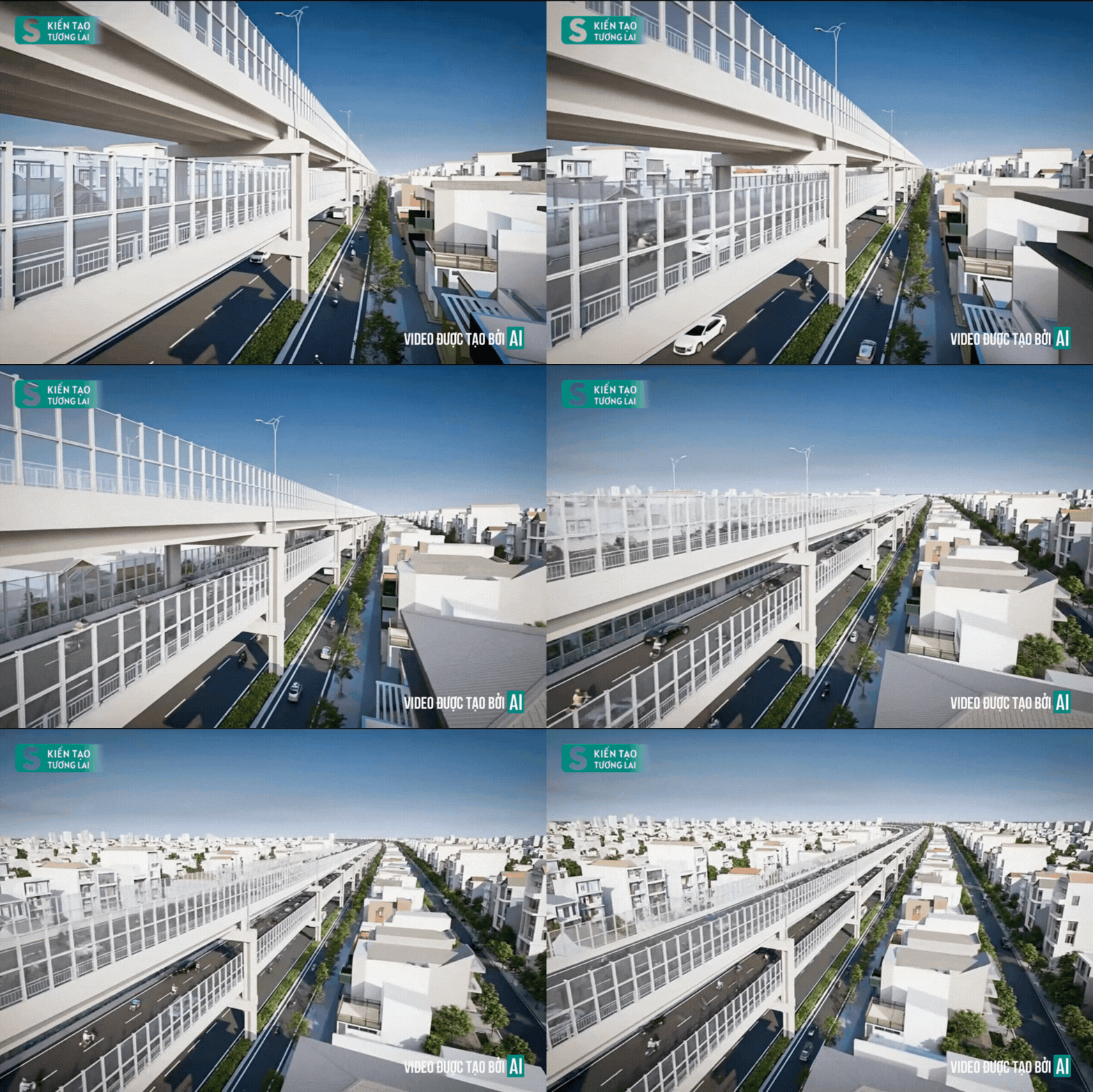
AI-generated illustration of the two-tier bridge and road system in Ho Chi Minh City, based on official designs from the city’s Department of Construction.
Meanwhile, Dong Nai Province will manage the road connection from Nguyen Ai Quoc Street to the Phu My 2 Bridge, including road construction and land clearance within its territory. The investment model for this component will be determined by Dong Nai Province based on its financial capabilities and project feasibility.
Dividing the project into two independent components is expected to enhance both regions’ autonomy in preparation and flexibility during implementation. Once completed, the Phu My 2 Bridge will enhance regional connectivity, alleviate congestion on existing bridges, and drive urban and industrial development in eastern Ho Chi Minh City and Bien Hoa (Dong Nai).
A Unique Two-Tier Bridge and Road System for Ho Chi Minh City and Vietnam
The Phu My 2 Bridge project spans approximately 16.7 km, featuring six motor vehicle lanes and two lanes for non-motorized traffic. The bridge section crossing the Dong Nai River is over 3 km long. The route begins at Nguyen Huu Tho Street (former District 7), passes through Hoang Quoc Viet and Dao Tri, connects to the Lien Cang axis, and ends at Road 25C (former Nhon Trach District, Dong Nai).
The project’s highlight is its two-tier bridge and road design, a first for Ho Chi Minh City. This innovative solution maximizes urban space, reduces land clearance challenges, and effectively resolves long-standing bottlenecks along the Hoang Quoc Viet axis.
The project is divided into three components (excluding land clearance costs):
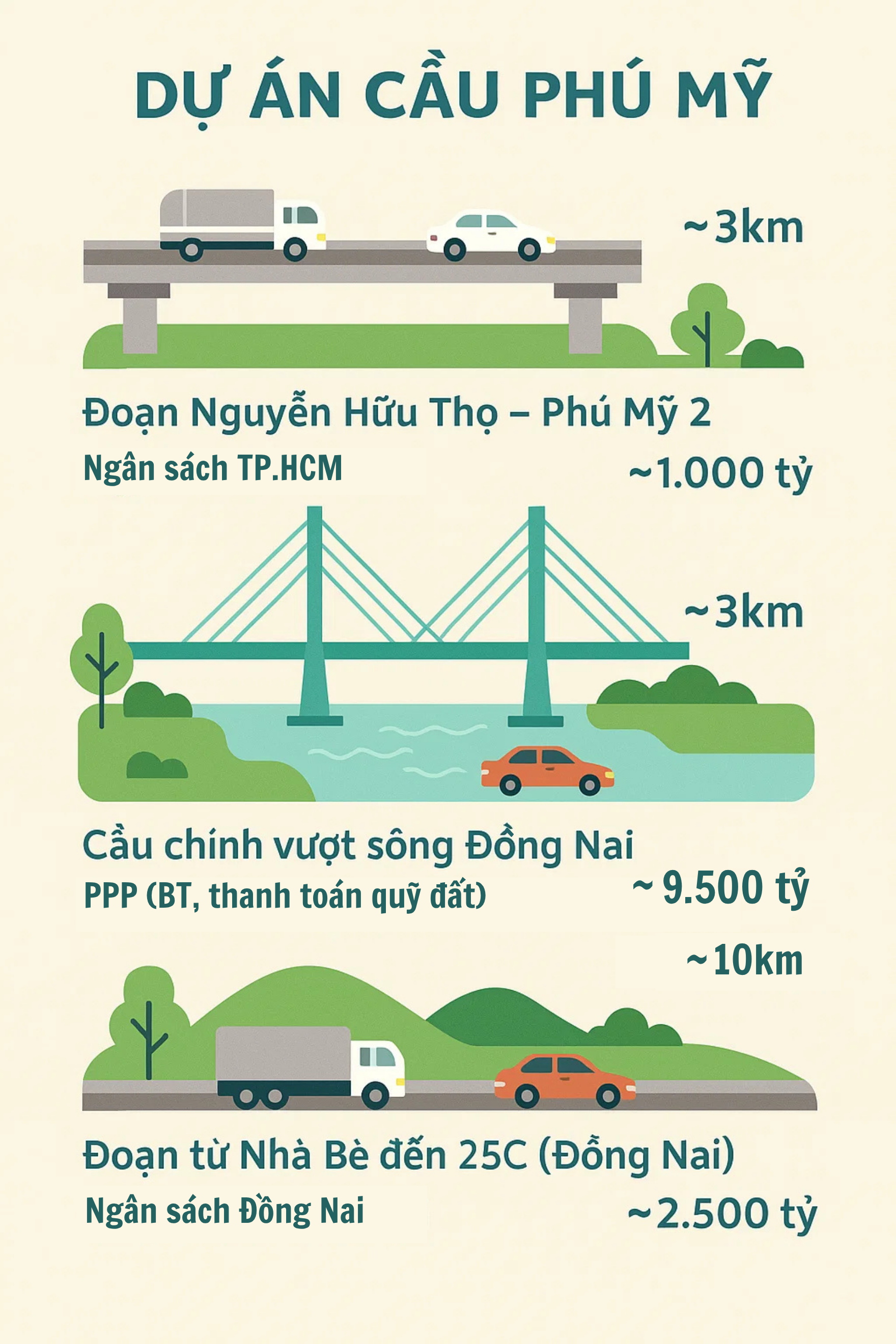
The Phu My 2 Bridge is a critical link connecting southern Ho Chi Minh City, Nhon Trach, and Long Thanh Airport, offering a seamless alternative to the overburdened Phu My 1 Bridge. This route reduces travel time from Phu My Hung to Long Thanh Airport to just 30–35 minutes, enhancing connectivity between urban areas, seaports, and airports.
As Ho Chi Minh City’s first two-tier road project, Phu My 2 sets a precedent for multi-level transportation development, similar to major cities like Bangkok, Seoul, and Singapore.
This bridge and road system will catalyze growth along the Nguyen Huu Tho – Hoang Quoc Viet – Nhon Trach corridor, fostering new commercial centers, logistics hubs, and residential areas. Nhon Trach will become more accessible to Ho Chi Minh City, reducing travel time and psychological distance, and attracting more investors.
The Phu My 2 Bridge will complete the transport corridor linking Hiep Phuoc Port, Nhon Trach logistics, and Long Thanh Airport, creating a multimodal transport axis from seaports to highways and airports. This will lower logistics costs, enhance competitiveness, and attract more FDI to industrial zones along the route.
The project will shift urban development from the city center to the south and southeast. Alongside the $16 billion Long Thanh Airport project, it will strengthen the satellite city model, reduce pressure on the inner city, and establish new growth poles beyond the existing core.
Illuminating the Night: How These Companies Brighten Ho Chi Minh City’s Skyline While Contributing Billions in Taxes

At night, Ho Chi Minh City sparkles with a dazzling display of lights, transforming into a breathtaking spectacle. Beyond its architectural marvels, this luminous landscape symbolizes the thriving presence of major corporations, contributing trillions to the budget and providing livelihoods for thousands of workers.
Crowdsourcing Logistics: Empowering Everyone to Build Infrastructure and Grow Businesses with Viettel Post
Viettel Post’s CEO, Phung Van Cuong, unveiled a groundbreaking strategy: “Socializing Logistics Infrastructure.” This innovative approach aims to engage the community in building a robust logistics network, empowering every individual to become an integral part of the operational chain. By fostering this collaborative model, the goal is to significantly reduce delivery wait times and progressively enhance the efficiency of Vietnam’s logistics sector.
FiinGroup Chairman: Core Challenge of North-South High-Speed Railway Project Lies Beyond “Capital” or “Funding”

The Chairman of FiinGroup asserts that while capital mobilization for the North-South high-speed railway project presents a significant challenge, the core issue transcends mere “capital” or “funding.”
The Beltway-Highway Metropolis: The New Investment Magnet in Southern Vietnam
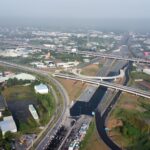
The rapid development of Ring Road 3, Ring Road 4, and the inter-regional highway system is reshaping the urban growth map of Southern Vietnam.
Geleximco Faces Challenges in Four Major Projects in Da Nang

Geleximco Group has announced the progress of four major projects in Da Nang, showcasing their commitment to significant developments in the region.