Since the National Assembly approved the investment policy for the North-South high-speed railway project, Vietnam’s infrastructure market has entered an unprecedented race. From industrial conglomerates and major contractors to small-scale enterprises, all are eagerly submitting proposals, expressing interest, or showcasing their commitment.
From an outsider’s perspective, this rush resembles a hunt for a “gigantic pie,” but upon closer examination, each slice reveals both significant profit opportunities and a chain of financial, technical, and policy risks that not everyone can navigate.
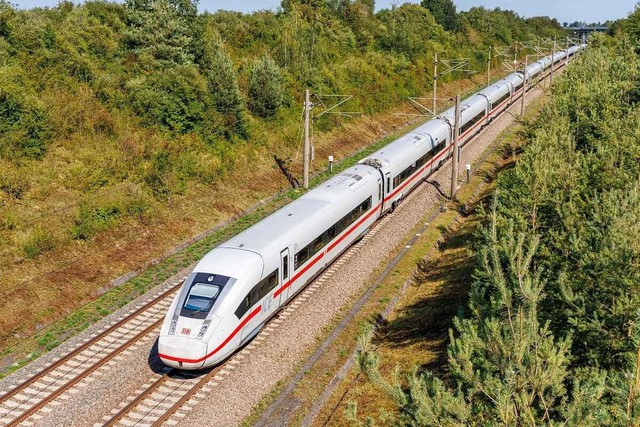
The North-South high-speed railway project spans 1,541 km across 20 provinces, with a total investment of approximately VND 1,700 trillion (USD 67 billion). Its structure comprises 60% bridges, 10% tunnels, and 30% embankments, averaging USD 43.7 million/km (VND 1,073 billion/km), comparable to global high-speed rail standards within the same speed range.
Billion-Dollar Race Among Industry Giants
Vingroup, through its subsidiary VinSpeed, has emerged as a prominent contender. The conglomerate, led by billionaire Pham Nhat Vuong, proposes to develop the entire route under a business investment model, with an estimated investment of over USD 61 billion (excluding land clearance costs).
Vingroup requests an 80% loan for the project, to be repaid within 30 years. The group pledges to complete construction within five years, without subcontracting or transferring the project, while significantly increasing localization and workforce training.
According to Nguyen Viet Quang, Vice Chairman and CEO of Vingroup, if VinSpeed directly invests, the state and society will benefit in multiple ways. Notably, the state would only need to lend 80% instead of funding the entire 100%, with faster capital recovery (30 years vs. 140 years).
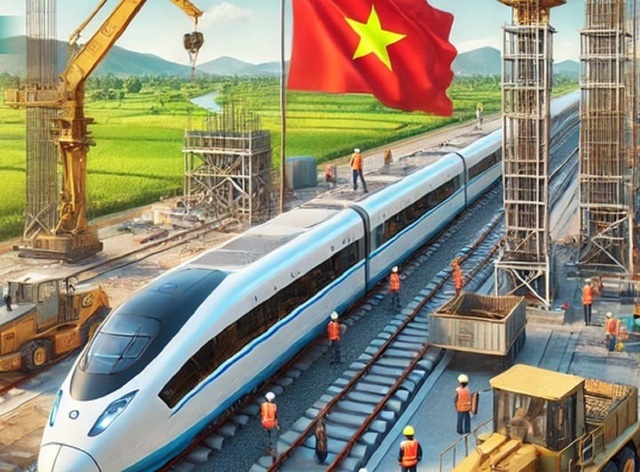
Meanwhile, Truong Hai Group adopts a different approach: self-arranging 20% equity and raising the remaining 80% through loans and capital mobilization. Notably, the group will establish subsidiaries to attract additional domestic and international investment.
Based on meticulous resource and capability calculations, the project is expected to take five years for the Hanoi-Vinh and Ho Chi Minh City-Nha Trang sections, and seven years for the Nha Trang-Vinh segment. The group commits to project quality, timely disbursement, and local manufacturing of train carriages and locomotives by 2029.
While not aiming to be the primary investor, other enterprises are also actively participating, leveraging their strengths. For instance, Hoa Phat (HPG) specializes in producing standard railway tracks. Deo Ca has sent personnel abroad to learn tunnel and road construction expertise, aiming to apply decades of experience to the project. Many other companies in shipbuilding, signaling, technology, and construction are also ready to contribute.
However, not all participants will succeed. A recent government-business meeting highlighted a clear divide. Alongside established companies with strong capital mobilization and large-scale project experience, many newcomers with modest capital or small teams have registered, planning to rely heavily on loans or non-state budgets. Some have been warned about financial capacity or were unreachable for verification.
What Do Businesses Gain from Joining This Historic Project?
The high-speed rail project offers a significant opportunity for urban development around stations (TOD), likened to a lucrative “slice of the pie.” International experience shows that commercial areas, hotels, offices, logistics hubs, and satellite residential areas near stations often experience substantial value appreciation, becoming long-term revenue sources.
Thus, not only contractors and manufacturers but also real estate giants are actively participating to control land and develop station-adjacent projects, offsetting participation costs and generating long-term profits. For real estate developers, even a small plot near a station can transform into a multi-billion-dollar urban complex.
Another perspective highlights that participation, or even expressing interest, serves as a strategic signal, enhancing a company’s position in policy negotiations, opening international cooperation opportunities, and building core capabilities for future large-scale infrastructure projects abroad.
Additionally, plans like Hoa Phat’s Dung Quat rail factory or Vingroup’s establishment of VinSpeed and VinMetal are seen as opportunities to increase production, achieve economies of scale, and raise localization rates, thereby reducing future import costs.
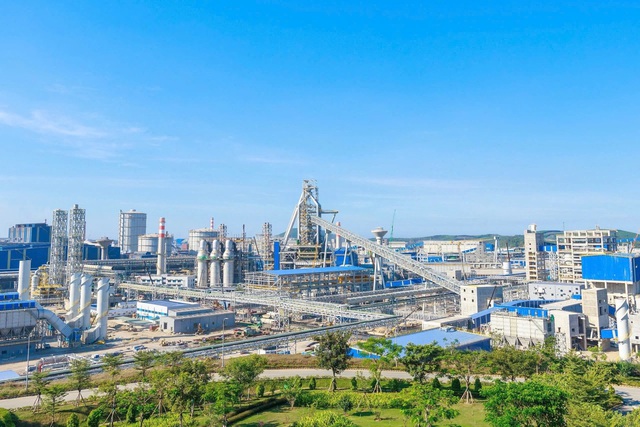
In February 2025, Prime Minister Pham Minh Chinh visited Hoa Phat Dung Quat, urging the group to produce high-quality steel, particularly rail steel for the North-South high-speed railway.
Significant Opportunities, Substantial Risks
However, these benefits come with considerable risks. Financially, the project demands massive foreign and domestic currency mobilization. Interest rate fluctuations, exchange rates, and capital costs can distort financial plans. Smaller enterprises, if overly reliant on loans, may fall into a debt spiral, jeopardizing their overall business strategy.
The Ministry of Construction’s financial simulation shows that a state-lent 80% loan at a 1% interest rate would balloon to USD 64 billion after 30 years; at 5%, it would soar to USD 182 billion. Thus, even a slight interest rate variation could collapse the financial model from the outset.
A government submission underscores an unavoidable reality: no country has allowed private entities to fully invest in high-speed railways without substantial state support. Nonetheless, Vietnamese enterprises remain determined to participate in this national flagship project.
Technically, implementing a 350 km/h rail line across Vietnam’s diverse terrain requires stringent standards and advanced safety and control technologies. Errors in technology selection, standards, or technology transfer could drastically increase maintenance and operational costs.
The question arises: which enterprises possess the necessary capabilities, compelling technical profiles, feasible capital mobilization plans, reasonable localization strategies, and viable implementation solutions? A recent government-business meeting demonstrated the state’s efforts to listen to ideas, verify commitments, and ensure objective, impartial investor selection to avoid negative consequences.
In conclusion, the rush to participate in the North-South high-speed railway project reflects both the ambition and pragmatism of Vietnamese enterprises: the ambition to seize significant opportunities and the pragmatism in accessing land, contracts, and equipment value chains. The project will create a “pie” shared across multiple sectors, including construction, heavy industry, real estate, finance, and services. However, only enterprises with robust financial capabilities, practical technical expertise, and a commitment to transparency will truly be selected.
Quảng Ngãi – Hoài Nhơn Expressway: The Final Sprint

After nearly three years of construction, the Quang Ngai – Hoai Nhon Expressway project has surpassed 90% completion, entering its final sprint phase. The investor and joint contractors have mobilized over 3,000 workers and 1,100 pieces of equipment, operating in three shifts around the clock, to ensure the entire route is ready for opening on December 19, as directed by the Prime Minister.
FiinGroup Chairman: Core Challenge of North-South High-Speed Railway Project Lies Beyond “Capital” or “Funding”

The Chairman of FiinGroup asserts that while capital mobilization for the North-South high-speed railway project presents a significant challenge, the core issue transcends mere “capital” or “funding.”
Unveiling the Enigma: Hanoi’s Female Tycoon’s $67 Billion Mega-Project Proposal

This company’s core business is unrelated to the high-speed rail industry.
Weighing the Options for a $60 Billion Project: THACO’s Financial Backing vs. Vingroup’s Rapid Execution

THACO and VinSpeed have both proposed to lead the $61 billion North-South high-speed railway project, offering a 20% equity and 80% loan financing structure. However, their approaches to capital mobilization, construction timelines, and risk allocation differ significantly, presenting two distinct options with unique advantages and drawbacks.
The Fierce Race for Vietnam’s North-South High-Speed Rail Project: How Vinspeed and THACO’s Commitments and Proposals Differ
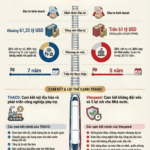
Two industry giants, VinSpeed (Vingroup) and THACO, made significant commitments at the meeting regarding the North-South high-speed rail project.