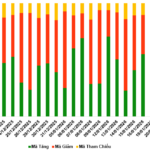
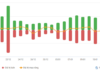
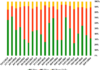
The third-quarter financial report reveals that the total inventory value of listed real estate companies (RECs) reached approximately VND 491.88 trillion. Residential property developers accounted for VND 420.839 trillion, exceeding 85% of the total, while industrial park developers recorded VND 60.465 trillion. The remainder belongs to leasing and real estate brokerage firms. The industry’s average growth rate stood at 9.08%, with residential developers rising by 12.96%, and leasing companies declining by 7.39%.
Specifically, DIC Corp’s inventory increased by 10.1%, Taseco Land by 46.3%, and Van Phu by 61.3%. Kinh Bac City reported an inventory of VND 25.091 trillion, an 89% surge year-on-year…
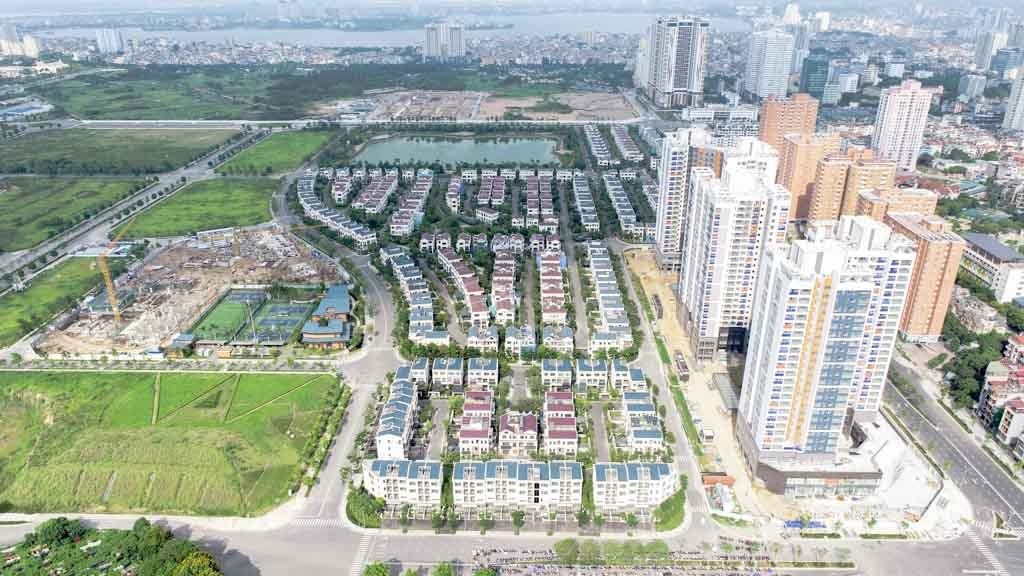
Real estate inventory rises due to supply-demand mismatch.
According to the Ministry of Construction’s report, the third-quarter market inventory reached approximately 18,650 apartments and individual houses, a 37% increase from the previous quarter. This includes 6,323 condominiums, 12,327 individual houses, and around 8,067 unsold land plots.
Not only RECs but also banks hold substantial real estate inventories, auctioning them off in year-end sales.
Agribank Branch 9 recently announced auctions for three properties in Ho Chi Minh City, totaling VND 220 billion, and 17 land-use rights in Minh Thanh commune, spanning over 132 hectares, valued at nearly VND 690 billion.
Additionally, Agribank is selling two FLC Group-related debts secured by real estate assets, with a combined starting price exceeding VND 200 billion.
BIDV Hoc Mon Branch is also auctioning land-use rights and attached assets in Trung My Tay Ward, starting at nearly VND 149 billion…
Many argue that real estate inventory persists due to prices exceeding buyers’ affordability.
In its latest report, while offering optimistic recommendations for the real estate sector, BIDV Securities (BSC) highlights the persistent “supply-demand mismatch” favoring high-end segments.
A Vietnam Association of Realtors survey reveals 61% of prospective buyers delaying purchases by 6-12 months due to financial concerns. Batdongsan.com.vn’s research further shows 93% of non-homeowners feeling unable to buy currently, reflecting widespread hesitation amid escalating prices.
Pham Thi Mien, Deputy Director of Vietnam’s Real Estate Market Research Institute, notes that despite positive signals, the market faces unresolved challenges: high property prices, supply-demand imbalances, surging real estate credit, fragmented information, and legal framework issues.
If unaddressed promptly, these constraints will hinder the industry’s stable, sustainable growth and impact overall economic expansion.
Skyrocketing Prices: Hanoi’s Social Housing Units Surge to 90 Million VND/m², a Fivefold Increase
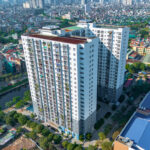
Social housing projects, once a beacon of affordability, are now commanding staggering prices on the secondary market. Just a few years after launch, units are being listed at 80-90 million VND/m², a 4-5 fold increase from their initial prices. This surge brings them on par with high-end condominiums, effectively pricing out the very low-income earners they were intended to serve.
CEO Vu Cuong Quyet: Skyrocketing Property Prices Pose Significant Concerns for Real Estate Professionals

Following a series of sharp price hikes, the real estate market typically enters a phase of price corrections and stagnation, according to Mr. Vu Cuong Quyet, CEO of Dat Xanh Northern Region. Consequently, he anticipates a shift toward sustainable development and steady growth in the market.
Exciting News: Multi-Billion Infrastructure Projects Nearing Completion, a Major Boost for Western Ho Chi Minh City’s Real Estate Market
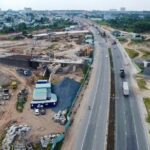
One of the key drivers propelling the real estate development in the western region of Ho Chi Minh City over the past years has been the robust investment in inter-regional transportation infrastructure.
Luxury Condos in Ho Chi Minh City Hit Staggering 450 Million VND/m² Mark

Despite luxury and high-end apartment projects in Ho Chi Minh City reaching staggering prices of 120-200 million VND per square meter, with some even hitting 450 million VND, interest has surged by 168% in the past quarter.
How Have Apartment Prices Along Metro Lines Surged Since Their Launch?

According to CBRE Vietnam, properties located within TOD (Transit-Oriented Development) zones, which prioritize integration with public transportation, consistently command higher values compared to those in non-TOD areas.