













On the afternoon of December 2nd, during the regular press conference held by the Da Nang City People’s Committee, reporters raised concerns about the surge of high-rise buildings along the river and coastal areas in the city center. They questioned how the city plans to address the resulting infrastructure and traffic pressures.
In response, Mr. Nguyen Ha Nam, Director of the Da Nang Department of Construction, stated: “This trend reflects the city’s development. However, the increase in high-rise buildings also intensifies the challenges in management, coordination, and implementation for the construction sector.”
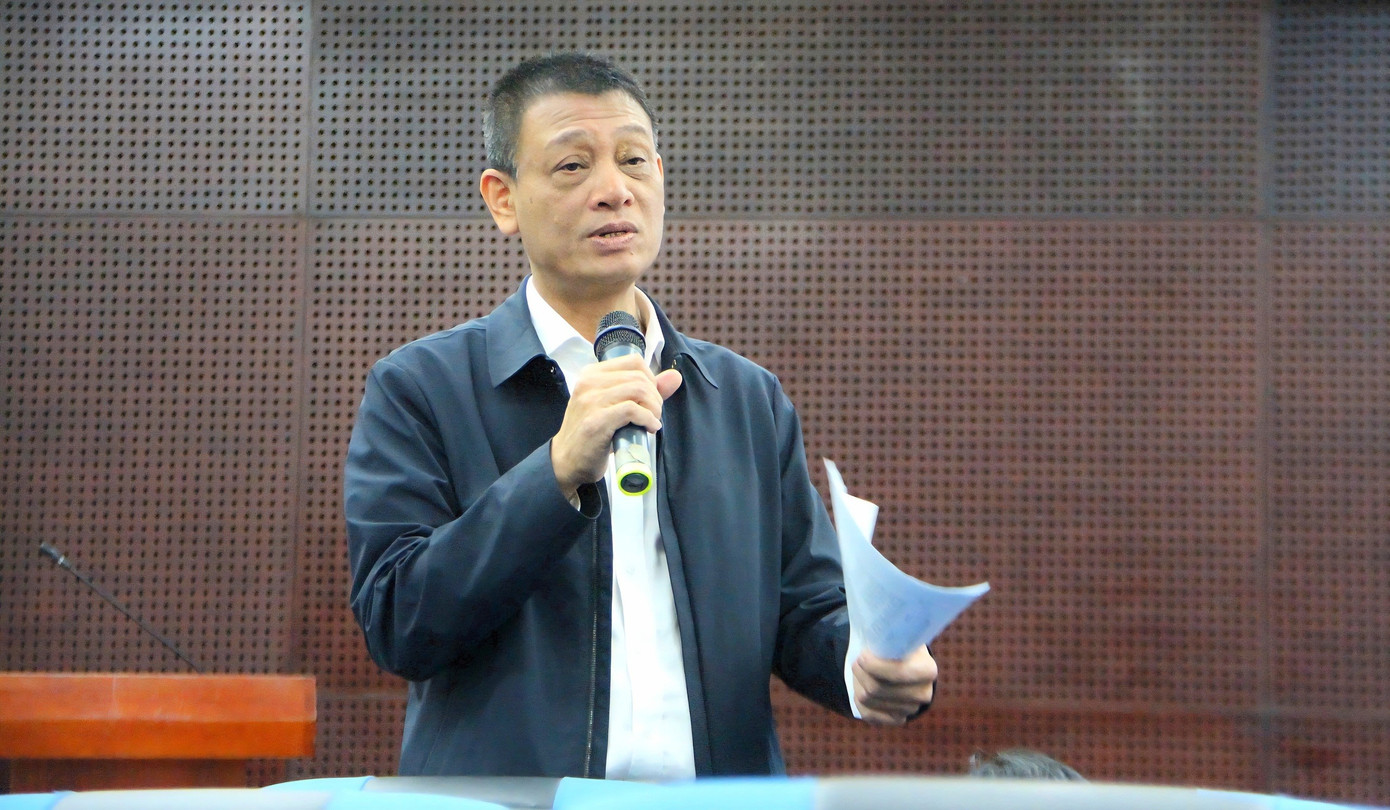
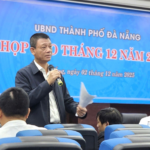
Mr. Nguyen Ha Nam, Director of the Da Nang Department of Construction, addresses the press conference.
Regarding urban planning, Mr. Nam explained that the new Da Nang City Master Plan is currently under development. The existing plan for the urban area, approved in 2022 under Resolution 359, divides the city into nine sub-zones, all of which have been fully approved. The planning process has accounted for technical infrastructure (transportation, water supply, electricity, wastewater treatment) and social infrastructure (education, healthcare, parks, cultural facilities) in each sub-zone, while limiting population density to maintain key indices.
Mr. Nam noted that since the consolidation of the city center, traffic congestion has worsened, particularly at key intersections. Expanding roads or constructing underpasses and overpasses is not immediately feasible. The city is exploring comprehensive solutions involving technical measures, spatial allocation, legal management, and urban organization to balance residential and commercial activities.
“The concentration of administrative centers and population growth, coupled with socioeconomic development, has accelerated infrastructure demands. These are new challenges that Da Nang is actively researching. Our goal is to harmonize the sub-zones, focusing on the southern area, to manage migration, distribute the population, and reduce infrastructure strain,” Mr. Nam added.
Addressing the Hoa Cam Industrial Zone Phase 2, Mr. Nam confirmed that the city has approved the investment policy, bidding documents, and investor selection plan. The Da Nang Hi-Tech Park and Industrial Zones Management Board is currently conducting the bidding process to select the project investor.
Regarding Road 14B, a critical western gateway, Mr. Nam reported that the 7-kilometer route faces complex land clearance issues, involving 1,182 cases in former Hoa Vang District. Approximately 75 cases remain unresolved, with completion expected by year-end.
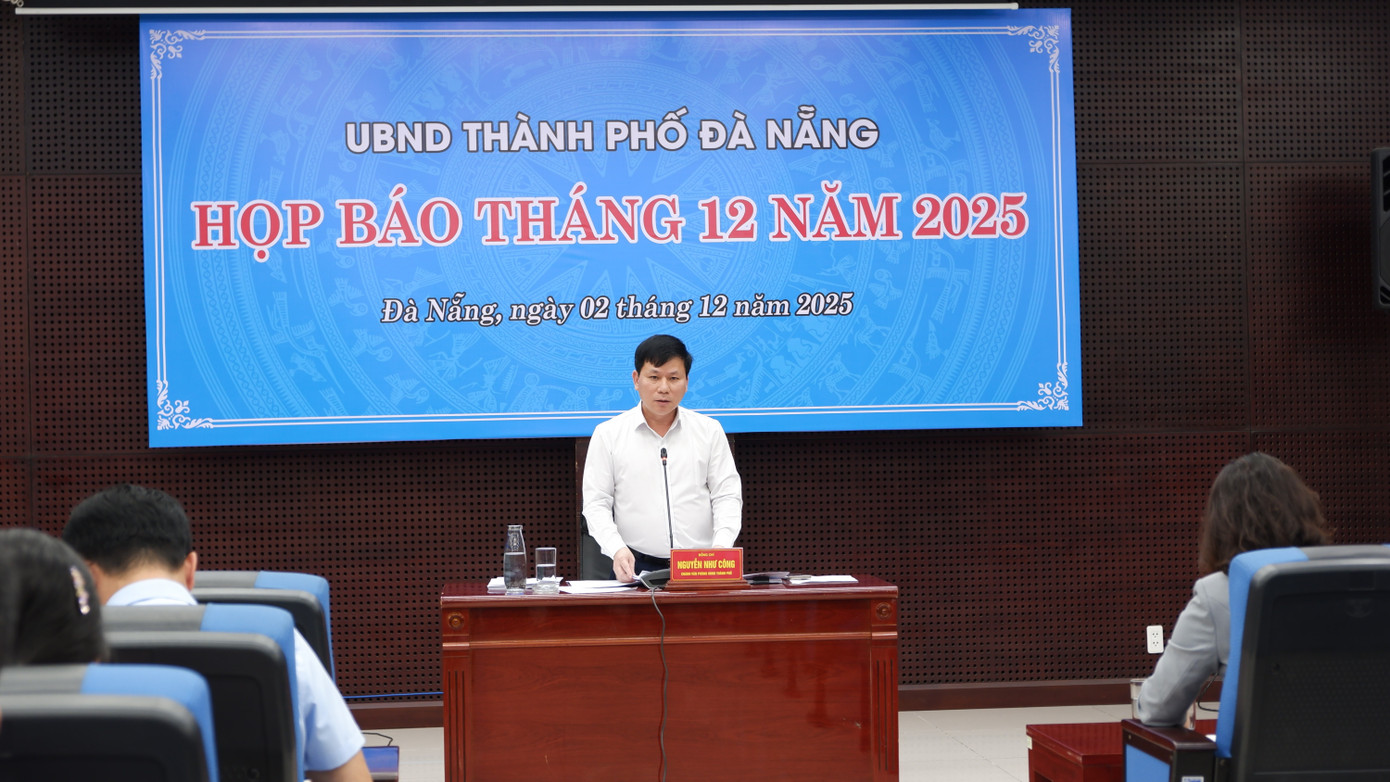
Mr. Nguyen Nhu Cong, Chief of the Da Nang People’s Committee Office, chairs the press conference.
Delays in the project are attributed to land acquisition challenges, limited contractor capacity, and high demand for fill material. The Department has been working to resolve these issues, providing material support to contractors and collaborating with the Ministry of Construction to assess progress. While construction costs remain stable, compensation expenses have risen due to additional policies supporting housing, architecture, and documentation.
On public investment disbursement, a representative from the Da Nang Department of Finance reported that only 55% of the central government’s target and 51% of the City Council’s target have been achieved, falling short of annual requirements.
The representative cited prolonged land clearance and project procedures as key obstacles. Additionally, the recent reorganization of project management boards has disrupted construction and payment schedules.
Regarding local business operations, Mr. Nguyen Hoang Ha, Director of the Da Nang Institute for Socio-Economic Development Research, noted that challenges faced by businesses are not unique to Da Nang but reflect national trends. Last month, the city convened a meeting with businesses to address three major issues: land acquisition, project procedures, and advance financial obligations.
“Businesses are awaiting stability in administrative structures. Once stability is achieved, they plan to resume investment activities. We expect to observe their responses within the next 1–2 months,” Mr. Ha concluded.
Why Da Nang is the Rising Star for Real Estate Investors

With its competitive pricing, expansive land availability, modern infrastructure, thriving tourism, and high quality of life, Da Nang has emerged as a top contender in the real estate investment landscape. According to industry experts, the quality of properties in Da Nang even surpasses that of Hanoi and Ho Chi Minh City, making it a highly attractive destination for investors.
Da Nang Reimagines Urban Space Amid Skyscraper Boom to Prevent Overcrowding
Amidst the rapid rise of high-rise buildings along the Han River and coastal areas, Da Nang is implementing an urban spatial adjustment plan to balance the strain on technical and social infrastructure.
Hoang Van Cuong Delegate: Ho Chi Minh City Requires a Truly Superior Mechanism

Delegate Hoàng Văn Cường from Hanoi asserts that it is high time to grant Ho Chi Minh City a truly innovative and superior institutional framework, rather than merely compiling minor, piecemeal incentives.
Hanoi Terminates Posco E&C’s Urban Development Project
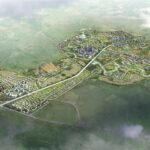
Investors failed to comply with the mandated investment procedures, prompting the Hanoi People’s Committee to issue a decision terminating the validity of all documents and directives related to the Ngoc Liep – Dong Truc Urban Area (Zone 9) project by Posco E&C.
Groundbreaking Date Set for Unprecedented Two-Tier Bridge-Road Project, Connecting to World-Class Airport
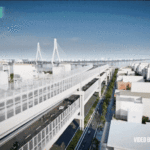
Vietnam’s wealthiest city has set a groundbreaking date for this one-of-a-kind project.