According to John Michael Campbell, Director of Industrial Services at Savills Vietnam, the country’s industrial foundation is poised for significant growth as it enters 2026.
In the first nine months of 2025, disbursed foreign direct investment (FDI) reached $18.8 billion, marking an 8.5% increase year-on-year. The manufacturing and processing sector alone accounted for nearly 60% of new registered capital, reflecting a shift toward high-value industries such as electronics, technology equipment, and semiconductors. This trend underscores Vietnam’s resilience and appeal amidst global economic uncertainties.
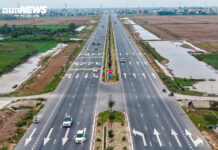
Simultaneously, over $16.6 billion in public investment has been disbursed, driving key infrastructure projects in transportation, logistics, and seaports. These developments are critical in reducing transportation costs and enhancing the competitiveness of manufacturing enterprises.
Vietnam’s Industrial Transformation
Campbell emphasizes that the new phase of growth is not solely reliant on foreign capital. Domestic investment is also rebounding, driven by positive signals from credit markets, corporate bonds, and clearer regulatory frameworks. Joint ventures between local developers and foreign investors are expected to boost the supply of high-quality industrial properties in strategic locations.

John Michael Campbell, Director of Industrial Services at Savills Vietnam
Infrastructure remains a key differentiator. The expansion of the Cai Mep – Thi Vai port complex and inter-regional road networks is reducing transit times and enabling the country to attract industries with stringent logistics requirements. Campbell notes that Vietnam is witnessing the expansion of strategic sectors, including advanced electronics manufacturing, industrial equipment, and data centers.
Parallel to this, sustainability is becoming a mandatory requirement rather than an optional feature. Eco-industrial parks like Prodezi Eco-IP and Phu My 3 have demonstrated cost-effectiveness, operational efficiency, and reduced emissions. As environmental standards, licensing requirements, and ESG expectations from international investors rise, sustainability is now a critical factor in securing tenants in the new cycle.
Campbell predicts that 2026 will be a pivotal year for Vietnam’s industrial market, characterized by improved manufacturing prospects, a stable investment environment, and strengthened connectivity across seaports, energy, and digital infrastructure. This transition marks a shift from cost-driven growth to system-driven growth, where infrastructure, energy, and data operate seamlessly to support higher-standard manufacturing industries.
“Vietnam enters 2026 with clearer industrial momentum than ever before,” Campbell states. “With high-value FDI, accelerating infrastructure connectivity, and digital foundations, the market is transitioning from a growth phase to large-scale, high-standard operations.”