Dr. Le Dang Doanh, former Director of the Central Institute for Economic Management, analyzed: Previously, when converting agricultural land to residential land, people only had to pay a portion of the land use fee, calculated as a percentage difference between residential and agricultural land prices, with a 30% rate for areas within the limit and 50% for exceeding the limit.
However, since the 2024 Land Law took effect, this regulation has been abolished. People must now pay 100% of the difference between agricultural and residential land prices. Compared to the newly increased land price tables in many localities, many households face significantly higher fees, even reaching billions of dong.
Mr. Doanh suggested that calculating land use fees when converting agricultural land to residential land should be flexible, avoiding rigid application.
Additionally, these fees should be based on the purpose of conversion. If individuals sell the land after conversion, the state should reclaim the waived amount. For those converting land for residential purposes, a suitable fee should be applied with a restriction on transfer for a certain period to prevent profiteering.
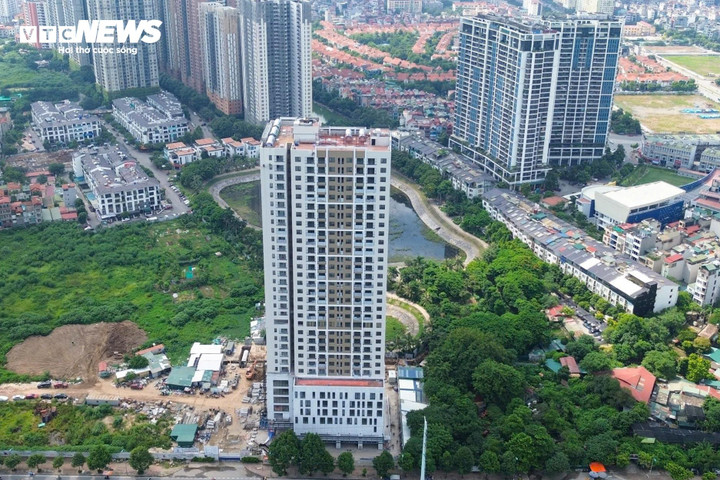
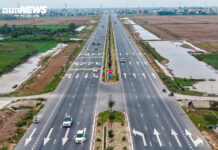
Soaring fees for converting garden land to residential land: Experts call for significant reductions. (Illustrative image: Minh Duc)
According to Mr. Doanh, this approach must consider individual, household, area, and regional land use limits.
For example, individuals reaching marriageable age without land, who receive land from their parents but must convert its use from other types to residential, should be treated differently from those who already own residential land but still receive conversion benefits.
The expert emphasized: Policies should be applied flexibly to ensure fairness and aim for everyone to have a home. Localities, when announcing land prices, must closely align with local social infrastructure, urbanization, planning, actual transactions, needs, and pre-existing land prices to establish the most accurate rates.
Sharing the same view, Prof. Dang Hung Vo, former Deputy Minister of Natural Resources and Environment, also believed that the purpose of land conversion should be specifically considered. If conversion is for expanding residential land due to family needs, not for trade, a differential price between residential and agricultural land should apply. If conversion is for commercial purposes, market rates should be charged.
“Land finance policies must have limits to distinguish between commercial and personal use purposes. The reason for conversion must be understood, avoiding rigid mathematical application,” Mr. Vo stressed.
Lawyer Truong Anh Tu, Chairman of TAT Law Firm, also opined: Converting residential land use should be clearly categorized, with transparent guidelines and appropriate support mechanisms, instead of a uniform pricing approach.
Not all cases should be placed under the same policy framework. For households converting land to build homes and live stably, exemptions, reductions, or payment extensions for land use fees should be considered. Conversely, for those converting land for subdivision or business, market rates are appropriate.
“Distinguishing between actual residential needs and investment or business activities is crucial for flexibly applying land use fee calculation methods. The 2024 Land Law is a significant reform, but to be effective, decrees and guidelines must detail classification criteria, handling procedures for applications submitted before new land prices took effect, and support mechanisms for affected groups. Policies will only be effective if they enable people to live stably on their legal land, rather than burdening them with unaffordable fees due to a lack of timely guidelines,” Mr. Tu stated.
Significant fee reductions recommended
Mr. Le Hoang Chau, Chairman of the Ho Chi Minh City Real Estate Association (HoREA), proposed substantial reductions in fees for converting garden land to residential land. Specifically, the collection rate for land within the residential land allocation limit should be 20% of the land use fee, and for areas exceeding the limit, 30%, instead of the current 30% and 50% as per the draft.
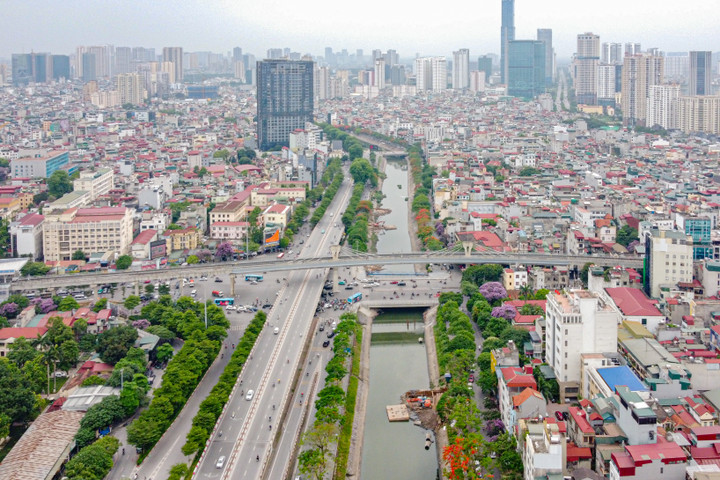
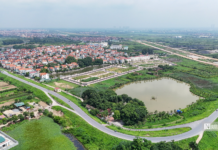
Experts suggest a 20% collection rate for land within the residential land allocation limit and 30% for exceeding areas, instead of the current 30% and 50%. (Illustrative image: Minh Duc)
Regarding application scope, the above rates should apply only once per household or individual, except for cases where individuals request conversion of the remaining area within the same plot previously partially converted.
In such cases, land use fees for subsequent conversions will follow general regulations in the Government’s Decree on land use fees and land rent, ensuring transparency and uniformity in implementation.
Mr. Chau emphasized that the 20-30% regulation not only reduces financial pressure but also ensures consistency in nationwide application. This will facilitate localities in implementation while ensuring “fairness and reasonableness.”
He illustrated that applying these percentage rates is similar to the “percentage tax rate” mechanism in the current Tax Law, uniformly applied nationwide, avoiding local disparities.
Additionally, HoREA proposed amending regulations for “exceeding areas” in residential land allocation limits at the local level.
Specifically, for “areas exceeding residential land allocation limits at the local level up to 2,000 m²” and for “areas exceeding residential land allocation limits at the local level over 2,000 m²,” replace the regulation for “areas exceeding residential land allocation limits at the local level up to 500 m²” and for “areas exceeding residential land allocation limits at the local level over 500 m².”
Recently, responding to voter suggestions from various localities, the Ministry of Finance announced it is drafting and finalizing a special Government resolution to address issues related to land use fee calculations for households and individuals converting agricultural land to residential land (following review by the Ministry of Justice) for Government consideration and decision.
Critical Land Certificate Changes Effective January 1, 2026: A Must-Read for All Hanoi Residents!
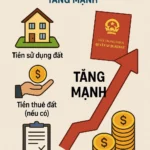
The Hanoi People’s Council has recently approved a significant and special adjustment, marking a pivotal moment for the city’s development and future prospects.
Đà Lạt Valley Flower Estate Owner Loses Over 1.5 Hectares of Land to Lâm Đồng Province’s Reclamation
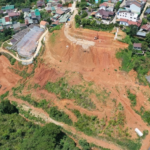
The People’s Committee of Lam Dong Province has officially reclaimed the entire 15,214 square meters of land previously allocated to Saigon Construction and Investment Trading Company Limited. This land, originally designated for the development of the Da Lat Flower Valley residential project, is now fully under the province’s control.
Land Use Fee Installment Proposal: Ministry of Finance Responds

In response to local and public appeals for installment payments on land use fees to alleviate financial burdens, the Ministry of Finance has stated that current legislation does not permit such arrangements. However, they have indicated that this issue will be considered during the revision of relevant decrees.
Critical Announcement: Red Book Recall Notice – All Citizens Urged to Take Immediate Action!
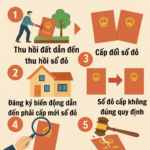
The 2024 Land Law explicitly outlines six scenarios in which a land title certificate (red book) can be revoked.
Ho Chi Minh City Plans Auction of Seven Land Plots in Thu Thiem New Urban Area
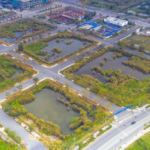
Ho Chi Minh City has unveiled a detailed auction plan for seven land plots within the Thu Thiem New Urban Area, including three plots that were previously auctioned but forfeited due to deposit defaults in 2021.