
















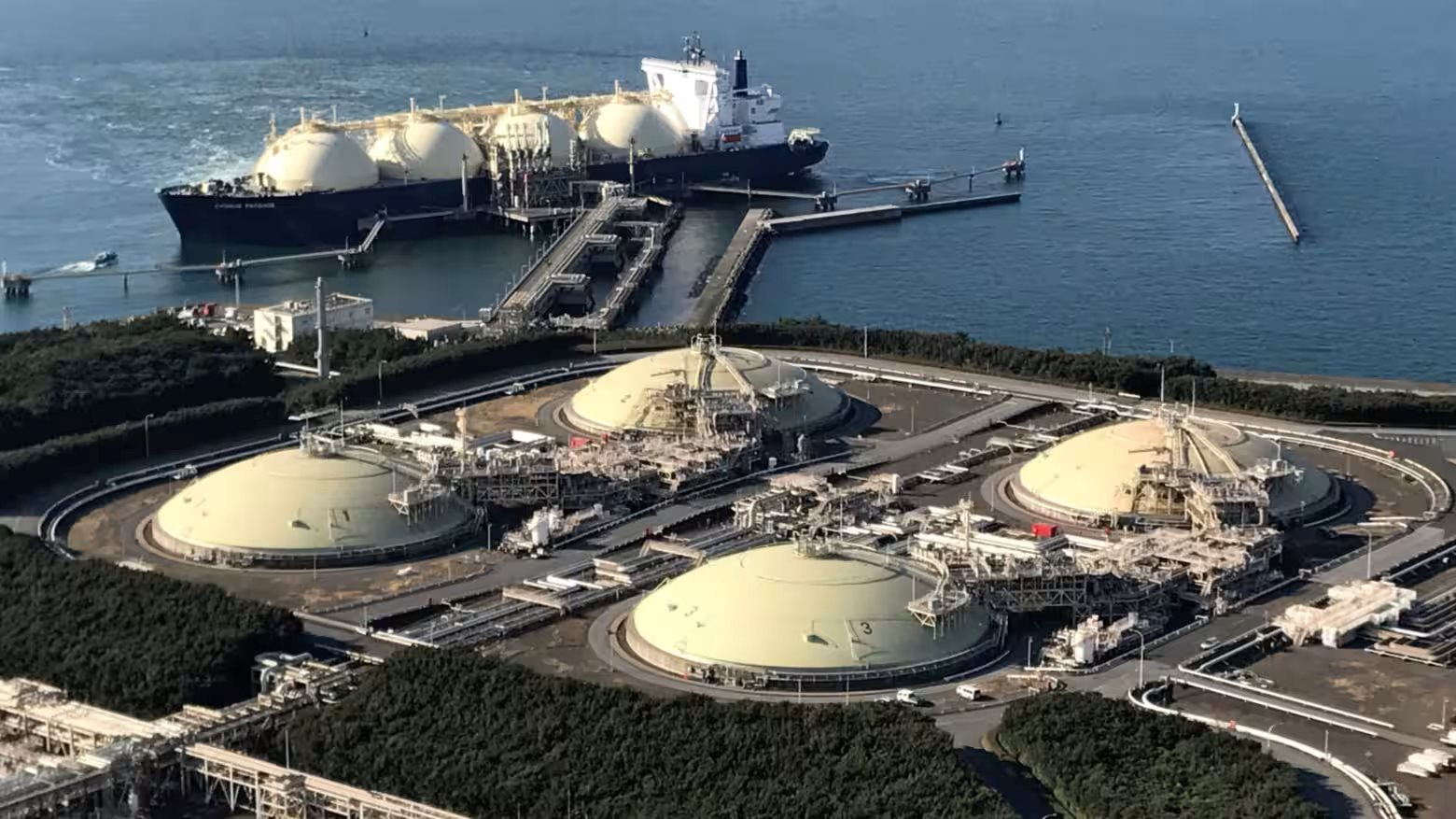
Illustrative Image
Japanese utility and energy companies are under mounting pressure to reassess their liquefied natural gas (LNG) import strategies from Russia, as international scrutiny of Moscow intensifies. Currently, eight Japanese power and gas companies, including JERA and Tokyo Gas, procure LNG from Russia’s Sakhalin-2 project. Gazprom holds a 77.5% stake in the project, while Mitsui and Mitsubishi own 12.5% and 10%, respectively. LNG from Sakhalin-2 accounts for approximately 9% of Japan’s total imports in the 2024 fiscal year.
The European Union recently adopted a plan to halt Russian LNG imports by November 2027. Previously, former U.S. President Donald Trump urged Europe and Japan to cease energy imports from Russia. The U.S. Treasury has extended Japan’s waiver until December 19, but the pressure remains significant. During a meeting with Japanese Prime Minister Sanae Takaichi, Trump pressed Tokyo to end Russian LNG imports, while Takaichi emphasized the challenges this would pose to energy security.
Several long-term contracts with Sakhalin-2 are nearing expiration, with JERA’s 500,000-ton annual contract set to end in late 2026. JERA’s decision could influence seven other importers. “The Prime Minister stressed the need to maintain Russian LNG supplies, but the procurement environment is becoming increasingly challenging,” noted a senior executive at a Japanese firm.
LNG from Sakhalin-2 offers price and logistical advantages. According to JOGMEC, Russian LNG is more cost-effective than alternatives from Australia and Indonesia. Transporting LNG from Russia’s Far East to Japan takes only 2–3 days, compared to a week from Australia and 40 days from the U.S. Gulf Coast. This efficiency enables companies like Kyushu Electric Power and Hiroshima Gas to better manage demand fluctuations and cost volatility. However, switching to alternative LNG sources could increase costs, potentially impacting households and businesses.
Since the Russia-Ukraine conflict, Japanese importers have sought to diversify their supply chains. Hiroshima Gas, which purchases 350,000 tons of LNG annually, including 200,000 tons from Sakhalin-2, has signed emergency supply contracts with 10 companies, up from three before 2022. Chairman Tomohiko Nakagawa emphasized that geopolitical risks must be considered when renewing LNG contracts.
Japan heavily relies on LNG from Australia and Southeast Asia, but gas fields in these regions are depleting, limiting alternatives to Russian supplies. Meanwhile, global LNG demand is projected to rise by 80% by 2040, with potential shortages from 2037 due to surging demand in emerging economies and digital sectors in developed nations.
Japan’s decision to continue importing Russian LNG or seek alternatives will directly impact national energy security and electricity-gas costs across regions, presenting a significant challenge in balancing economic interests with geopolitical risks.
Source: Nikkei
After India, Russia’s Second-Largest Oil Buyer Slashes Imports: Daily Output Drops by Hundreds of Thousands of Barrels, Shifting Purchases to Kazakhstan, Iraq
Once the largest buyer of Russian oil following Europe’s halt on crude oil purchases from Moscow, this entity has significantly reshaped global energy dynamics.
Hundreds of Porsche Vehicles in Russia Mysteriously Cease Functioning

Porsche owners across Russia are waking up to a baffling issue: their vehicles are mysteriously immobilized after being parked overnight. Concerns are rising about potential satellite signal interference or deliberate sabotage as the root cause.
Asian Powerhouse Defies Global Trend, Commits to Russian Energy Despite Shifting Dynamics
The Asian nation underscores the critical role of Russian energy in ensuring its energy security.
Amid Sanctions Storm, Tens of Millions of Tons of Russian Oil Find a ‘Loophole,’ Quietly Slipping Across the Globe to Generate Over $5 Billion

A groundbreaking report reveals that over 100 vessels flying false flags have covertly transported Russian oil across the globe, generating more than $5 billion in revenue despite international sanctions.
Latest Developments in Vietnam’s Largest Gas Pipeline Project

The onshore pipeline segment of the Lot B – O Mon Gas Pipeline Project has officially commenced construction, marking a significant milestone in the development of this vital energy infrastructure.