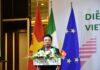

















On December 10th, during the 10th session, the National Assembly passed the amended Personal Income Tax Law with 438 out of 443 delegates voting in favor.
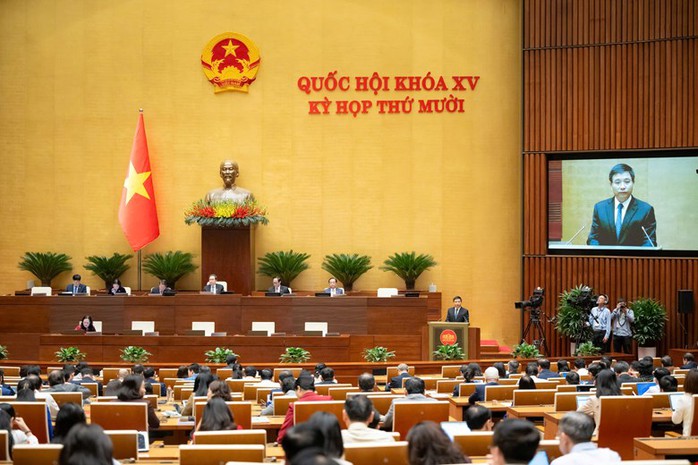
The National Assembly votes to pass the amended Personal Income Tax Law.
According to the newly adopted Personal Income Tax Law, households and individuals with annual revenue below 500 million VND are exempt from income tax. This 500 million VND threshold is deducted before calculating taxable revenue.
The law also introduces a new provision for households and individuals with annual revenue between 500 million VND and 3 billion VND, taxing them based on income (revenue minus expenses).
This ensures taxation aligns with the true nature of income tax, applying a 15% tax rate similar to the corporate income tax rate for businesses with revenue under 3 billion VND annually, as stipulated in the Corporate Income Tax Law.
Consequently, all households and individuals will pay taxes based on actual income: higher income means higher taxes, lower income means lower taxes, and no income means no tax.
The government estimates that with the 500 million VND tax threshold, approximately 2.3 million households, or about 90% of all businesses, will be exempt from taxation. The tax authority estimates a total tax reduction (including both personal income tax and value-added tax) of around 11.8 trillion VND.
Previously, the Economic and Financial Committee assessed that raising the tax-exempt revenue threshold to 500 million VND would exclude the lowest-earning businesses from taxation, while also reducing the administrative burden on tax authorities.
Furthermore, given that the drafting agency cannot yet reduce the tax rates calculated as a percentage of revenue, allowing a 500 million VND deduction from taxable revenue (for households exceeding the threshold) will partially offset the tax burden for these households when transitioning to tax declaration based on cash register revenue.
To ensure the smooth and effective implementation of these policy changes, the Economic and Financial Committee urges the government to direct relevant agencies to promptly draft and issue implementation guidelines in time for the law’s effective date.
Particularly for small businesses and individuals, measures should ensure convenience, feasibility, and transparency to avoid compliance costs. Guidelines on accounting records, declaration procedures, etc., should be simpler than those for micro-enterprises, allowing businesses to declare expenses for tax calculation purposes.
Solutions are needed for potentially problematic expenses, such as labor costs for individual business owners, which should be considered in relation to family deductions. Inventory handling during the transition period also requires appropriate guidance.
Anticipated 90% Tax Exemption for Businesses: Lingering Concerns Remain

The proposed tax threshold for business households, set at 500 million VND, is five times higher than the current level but still falls short of alleviating concerns among small business owners. Experts suggest considering actual net profit margins by industry, advocating for a lighter approach for low-margin sectors and a firmer stance on high-profit businesses.
Personal Income Tax: Government Aims to Retain Top Bracket at 35%
Under the latest proposal, income exceeding 100 million VND per month, after deductions for dependents, will be subject to the highest tax rate of 35%. The government argues that reducing this rate from 35% to 30% would be perceived as a policy of ‘tax cuts for the wealthy.’
Raising the Tax Threshold for Household Businesses to 500 Million VND: What Do Experts Say?

The Ministry of Finance has proposed raising the tax-exempt revenue threshold for household businesses.
Finance Ministry: Taxation Not the Optimal Tool to Curb Real Estate Speculation

According to the Ministry of Finance, the taxation of income from real estate transfers requires comprehensive research to ensure alignment with the ongoing refinement of policies related to land, construction, housing, and other associated sectors.
Latest Updates on Taxation of Gold Bullion Transfers

The Ministry of Finance has proposed a 0.1% tax rate on the transfer price of each gold bar transaction. The government will specify the threshold value of gold bars subject to tax, exempting individuals who buy or sell gold for savings or storage purposes (not for business), in line with traditional accumulation practices.