


















How Do Rising Interest Rates Impact Real Estate?
Speaking at the Vietnam Real Estate Conference 2025 (VRES 2025) on December 9th, Mr. Nguyễn Quốc Anh, Deputy General Director of Batdongsan.com.vn, shared that in the final quarter of this year, interest rates began to rise as many commercial banks recorded a decline in deposits, pushing the 12-month deposit interest rate to 5.3-5.5% per annum.
According to Mr. Quốc Anh, to accurately assess the impact of the year-end interest rate hike, it’s essential to compare it with the situation in 2022. That year, the market faced a “double shock” as global inflation soared, exchange rates fluctuated sharply, and Vietnam was forced to raise interest rates in line with the Fed. Lending rates then surged to 11-15% amid a corporate bond crisis that abruptly tightened credit.
“The market nearly froze, and transactions plummeted. High borrowing costs forced many investors to sell at a loss, particularly in land plots,” he noted.
From the second quarter of 2022, prices entered a deep correction cycle. Market sentiment hit rock bottom, with 72% of surveyed consumers worried about inflation and 75% expecting interest rates to continue rising.
In contrast, 2025 presents a vastly different scenario. The current slight increase in deposit rates is purely technical, aimed at restoring capital levels after the sharp declines of 2024. Lending rates hover around 6-7% per annum, higher than the 5-5.5% lows of youth-targeted packages but still within a supportive range for transactions.
“Current market pressure stems mainly from capital demand for public investment and production, while low deposit rates continue to shift funds into real estate and stocks,” he analyzed.
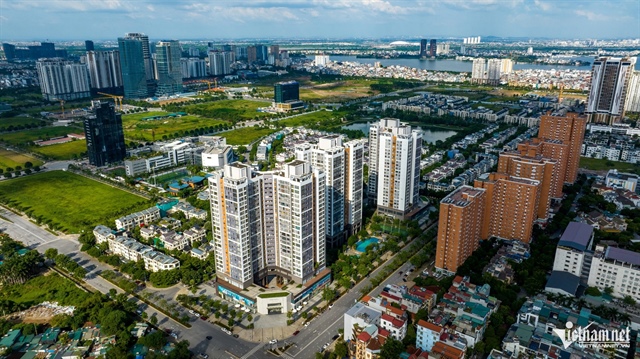
2026 will mark a period of clearer market segmentation and greater stability. Photo: Hoàng Hà |
He believes that banks’ slight increase in deposit rates at year-end is positive, as it helps the system better balance long-term capital, laying a stable foundation for the next cycle.
From a market perspective, he emphasized the stark differences between the two interest rate hike periods.
In 2022, the real estate market was overheated, with speculative products dominating. A significant portion of transactions relied on financial leverage, making the market fragile. When interest rates rose abruptly, many investors could no longer afford repayments, leading to a sharp drop in liquidity and a near freeze in land plot transactions.
In 2025, however, the market is much “calmer,” shifting toward products tied to actual housing needs. While transaction interest hasn’t returned to 2022 peaks, funds are now focused on legally transparent products, reflecting a cautious mindset after the 2022 shock and a more sustainable market trend.
Additionally, legal frameworks from the amended Land Law and Real Estate Business Law enhance transparency and improve project implementation processes. Land prices in 2025 remain lower than 2022 peaks in many areas, helping maintain market stability and reduce risks.
He noted that there’s no widespread land fever yet; hotspots are primarily linked to administrative boundary mergers, while transactions remain concentrated in apartments and private homes in major cities.
“In the short term, the market may still be exploratory, but in the medium to long term, the recovery cycle began in 2024 and has ample room to grow. I believe 2026 will see clearer market segmentation and greater stability. A repeat of the 2022 crisis is highly unlikely,” Mr. Quốc Anh concluded.
Which Segments Will Lead the Market?
Discussing real estate segments, Mr. Đinh Minh Tuấn, Sales Director at Batdongsan.com.vn, predicted that apartments and private homes will remain the most promising segments in the first half of 2026. Apartments are expected to grow by 42%, while private homes and townhouses will see around 31% growth.

Dr. Cấn Văn Lực speaks at the Vietnam Real Estate Conference 2025 (VRES 2025). Photo: Nguyễn Lê
|
According to Mr. Tuấn, apartment prices will rise slightly in 2026 due to high-end supply driving up averages, increased real demand, rising land and construction costs, insufficient supply, and a shift from private homes to apartments.
Meanwhile, Dr. Cấn Văn Lực, Chief Economist at BIDV and a member of the Prime Minister’s Policy Advisory Council, stressed the need for continued policy refinement in the real estate market, particularly addressing land valuation issues in the Land Law.
Dr. Lực noted that the State Bank and Government aim to stabilize interest rates to support economic growth. However, real estate-related rates are creeping up with deposit rates. Commercial housing isn’t a priority sector, so lending rates have risen, requiring businesses to carefully manage their finances.
He added that upcoming measures may further regulate the real estate market for safety and efficiency.
The Government will also diversify capital sources, including a national housing fund for social housing rentals. Plans include establishing a Real Estate and Land Use Rights Trading Center to ensure transparency and build a unified national database.
Nguyễn Lê
– 19:29 09/12/2025
Lê Hoàng Châu Elected as HoREA Chairman for the 2025-2030 Term

On the afternoon of December 9, 2025, the Ho Chi Minh City Real Estate Association (HoREA) convened its 1st Congress for the 2025-2030 term. The primary objective of this assembly was to merge the Binh Duong Province Real Estate Association with HoREA, thereby establishing the newly unified Ho Chi Minh City Real Estate Association.
The Land Acquisition Frenzy: Domestic and Foreign Real Estate Giants SonKim Land, Phát Đạt, CapitaLand, Skyworld, and More Join the Hunt

The race to expand real estate portfolios through mergers and acquisitions (M&A) is heating up.
2026 Housing Market Shock: Unexpected Condo and Home Price Predictions

Many experts predict that apartments and single-family homes will be the most promising real estate segments in 2026. While housing supply is expected to surge, strong demand for residential properties will likely drive a modest price increase during the first half of the year.
Current Mortgage Interest Rates for Young Homebuyers: What You Need to Know
Several banks have halted preferential loan packages for young homebuyers, while others continue to offer loans with slightly increased interest rates. Warnings persist regarding rising lending rates and the significant flow of credit into the real estate sector.
Why the Luxury Segment Dominates the Real Estate Market?

Experts suggest that some previously planned projects were initially designed to cater to the mid-range housing market. However, prolonged delays, rising interest costs, and increased land-use fees have forced developers to reposition these projects as luxury offerings to offset escalating expenses.