









Among the 79 locations slated for the inauguration and groundbreaking ceremonies of key projects in celebration of the 14th National Congress of the Communist Party of Vietnam, the Ben Thanh – Can Gio metro line stands out. This project, initiated by Vingroup, will commence construction at the Can Gio Coastal Urban Area.
On November 8th, the Ho Chi Minh City People’s Committee approved the investment policy and designated Vinspeed Railway Investment and Development JSC (a Vingroup subsidiary) as the investor for the Ben Thanh – Can Gio railway project.
This high-speed rail line, the first of its kind connecting Ho Chi Minh City’s center to the former Can Gio district, boasts a preliminary investment of over 102.4 trillion VND, excluding the nearly 12.8 trillion VND allocated for compensation and land clearance, which will be covered by the state budget.
Spanning over 54 km, the double-track railway is designed with a standard gauge of 1,435 mm, electrification, and a maximum design speed of 350 km/h. It will traverse key areas including Ben Thanh, Khanh Hoi, Xom Chieu, Tan Thuan, Tan My, Nha Be, Binh Khanh, An Thoi Dong, and Can Gio.
Compensation and land clearance are set to begin in Q4/2025. Once the cleared land is handed over, the investor must complete construction and commence operations within 30 months, targeting completion by 2028.
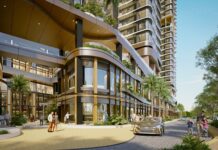
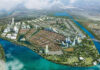
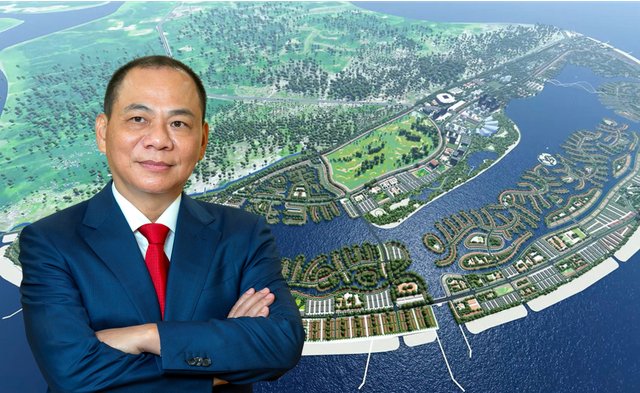
The Can Gio Coastal Urban Area (Vinhomes Green Paradise), the site of the Ben Thanh – Can Gio metro line groundbreaking ceremony, is hailed as Ho Chi Minh City’s largest real estate project in 2025. Covering 2,870 hectares—three times the size of the former District 1—the project has a total investment of approximately 10 billion USD.
With its unique location bordering the sea on three sides, Vinhomes Green Paradise is envisioned as Vietnam’s first “city on the sea.” Its centerpiece is a 108-story tower reaching 550 meters, poised to become the world’s tallest coastal building, Vietnam’s tallest structure, and a top-10 global skyscraper.
Approved in March 2025 with a 1/500 scale plan, the project officially broke ground on April 19, 2025, under the leadership of Can Gio Urban Tourism JSC (a Vingroup subsidiary).
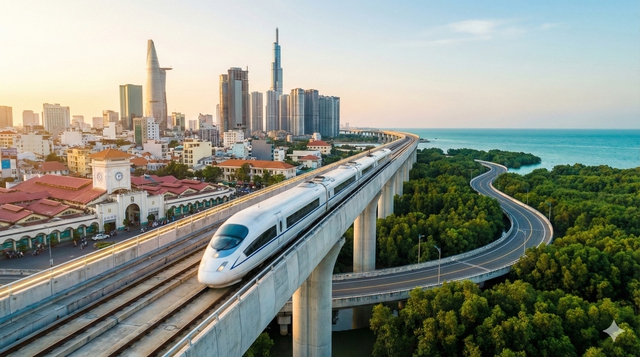
The Ben Thanh – Can Gio metro line groundbreaking ceremony at the Can Gio Coastal Urban Area, developed by Vingroup.
According to Minister Tran Hong Minh of the Ministry of Construction, 245 projects across 34 provinces and cities are eligible for inauguration or groundbreaking during this event (155 groundbreaking and 90 inauguration projects), with a combined investment of nearly 1.35 million billion VND.
The ministry proposes 79 live broadcast and online connection points at key projects, with 34 featuring attendance from Party, State, National Assembly, Fatherland Front, Government, and ministerial leaders. The central connection point will be at Long Thanh International Airport.
Other localities will set up screens to monitor the live broadcast on VTV1 and simultaneously conduct groundbreaking and inauguration ceremonies as directed from the central connection point.
Tu An
Market Pulse 11/12: Failed Attempt to Hold 1,700 Mark as Foreign Investors Extend Selling Streak to 5th Consecutive Session
Today’s afternoon session witnessed significant efforts, with the VN-Index briefly reclaiming the 1,700-point milestone. However, the momentum proved short-lived as renewed pressure swiftly resurfaced, leaving the index unable to sustain its gains.
Ho Chi Minh City Poised to Become a $10 Billion Drone Capital, Says Truong Gia Binh
FPT Corporation’s Chairman, Truong Gia Binh, shared strategic insights on international collaboration opportunities and the potential development of a low-altitude economy, particularly in the unmanned aerial vehicle (UAV) industry, in Ho Chi Minh City and Vietnam as a whole.
Market Pulse 12/09: Financial Stocks Rebound in Afternoon Session, Yet Fall Short of Driving Momentum
Closing the session on December 9th, the VN-Index settled at 1,747 points, down over 6.5 points, while the HNX-Index ended at 257.1 points, shedding 1.5 points. Despite an afternoon rebound supported by various stock groups, the market failed to reclaim positive territory.
Lê Hoàng Châu Elected as HoREA Chairman for the 2025-2030 Term
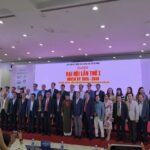
On the afternoon of December 9, 2025, the Ho Chi Minh City Real Estate Association (HoREA) convened its 1st Congress for the 2025-2030 term. The primary objective of this assembly was to merge the Binh Duong Province Real Estate Association with HoREA, thereby establishing the newly unified Ho Chi Minh City Real Estate Association.
Maximizing Affordability: Ho Chi Minh City Introduces Top-Tier Incentives for Social Housing
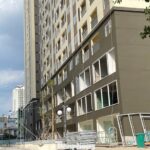
Ho Chi Minh City offers substantial support for social housing projects, covering 50% of infrastructure investment costs up to a maximum of 10 billion VND per project. Additionally, the city fully subsidizes all expenses related to investment and construction procedures, including detailed 1/500 planning approvals, environmental permits, feasibility study assessments, and building permits.