

















On December 11, the Ministry of Construction issued Document No. 14998, urging the Department of Housing and Real Estate Market Management to expedite the task of “Developing and perfecting national technical standards for safety in apartment buildings (existing and upcoming) equipped with electric vehicle charging stations/pillars.”
This follows a December 10 report by Vietnam Television (VTV1)’s 19:00 News program titled “Electric Vehicles in Apartment Basements: Safety Standards Still Pending,” which highlighted issues related to electric vehicle charging in residential complexes.
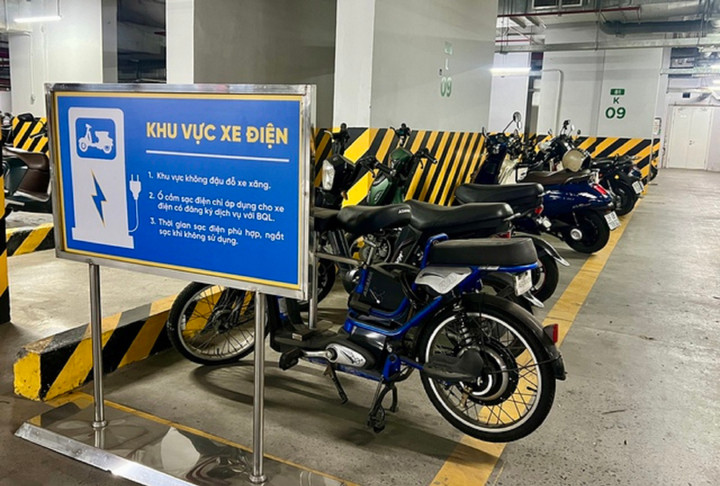
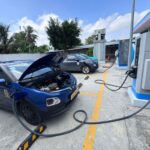
The Ministry of Construction mandates the development and enhancement of national technical safety standards for apartment buildings with electric vehicle charging stations/pillars. (Illustrative image: Thanh Nien Newspaper)
In alignment with key initiatives on environmental protection, climate change, green growth, circular economy, and energy efficiency, the Ministry of Construction has tasked the Department of Housing and Real Estate Market Management with urgently developing and refining national technical safety standards for apartment buildings (both existing and upcoming) equipped with electric vehicle charging stations/pillars.
The Ministry also instructs the Department to gather information and conduct policy communication during the review and enhancement of these standards, adhering to the guidelines outlined in Directive No. 07/CT-TTg dated March 21, 2023, issued by the Prime Minister on strengthening policy communication efforts.
Previously, the management board of HH Linh Đàm Apartment Complex (Hoàng Liệt Ward, Hanoi) announced a temporary halt to new vehicle registrations and plans to completely discontinue electric vehicle (electric motorcycles, electric bicycles) parking in the basement starting February 1, 2026. The management cited a rapid increase in electric vehicles, leading to basement overcrowding and heightened safety risks.
Electric motorcycles and bicycles use batteries, which pose a significant fire and explosion hazard due to electrical faults, collisions, or improper charging. In case of an incident, the dense presence of electric vehicles in the basement could cause fires to spread rapidly, generating toxic smoke and complicating evacuation, thereby endangering residents’ lives and property.
In response, the HH Linh Đàm Apartment Complex management announced that from December 2025, new registrations for electric motorcycles and bicycles would be suspended (existing vehicles registered before this date will continue to be serviced). From February 1, 2026, all electric vehicle parking in the basement, including those currently stored, will be permanently discontinued.
Facing resident opposition, on December 4, the People’s Committee of Hoàng Liệt Ward issued a document to Dien Bien Province’s Private Construction Enterprise No. 1 (the investor of the HH apartment complex) and the Linh Đàm Housing Service Branch (the investor’s representative managing the apartment complex), instructing the building management not to refuse electric vehicle parking services.
New Regulations: Vietnam’s Ministry of Industry and Trade Introduces Dedicated Electricity Pricing for Electric Vehicle Charging
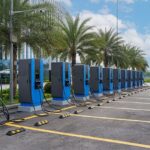
A notable feature of Circular No. 60/2025/TT-BCT is the introduction of specific regulations for retail electricity prices used for charging electric vehicles. Under these provisions, commercial charging stations, charging poles, and battery swapping cabinets for electric vehicles must install separate meters and apply pricing based on the purpose of charging.
“Government Agency Provides Insights on ‘Open-Access, Interconnected’ Approach to Electric Vehicle Charging Infrastructure”
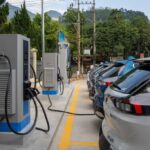
The Bureau of Industry has unified its approach to charging infrastructure, embracing a policy of “openness, interoperability, and fair competition.” This strategy aims to delineate market segments, safeguard consumer rights, and establish a robust foundation for the growth of the domestic charging equipment support industry.
China to Double Electric Vehicle Charging Capacity by 2027
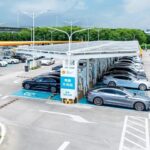
China aims to double its electric vehicle charging infrastructure by 2027, ensuring capacity for 80 million vehicles.
V-Green’s Rapid Expansion: Billionaire Pham Nhat Vuong’s Venture Partners with Viettel Post, The Gioi Di Dong, and PNJ to Deploy Over 5,000 Charging Stations and Battery Swap Cabinets Nationwide in Just Two Weeks
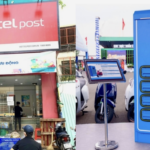
With over 3,000 charging stations at Viettel Post branches, 2,000 charging and battery swap stations at The Gioi Di Dong, and extensive coverage at FPT Retail and PNJ, the company has rapidly expanded its charging network to over 5,000 locations within just two weeks.
V-Green by Billionaire Pham Nhat Vuong Proposes Eliminating Peak-Hour Electricity Pricing for Charging Stations
V-Green advocates for the elimination of peak-hour pricing for electric vehicle charging, aiming to incentivize businesses and individuals to invest in charging infrastructure.