
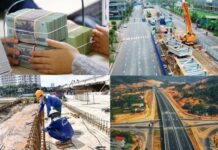







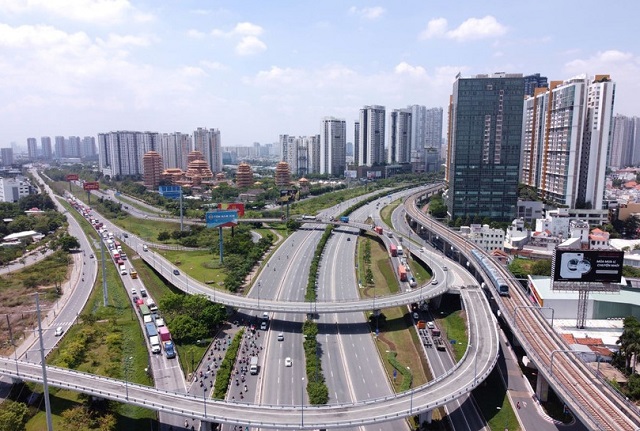
The Cat Lai Interchange on Hanoi Highway. (Photo: Thanh Vu/TTXVN)
|
National Assembly Chairman Tran Thanh Man has ratified Resolution No. 258/2025/QH15 on piloting special mechanisms and policies for major projects in the capital city; Resolution No. 259/2025/QH15 amending and supplementing certain provisions of Resolution No. 136/2024/QH15 dated June 26, 2024, on piloting special mechanisms and policies for Da Nang’s development; and Resolution No. 260/2025/QH15 amending and supplementing certain provisions of Resolution No. 98/2023/QH15 dated June 24, 2023, on piloting special mechanisms and policies for Ho Chi Minh City’s development.
Regulations on Major Projects in the Capital City
Resolution No. 258/2025/QH15 pilots special mechanisms and policies in investment, planning, urban development, architecture, construction, land, and finance for major projects in the capital city.
Major projects in the capital city include: public investment projects under the Law on Public Investment; PPP projects under the Law on Investment in the form of Public-Private Partnerships; and investment projects under the Law on Investment that require immediate implementation as directed by the Politburo, the Party Central Committee’s Secretariat, the Government Party Committee, and the Hanoi Party Committee.
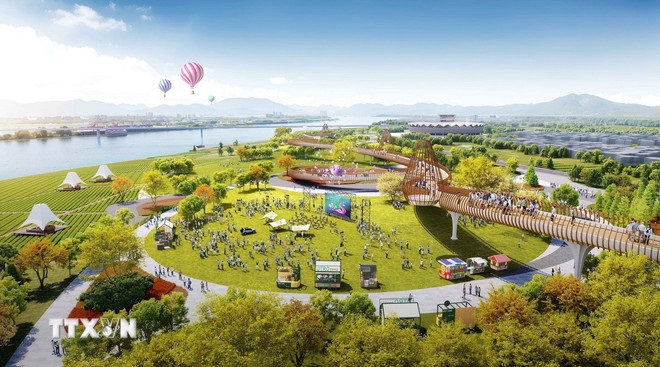 The project is expected to be completed by the 100th anniversary of the Party’s founding (February 3, 2030), contributing to a green, clean, and beautiful environment, improving urban landscapes, and enhancing the quality of life for Hanoi’s residents. (Photo: Phan Phuong/TTXVN)
|
Public investment projects and PPP projects meeting the criteria for national key projects; public investment projects and PPP projects using local budgets and other legal local funds with a total investment scale of VND 30,000 billion or more;
Investment projects in the list of strategic investor attraction under the Law on the Capital with an investment scale of VND 30,000 billion or more;
Urban area renovation projects under this Resolution include the reconstruction of apartment buildings requiring demolition under the Law on Housing; and the renovation, upgrading, and reconstruction of one or multiple urban blocks;
New investment projects and infrastructure upgrades to address urgent issues such as traffic congestion, flooding, environmental pollution, and urban order.
Land Policies for Da Nang’s Free Trade Zone
Resolution No. 259/2025/QH15 stipulates that Da Nang’s Free Trade Zone is organized into functional areas, including production zones, logistics centers, port and port logistics areas, commercial and service zones, and other functional areas as prescribed by law.
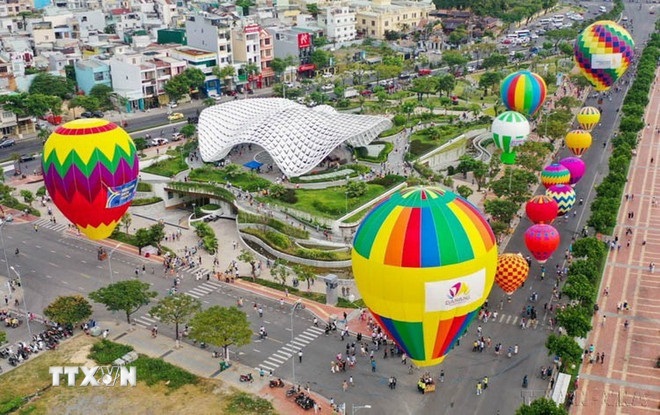
APEC Park, located beside the Han River, is a popular tourist attraction in Da Nang. (Photo: Tran Le Lam/TTXVN)
|
Functional areas within the Free Trade Zone meeting the conditions for non-tariff zones under the law are ensured customs inspection, supervision, and control by customs authorities, as well as state management activities by relevant agencies as prescribed by law.
The Prime Minister decides on the establishment of Da Nang’s Free Trade Zone. The People’s Committee of Da Nang adjusts the establishment decision; decides on the expansion and boundary adjustment of the Free Trade Zone following procedures and regulations set by the City People’s Council.
Decisions on establishment, expansion, and boundary adjustment of the Free Trade Zone are considered as decisions approving and adjusting local urban and rural planning. The People’s Committee updates the content of expansion and boundary adjustment of the Free Trade Zone into relevant planning documents.
The Chairman of the People’s Committee approves investment policies for projects developing and operating infrastructure in functional areas of the Free Trade Zone. The approval procedures follow those for projects under the authority of the provincial People’s Committee Chairman as prescribed by the Law on Investment.
The Resolution also outlines land policies for Da Nang’s Free Trade Zone. Accordingly, except for commercial housing projects, the State allocates or leases land without auctioning land use rights or bidding for projects with land use for the following industries and fields:
Investment in building innovation centers, data centers, research and development (R&D) centers linked with training; investment in research and technology transfer for high-tech, strategic technologies, and high-tech products with an investment scale of VND 2,000 billion or more;
Investment in semiconductor chip technology, integrated circuit manufacturing, electronic component manufacturing, flexible electronics (PE), new battery technologies, new materials, and defense industries; strategic technologies and high-tech products with an investment scale of VND 4,000 billion or more;
Investment in building and operating infrastructure for functional areas in the Free Trade Zone as per approved planning, including commercial and service zones with an investment scale of VND 3,000 billion or more; logistics centers with an investment scale of VND 3,000 billion or more; and production zones with an investment scale of VND 3,000 billion or more;
Investment in healthcare facilities, elderly care centers, or educational institutions with an investment scale of VND 2,000 billion or more;
Investment in building seaports or airports with an investment scale of VND 10,000 billion or more.
Special Mechanisms and Policies for Ho Chi Minh City’s Development
Resolution No. 260/2025/QH15 pilots special mechanisms and policies for Ho Chi Minh City’s development in investment management; state finance and budget; urban, resource, and environmental management; priority lists for strategic investor attraction; establishment and operation of the Ho Chi Minh City Free Trade Zone; science, technology, and innovation management; and the organization of the city’s administrative apparatus.
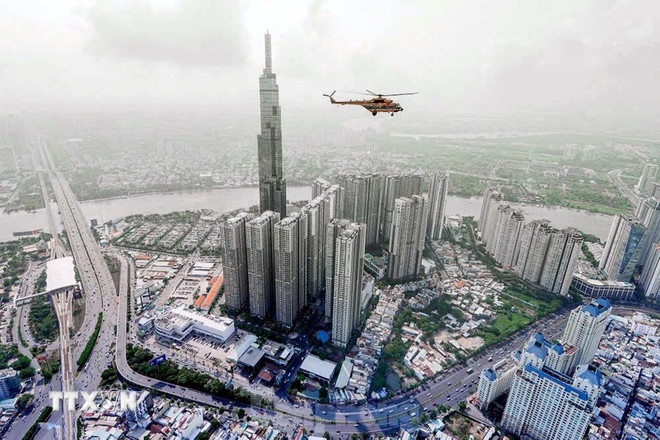
Ho Chi Minh City. (Photo: Thanh Vu/TTXVN)
|
The Resolution states that the City People’s Council decides on the use of local budgets for independent public investment projects to implement compensation, support, and resettlement for projects under separate urban design plans, regional urban planning for areas around railway stations, and areas around Ring Road 3 intersections within the city. This aims to recover land, upgrade urban areas, implement resettlement, create land funds for auctioning land use rights for urban development projects, and pay investors implementing railway projects under Build-Transfer (BT) contracts as prescribed by law.
At railway stations, train maintenance and repair depots, and areas around Ring Road 3 intersections designated for Transit-Oriented Development (TOD) by the City People’s Committee, the Committee may decide on investments combining housing, commercial services, public facilities, and community projects. The Committee may also set economic and technical indicators and land use planning different from national urban and rural planning standards, provided they meet infrastructure, social amenities, and environmental safety requirements for residential areas as prescribed by law.
Housing, commercial services, public facilities, and community projects in these areas may be sold, transferred, leased, lease-purchased, or subleased according to the law during the project’s operational period.
– 21:56 23/12/2025
Why Have Nearly 1.7 Million Vietnamese Left the Mekong Delta in the Past Decade?

According to the World Bank’s report, the exodus of nearly 1.7 million people from the Mekong Delta is rooted in stark realities.
Vietnam Officially Exports Another Popular Fruit to China
Vietnamese jackfruit is set to make its official debut in China’s formal import market starting June 1, 2026.
Vietnam Poised to Emerge as a Global LNG Re-Export Hub
Strategically positioned, Vietnam is poised to emerge as a pivotal LNG re-export hub, a regional LNG trading center, and a critical energy backbone for FDI supply chains.
Prime Minister: Construction Sector to Implement “5 Guarantees, 6 Breakthroughs” for Synchronized, Modern Infrastructure Development
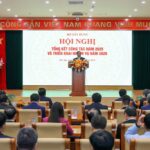
At the Ministry of Construction’s year-end conference, Prime Minister Pham Minh Chinh encapsulated the sector’s achievements in 32 words: “Refined institutions, synchronized planning, breakthrough infrastructure, green-digital transformation, streamlined apparatus, united internal affairs, urban development, and rural innovation.” He urged the Ministry to pursue “5 guarantees, 6 breakthroughs” and highlighted 3 critical tasks for developing synchronized infrastructure.
Vietnam Unveils Transformative Economic Model, Poised to Rival Global Powerhouses Like New York and Shanghai
According to the Prime Minister, the establishment of this model in Vietnam marks a “turning point” in the nation’s integration and development journey after 40 years of renewal.