















Citizens Abandon Land Conversion Due to Land Use Fees
In mid-2025, a story published on VietNamNet about a couple breaking down in tears upon learning they would have to pay nearly VND 4.5 billion in land use fees to convert their 300m² garden plot adjacent to a cemetery into residential land sparked public outrage.
The case involved Mr. Trần Duy Đồng (born in 1965) and Mrs. Nguyễn Thị Hồng (born in 1970), residents of Đức Thịnh ward, Hưng Lộc district, Vinh City (now Vinh Lộc district, Nghệ An province). They intended to divide their land, which had been in use since before 1993, into three portions for their three children.
However, upon receiving the notice requiring them to pay nearly VND 4.5 billion, equivalent to VND 15 million per square meter according to the new land price table, the family was overwhelmed. They realized that even a lifetime of work would not suffice to cover this amount.
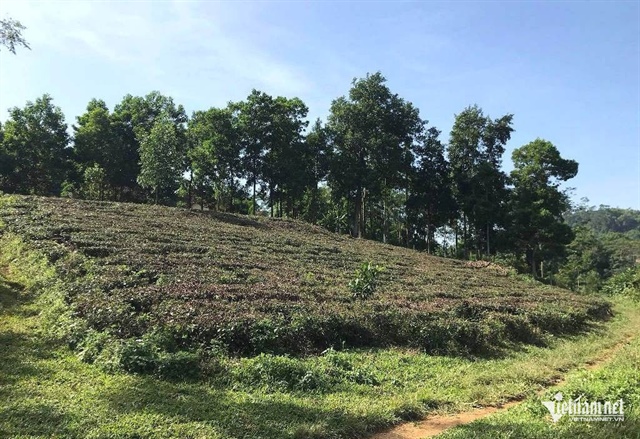
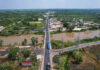
Starting in 2026, when converting garden, pond, or agricultural land into residential land, citizens will pay significantly lower land use fees compared to the current 100% rate. Photo: Nguyễn Lê |
Another case involved Mr. Đ.C.P from Minh Quang commune, Ba Vì district (now Ba Vì commune, Hanoi), who sought to convert over 210m² of perennial crop land into residential land.
According to Decree 103, the land use fee for such conversions is calculated as the difference between the residential land price and the perennial crop land price within the same land price table. Under this calculation, Mr. Đ.C.P was required to pay over VND 911 million in land use fees, excluding registration fees.
For rural residents, this amount is exorbitant. Unable to afford it, Mr. Đ.C.P had no choice but to abandon his plans. Despite initially approving the land conversion, the Ba Vì District People’s Committee (now the Ba Vì Commune People’s Committee) had to revoke and cancel the decision.
During a recent National Assembly discussion on a draft resolution addressing challenges in implementing the Land Law, many delegates highlighted inconsistencies in land use fee collection when citizens convert land to residential use.
The issue lies in the collection of 100% of the price difference according to the land price table, multiplied by the area, without distinguishing between land within or beyond the allocated limit. This has left many households, even those with ancestral land, facing unaffordable fees, akin to “repurchasing their own land.”
Easing the Burden on Citizens
Under the 2024 Land Law, the fee for converting agricultural land to residential land is the full difference between residential and agricultural land prices. Citizens are required to pay 100% of this difference.
To address these challenges, Resolution No. 254/2025/QH15, which outlines mechanisms and policies to resolve difficulties in implementing the Land Law, was adopted by the National Assembly on December 11, 2025, and will take effect on January 1, 2026.
Specifically, Article 10, Clause 2(c) of the Resolution stipulates that not all land conversions qualify for reduced land use fees. Reductions apply only to garden, pond, or agricultural land within the same plot as residential land, recognized during land use rights certification, or to land originally part of a garden or pond attached to residential land but later separated for transfer or due to cadastral mapping before July 1, 2014.
Land use fees are calculated based on local residential land allocation limits. Within the limit, citizens pay 30% of the land use fee; for areas exceeding the limit but not more than double the limit, the rate is 50%; and for areas exceeding double the limit, the rate is 100%.
These reduced land use fees apply only once per household or individual, per plot of land.
For example, in a locality with a residential land allocation limit of 100m², converting 200m² of garden land would result in the first 100m² being charged at 30%, and the next 100m² at 50%.
This resolution significantly alleviates the financial burden on citizens converting agricultural land to residential use, especially with rising land prices in many areas.
The Ministry of Finance is currently drafting a decree to detail the implementation of Resolution No. 254.
The Ministry has requested local authorities to provide feedback on provisions aimed at resolving practical challenges related to land use fee calculations for converting garden, pond, or agricultural land to residential use. This includes fee levels, application principles, methods for determining residential land allocation limits, and transitional provisions for cases approved for conversion between August 1, 2024, and the effective date of Resolution No. 254.
Nguyễn Lê
– 11:31 24/12/2025
New Land Price List in Ho Chi Minh City: Peak Rates Reach Over 687 Million VND per Square Meter
The Ho Chi Minh City People’s Committee has recently submitted a proposal outlining the new Land Price List, set to take effect from January 1, 2026, across the city.
Gia Binh Airport: 5,000 Households Receive Over VND 2.7 Trillion in Land Clearance Compensation
With over 2.7 trillion VND disbursed to approximately 5,000 households, the land clearance efforts for the Gia Binh International Airport project are being accelerated by the Bac Ninh province.
Can Tho Real Estate Set to Establish New Price Benchmarks
Can Tho is set to revise its land price schedule effective next year, replacing the current one in use since 2024. The proposed adjustments include a 20-40% increase for residential land, while other land categories will see slight increases or remain unchanged. The new pricing is expected to boost budget revenue, but Can Tho’s real estate market may struggle to gain momentum due to lingering legal issues affecting numerous projects.
Haiphong Scrutinizes Ward and Commune Chairpersons’ Accountability in Land Violations
The Chairman of the Hai Phong City People’s Committee has mandated that the Chairpersons of Commune, Ward, and Special Zone People’s Committees assume full responsibility for land management. Failure to promptly address violations will result in accountability measures being taken against them.
70% Reduction in Agricultural Land Conversion Fees Effective January 1, 2026: What Residents Need to Know
As of January 1, 2026, individuals will only be required to pay 30% of the differential amount when converting agricultural land to residential land within the allowable limit, a significant reduction from the current 100% payment.