









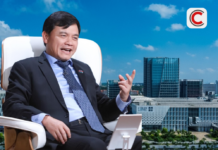








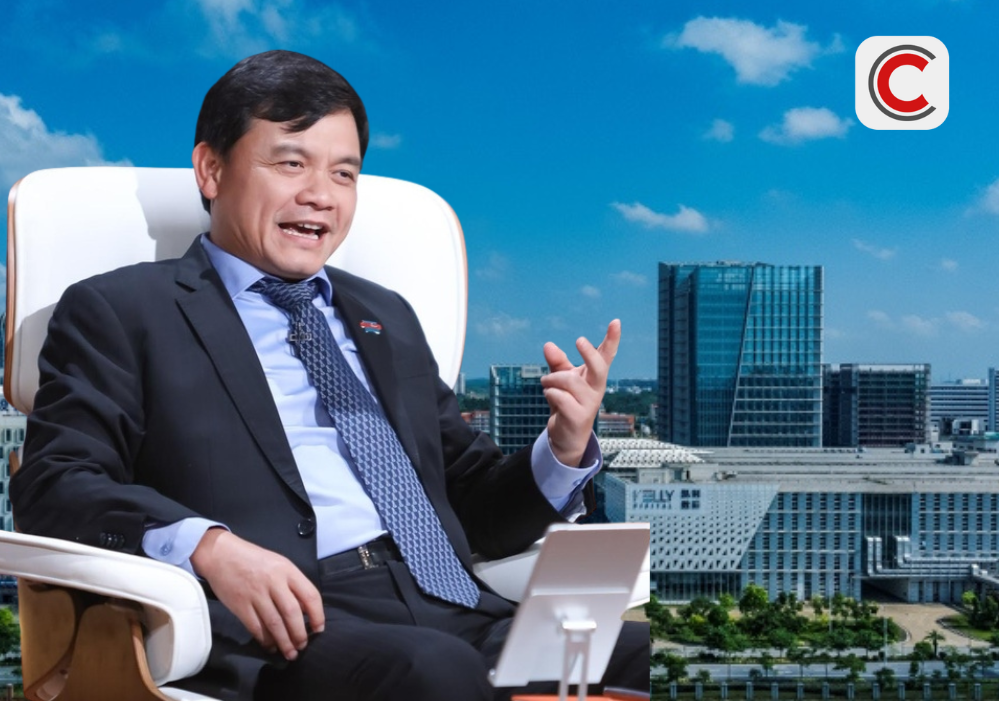
Mr. Nguyen Xuan Phu – Chairman of Sunhouse Group.
Recently, the Hanoi Young Business Association (Hanoiba) organized a Morning Coffee program themed: Human Resource Strategy for SMEs in 2026.
At the event, Mr. Nguyen Xuan Phu – Chairman of the Board of Directors of Sunhouse Group (also known as Shark Phu) provided insights into the real estate market, financial trends, and investment outlook for 2026.
Mr. Phu noted that making clear predictions for the upcoming year is challenging compared to previous years. The primary reason is that while the economy has bottomed out, the upcoming growth phase will not be as rapid. Consequently, it will be difficult to identify significant breakthroughs in specific sectors, unlike during past crisis periods.
However, Shark Phu highlighted several key points. First, the economy will fundamentally improve. This is a crucial observation. Sectors related to production and exports will grow steadily, driving growth in supporting industries as well.
Second, digital business models, including online retail, content creation, entertainment, and gaming, will undoubtedly continue to thrive.
The tourism sector is expected to recover noticeably, though at a slower pace. According to Mr. Phu, Vietnam still faces challenges with Chinese tourists, who account for approximately 45% of the market share. Additionally, visa issues remain unresolved, preventing a rapid tourism boom.
“In reality, without these barriers, tourism next year should have experienced robust growth. However, under current conditions, tourism will recover but not explode as it did in 2018–2019. Sectors severely impacted during the pandemic, such as food services and tourism, will begin to rebound. These are the fundamental aspects of the economic landscape,” he remarked.
Regarding potential disruptions, the Sunhouse Chairman emphasized that the greatest opportunity for rapid and substantial growth lies in leveraging policies amid the U.S.-China trade war. Companies that seize this opportunity will achieve significant breakthroughs.
“For instance, last week I visited a South Korean semiconductor plant that is up for sale. Building a new semiconductor plant typically requires $150–200 million, but this one can be acquired for just $50 million. The reason is that the competitive advantage of the semiconductor industry in Japan, South Korea, and the U.S. is declining, while countries like Vietnam are on the rise. This explains why we’ve been discussing semiconductors so frequently lately,” Mr. Phu illustrated.
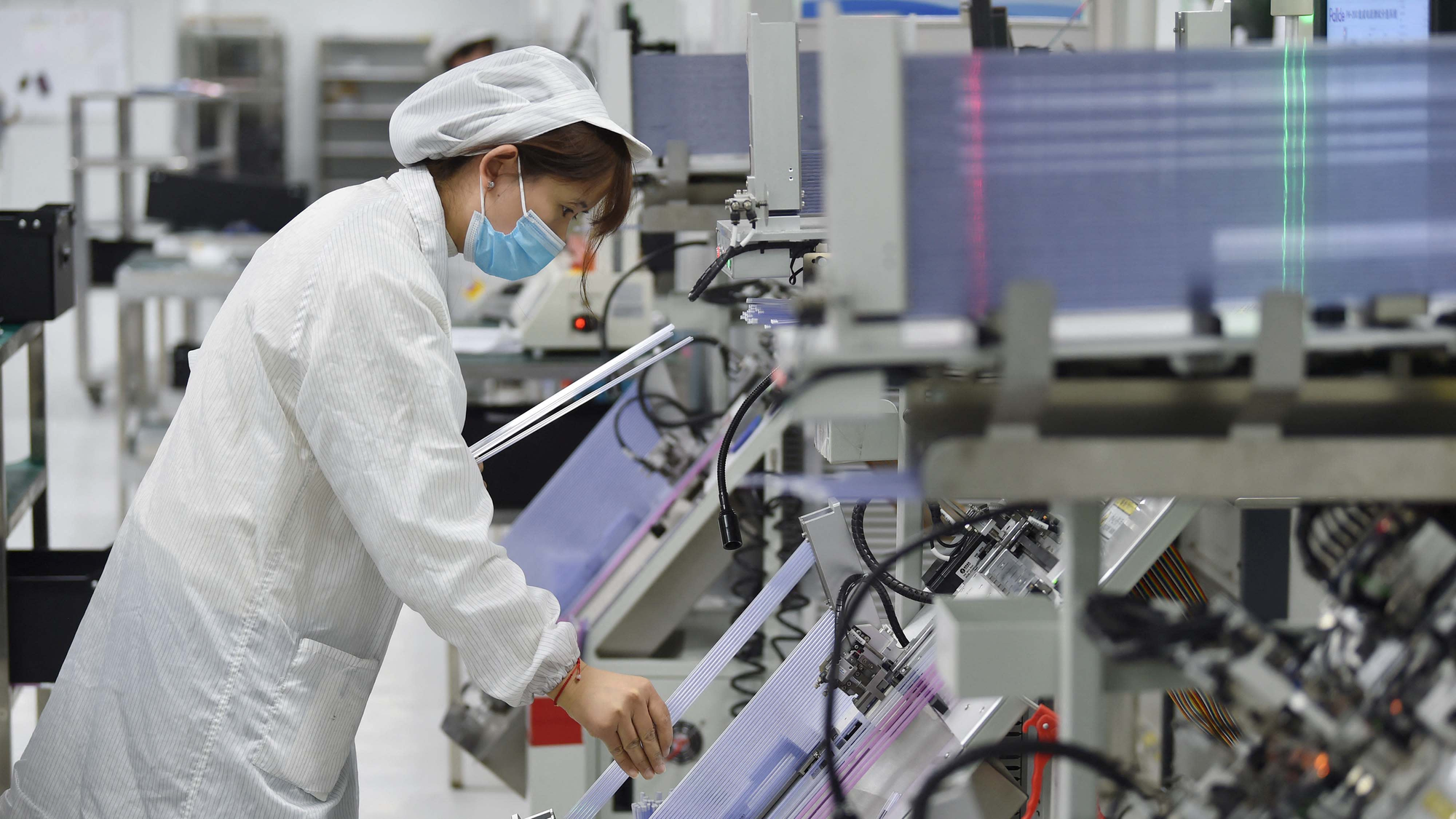
Production line at a semiconductor company in Jiangsu Province, China – Photo: Reuters
Secondly, the shift in manufacturing is another significant trend. Mr. Phu mentioned visiting a factory invested by Guangxi (China), which hired a team of South Korean experts to build a complete production facility for smartphone and OLED screens. They are currently seeking Vietnamese partners to invest in a processing plant for phone and tablet screens, serving both domestic and international markets.
Mr. Phu believes this presents an enormous opportunity for Vietnamese businesses to collaborate, form joint ventures, or invest in producing alternatives to Chinese products. Previously, China exported directly, but due to tariff barriers, they are now relocating to Vietnam, partnering with Vietnamese companies, or international clients are moving their manufacturing bases from China to Vietnam.
“If businesses capitalize on this opportunity, growth could be exponential. Sales may not just increase by 1–2% but could surge by 100%, or even several thousand percent. These are extraordinary disruptions, offering transformative business opportunities for those who act at the right time,” he analyzed.
Conversely, Shark Phu warned businesses operating in declining sectors to transition quickly. Traditional business models, such as storefronts and conventional markets, will undoubtedly continue to struggle. Companies in these areas must adapt to trends or even divest to restructure aggressively. Prolonged resistance will not lead to a turnaround.
“Before the pandemic, I stated that businesses unable to weather the crisis should close early to preserve resources. If a company finds itself in a declining sector, it must be willing to transform and divest to focus on growth areas,” Shark Phu advised.
China Just Took a Long-Awaited Global Action
European and American nations, alongside China, emerged as the most jubilant following this decision.
Reflecting on a Year of Trade Tensions

Following the initial shock, Vietnam and other Asian export nations steadily moved toward trade agreements with the U.S. administration. Meanwhile, export activities continued to grow.
Why Banks Are Rushing to Inject Capital

As the year draws to a close, businesses enter a critical “sprint” phase, marked by a surge in capital demands. To meet this heightened need, banks are ramping up their efforts, injecting substantial funds into the market through a variety of attractive credit packages.
PNJ Ranked Among Top 100 Best Companies to Work for in Southeast Asia 2025

A comprehensive, people-centric HR strategy, coupled with a sustainable corporate culture, has propelled PNJ to become a leading jewelry and lifestyle retailer, earning recognition from Fortune as one of the Top 100 Best Companies to Work for in Southeast Asia 2025.
Experts Warn: Delayed Action Could Cost Vietnamese Businesses Global Supply Chain Opportunities
In the era of digital transformation and sustainable development, leveraging advanced technology and efficient data management has become crucial for Vietnamese businesses to successfully implement ESG (Environmental, Social, and Governance) standards.