















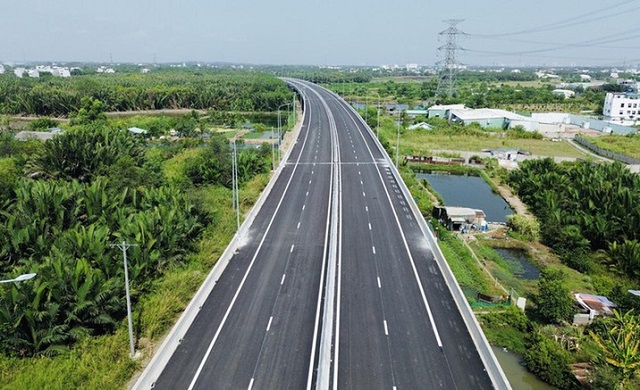
The Ben Luc – Long Thanh Expressway project is included in the Government Inspectorate’s audit plan for 2026 – Image: VGP
|
The Bureau of Inspection, Complaint Resolution, and Construction Sector Denunciations (Bureau VII – Government Inspectorate) has clearly defined its objectives through inspection activities to promptly identify and rectify weaknesses and shortcomings in state management. It aims to strictly and legally handle collectives and individuals violating the law, engaging in corruption, waste, or negativity. Simultaneously, it seeks to propose improvements to policies and laws that are inadequate or have loopholes.
According to the Government Inspectorate’s 2026 audit plan, Bureau VII is assigned to lead seven inspections, primarily focusing on infrastructure construction, investment in construction, and real estate business. These sectors are large-scale and directly related to the management and use of capital, assets, and land.
Specifically, Bureau VII will inspect the Vietnam Expressway Corporation (VEC) and related agencies and organizations, focusing on legal compliance in the implementation of the Ben Luc – Long Thanh Expressway project in the second quarter of 2026. This is a key transportation project of significant importance for the economic and social development of the southern region.
Additionally, Bureau VII will inspect the Ho Chi Minh Road Project Management Board and related agencies and organizations regarding legal compliance in the implementation of the Van Ninh – Cam Lo and Nha Trang – Cam Lam expressway projects in the third quarter of 2026.
In the specialized management sector, the bureau will inspect the Vietnam Civil Aviation Authority and related units on compliance with policies and laws in performing assigned tasks during the 2021–2025 period in the first quarter of 2026.
Simultaneously, it will inspect the Vietnam Register in the third quarter of 2026 regarding legal compliance in the registration and inspection of Vietnamese ships during the 2021–2025 period.
In the field of construction investment, housing, and real estate business, Bureau VII will inspect legal compliance in several projects by Nam Long Investment Corporation (first quarter of 2026), Him Lam Corporation (second quarter of 2026), and Vietnam Construction Import-Export Corporation (Vinaconex) as investors or project owners (second quarter of 2026).
Bureau VII requires inspection teams to operate within their authority, functions, tasks, powers, and procedures as prescribed by law. Inspections must be focused, accurate, and objective, without hindering the normal operations of inspected agencies, units, and enterprises.
Furthermore, the bureau emphasizes the continued innovation of inspection methods and the application of science and technology to enhance effectiveness and efficiency. Through these inspections, it aims to strengthen discipline and order in state management, prevent violations, and promote sustainable socio-economic development.
– 14:30 05/01/2026
Mandatory Asset Declaration for Officials: Supplemental Reporting Required for Changes Exceeding 1 Billion VND from January 1st to 7th

The amended Law on Anti-Corruption, which revises and supplements several provisions of the existing legislation, will come into effect on July 1, 2026.
Government Inspectorate Proposes Revocation of 305 Land Titles for Mỹ Mỹ Resort Project

The Government Inspectorate has recommended that the People’s Committee of Khanh Hoa Province revoke 305 land use right certificates previously issued to the investor of the My My Resort project, located in Cam Lam Commune, Khanh Hoa Province.
Government Inspectorate Proposes Revocation of 305 Land Titles in Novaland Project

The inspection findings reveal a series of violations pertaining to investor selection, land allocation and leasing procedures, land valuation, and construction density regulations.
Billion-Dollar Real Estate and Tourism Projects in Khanh Hoa Province Face Violations

The Government Inspectorate has recently unveiled its findings from an audit of seven large-scale real estate and tourism projects in Khanh Hoa province, with combined investments totaling trillions of Vietnamese dong. The audit exposed numerous critical violations in investor selection, land management and utilization, financial obligation determination, planning adjustments, and project implementation, posing significant risks of substantial losses to the state budget.
Massive Violations Uncovered at Golden Bay Urban Area Project in Khanh Hoa
Golden Bay Khánh Hòa Urban Area Project faces significant violations in land allocation, financial obligation determination, and project implementation, according to the Inspection Conclusion. These issues pose a high risk of complaints due to prolonged delays in project progress.