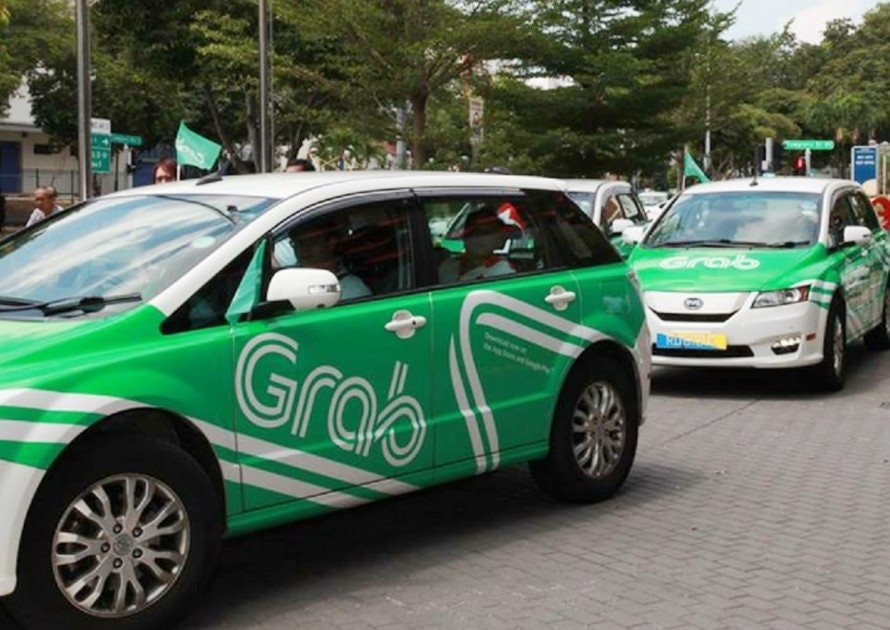
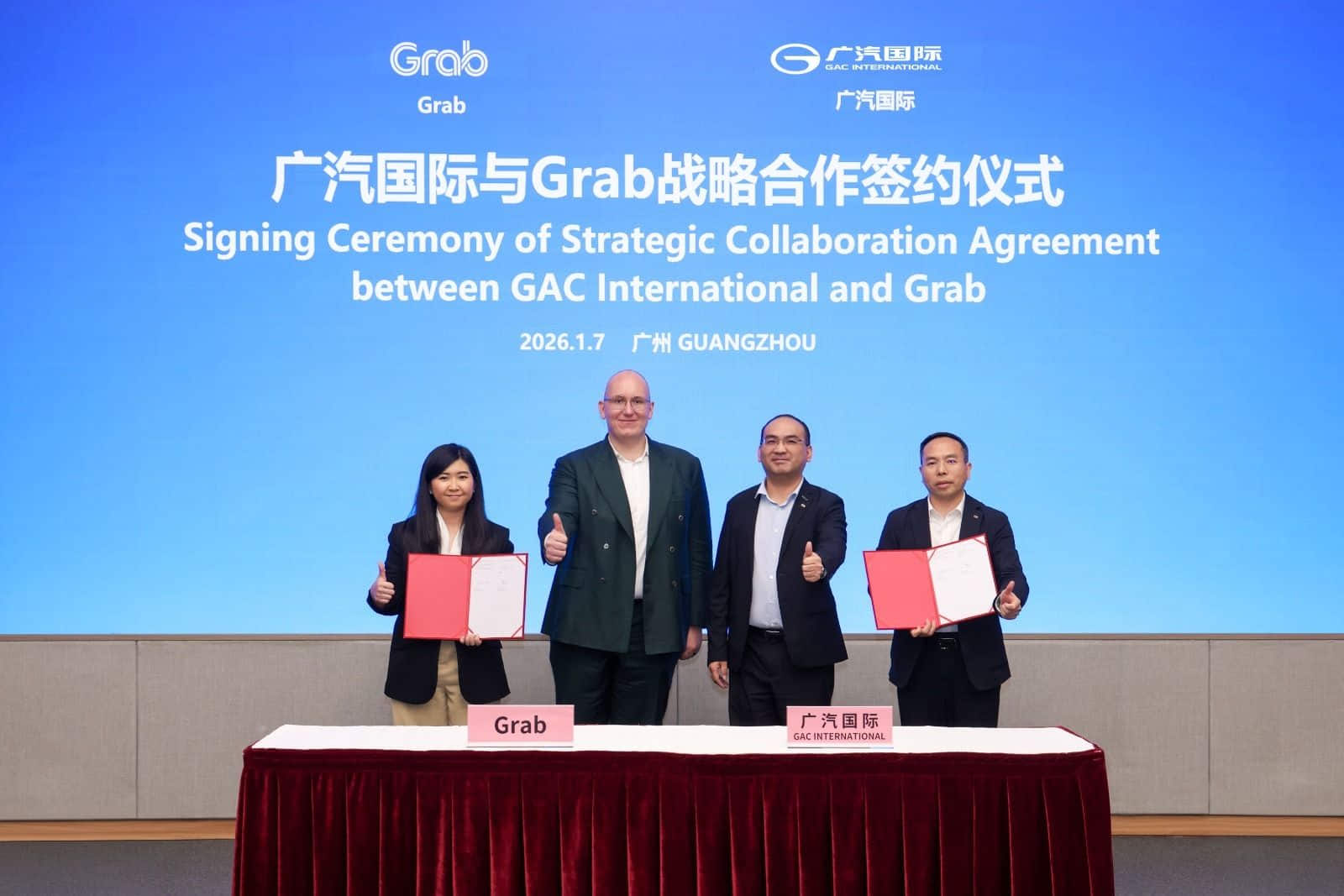
On January 8th, Grab announced a strategic partnership with GAC, one of China’s leading automotive groups, to deploy approximately 20,000 high-performance electric vehicles (EVs) across Southeast Asia.
Under the agreement, Grab and GAC aim not only to increase the number of electric vehicles in Grab’s fleet but also to deeply integrate their technological systems. This collaboration will enhance the operational experience for driver-partners. Both companies are committed to improving post-sales support, maintenance, and fleet management services, which are critical for a professional ride-hailing model.
Initially, three flagship GAC electric vehicle models—AION Y, AION ES, and AION V—will be introduced in six key markets: Singapore, Malaysia, Indonesia, the Philippines, Vietnam, and Thailand. These vehicles are specifically designed to meet the unique demands of ride-hailing services, featuring 90-degree opening doors, spacious rear legroom, and an optimized cabin for urban mobility, ensuring greater comfort for both drivers and passengers.
The partnership with Grab aligns with GAC’s global strategy, which involves not only exporting vehicles but also bringing technological solutions, services, and operational capabilities to build an integrated electric vehicle ecosystem in international markets.
A key highlight of the agreement is the integration of Grab’s driver app directly into GAC’s smart cockpit system. This allows driver-partners to access navigation instructions, high-demand area alerts, and safety warnings on the vehicle’s central screen, eliminating the need for multiple devices. Grab states that this solution reduces eye strain, minimizes distractions, and enhances road safety during operations.
Philipp Kandal, Head of Product at Grab, emphasized, “Integrating the Grab driver app into GAC’s cockpit display provides a seamless and intuitive experience, reducing cognitive load for drivers. This supports our commitment to carbon neutrality and sustainable development.”
Grab driver-partners will have multiple options to access electric vehicles, including leasing through partner fleet management companies or participating in financial support and vehicle ownership programs offered by Grab. Moving forward, Grab and GAC plan to continue researching technological innovations and expanding the scale of electric vehicles across the region.
The Southeast Asian electric vehicle market is experiencing rapid growth. According to the International Energy Agency’s (IEA) Global EV Outlook 2025, electric vehicle sales in the region increased by nearly 50% in 2024. In this context, Grab identifies supporting drivers in transitioning to low- or zero-emission vehicles as a critical pillar in its strategy to achieve carbon neutrality by 2040.
In Vietnam, Grab is strengthening partnerships with charging infrastructure providers such as EBOOST and Charge+ since late 2025, offering drivers discounted charging rates and cost-saving programs. Similar initiatives are being implemented in Singapore, Thailand, Indonesia, and the Philippines, gradually forming a regional electric vehicle ecosystem, with Grab serving as the central platform connecting users, drivers, manufacturers, and infrastructure providers.
VinFast Surpasses Vingroup in Chartered Capital

VinFast has recently increased its chartered capital to a staggering 80.793 trillion VND, surpassing its parent company, Vingroup, which holds 77.335 trillion VND.
VinFast Sells Nearly 700 Cars in 3 Months: What’s Behind Vietnam Future Group (VFG)’s Success?
After just four months of operation, VFG has achieved an impressive revenue of over 350 billion VND, with a remarkable profit of approximately 45 billion VND.
Vietnam’s GDP Poised to Surpass Thailand by 2026?

Recently, Nikkei Asia projected that Vietnam’s GDP could surpass Thailand’s this year, fueled by a significant boost from large-scale infrastructure projects.
Vietnam’s Economy Through an International Lens: The 2025 Momentum and Foundations for a New Cycle
Vietnam’s total import-export turnover has surpassed the $900 billion mark for the first time, reaching an all-time high. This milestone underscores the nation’s significant progress in its journey of international economic integration.
VinFast Enters Congo: Aiming to Sell 100,000 Motorcycles in One Quarter, Matching Vietnam’s Peak—Can the ‘Old Vehicle Phase-Out’ Policy Ease the Power Demand?

Kinshasa’s 17 million residents, heavily reliant on aging gasoline-powered motorcycles (Wewa), represent a vast market with immense potential for Vingroup’s strategic expansion. However, the true catalyst lies in the Congo’s transformative legal reforms, which are paving the way for unprecedented opportunities.