










Investing in Culture is Investing in Sustainable Development
General Secretary Tô Lâm has signed and issued Resolution 80 of the Politburo on the development of Vietnamese culture.
The resolution emphasizes that cultural and human development is the foundation, an important internal resource, and a significant driving force, serving as the regulatory pillar for the rapid and sustainable development of the nation. Cultural values must be closely intertwined, harmoniously integrated, and deeply embedded in all aspects of social life, from politics, economics, society, and environment to defense, security, and foreign affairs, truly becoming the nation’s soft power in the new era.
Cultural development aims to perfect the personality of socialist humans in the new era and to build individuals who contribute to cultural advancement. It seeks to create a humane, healthy, civilized, and modern cultural environment. The goal is to comprehensively develop Vietnamese culture and people based on the national value system, cultural values, family values, and the standards of Vietnamese people; to promote patriotism, resilience, intelligence, self-reliance, and national pride; and to uphold morality, talent, creativity, and the aspiration to contribute to the prosperity, civilization, and happiness of the people and the robust development of the Vietnamese nation in the new era.
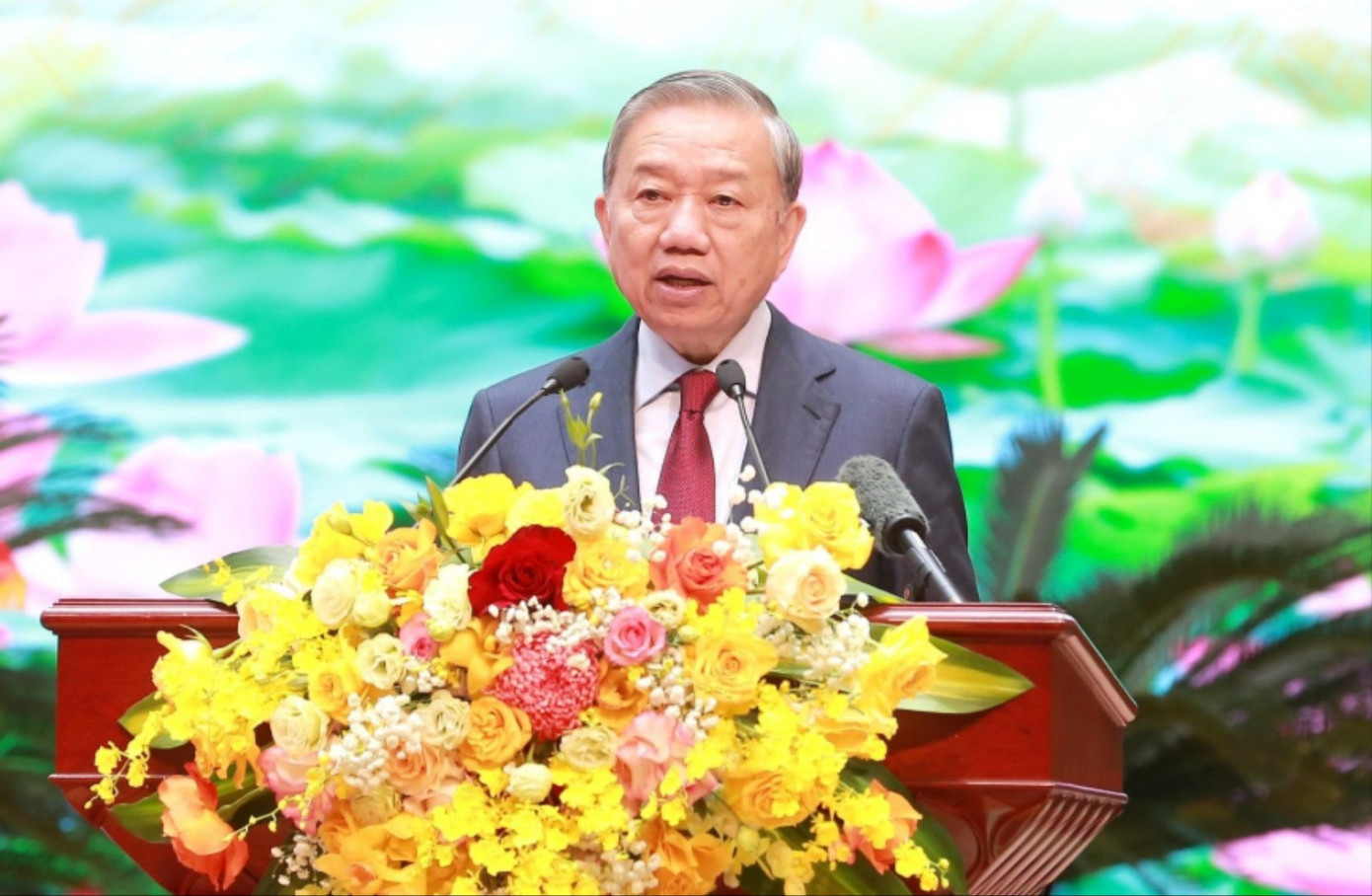
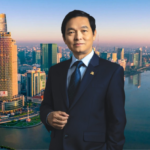
General Secretary Tô Lâm. Photo: PV.
Cultural development is a national endeavor led by the Party, managed by the State, with the people as the primary creators and beneficiaries. Intellectuals, artists, cultural officials, and entrepreneurs play a crucial role, while the pioneering and exemplary role of Party members and officials is emphasized. Cultural development is both a long-term strategic goal and an urgent necessity, requiring proactive, positive, creative, persistent, and consistent efforts tailored to objective realities.
The resolution underscores that investing in culture is investing in the nation’s sustainable development and the future of the people. It calls for a fundamental and comprehensive shift in thinking about mobilizing all resources for cultural development, with state resources playing a leading role and social and private sector resources serving as important drivers. Institutions, particularly breakthrough mechanisms and policies, are key to effectively mobilizing and utilizing investment resources for culture, attracting and utilizing talents.
The resolution aims to maximize the value and strength of Vietnamese culture and people in the new era, addressing the harmonious and effective management of culture’s internal relationships: between “building” and “combating,” tradition and modernity, national and international, preservation and development, mass and elite culture, real life and digital space, and open data and ensuring digital cultural sovereignty and security.
Establishing 5-10 National Cultural Industry Brands by 2030
Among the goals set for 2030, the resolution aims to develop cultural industries contributing 7% to GDP and establish 5-10 national cultural industry brands in potential fields such as cinema, performing arts, cultural tourism, design, and fashion.
It plans to successfully organize 5 international art festivals and cultural events in cinema, music, and fine arts. Additionally, 1-3 Vietnamese cultural centers will be established abroad, prioritizing comprehensive strategic partner countries. Efforts will be made to have 5 more cultural heritages recognized and inscribed by UNESCO.
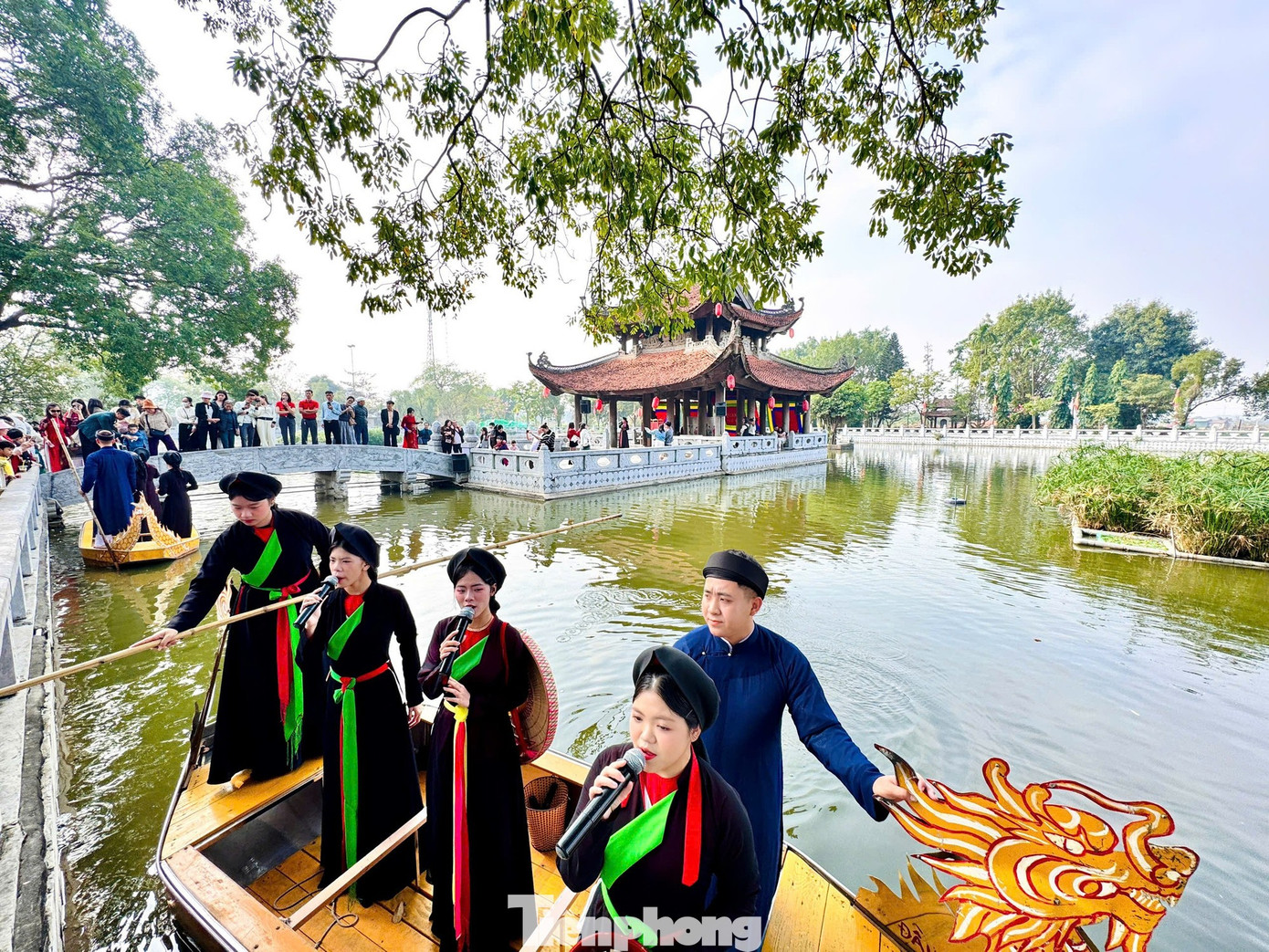
The Politburo has designated November 24th as “Vietnamese Culture Day” annually.
By 2045, the vision is to build and develop Vietnamese socialist culture, with people at the center, as the subject, goal, and driving force of development. Cultural values will serve as the foundation and standards, permeating all aspects of social life. The cultural industry and creative economy will become a pillar of sustainable development, aiming to contribute 9% to GDP. The goal is to have 10 internationally renowned art festivals and cultural events and to have approximately 8-10 more cultural heritages recognized by UNESCO. Vietnam aims to be among the top 3 in ASEAN and the top 30 globally in the Soft Power Index and the value of cultural industry product exports.
Establishment of the Central Steering Committee for Vietnamese Cultural Development
Among the tasks and solutions, the resolution calls for a bold shift in thinking and unified awareness and action to develop culture in the new era. It emphasizes the need to perfect institutions for strategic breakthroughs and to unlock cultural development resources. Focus is placed on building well-rounded Vietnamese individuals and creating a humane, healthy, civilized, and modern cultural environment.
The resolution mandates the implementation of a comprehensive value system, including national values (peace, unity, independence, a wealthy people, a strong nation, democracy, equity, civilization, and happiness), family values (prosperity, happiness, progress, and civilization), and Vietnamese human standards (patriotism, unity, self-reliance, compassion, honesty, responsibility, discipline, and creativity). It stresses the seamless integration of traditional and modern values, national and international elements, to significantly contribute to the comprehensive development of individuals, social morality, and national character in the new era.
The resolution ensures equal access to cultural enjoyment and creation, developing cultural services to better meet the people’s needs. It advocates for the construction and operation of a National Digital Culture Platform, providing free or low-cost access to digital libraries, museums, online performances, and art classes to bridge the cultural enjoyment gap between regions, social classes, and communities.
It guarantees equal access to cultural values for vulnerable groups such as people with disabilities, the poor, children, and ethnic minorities, with a focus on preserving and promoting the positive traditional and cultural identities of ethnic minorities.
Notably, the resolution designates November 24th as “Vietnamese Culture Day,” a paid holiday, to enhance cultural enjoyment, encourage artistic creativity, and promote a civilized and cultural lifestyle across society.
The resolution also focuses on the targeted development of key cultural industries (cinema, music, fine arts, cultural tourism, design, fashion, traditional crafts, video games, cuisine, and digital content/software). It supports research and pilot projects applying high technology throughout the value chain of cultural industries, from creation and production to distribution, consumption, and copyright protection.
In terms of implementation, the resolution establishes the Central Steering Committee for Vietnamese Cultural Development, headed by the Standing Committee of the Secretariat, with members from relevant agencies to oversee and ensure the effective execution of the resolution’s objectives.
Exciting News: Vietnam Adds an Extra National Holiday with Full Pay for All Workers
On January 7, 2026, on behalf of the Politburo, General Secretary Tô Lâm signed and issued Resolution No. 80-NQ/TW of the Politburo on the development of Vietnamese culture. November 24th of each year has been designated as “Vietnamese Culture Day,” as per Resolution No. 80 of the Politburo. On this day, workers nationwide are granted a paid day off from work.
Why Japan and South Korea Face Challenges While Vietnam Surges Ahead?
Driven by the ambition for double-digit growth, capital flows are shifting, and market confidence is surging. The vision unveiled at FChoice 2025 illustrates why Vietnam is defying the challenges faced by many other economies.
Unprecedented Milestone: Vietnamese Stock Market Achieves Historic Feat

In 2025, Vietnam’s stock market achieved an unprecedented milestone: mobilizing a record-breaking 141 trillion VND, a feat never seen before, according to Mr. Nguyễn Quang Thuân, Chairman of FiinGroup and FiinRatings.
Masterise Homes: Pioneering Luxury Mindset Shaping Market Leadership

At the prestigious Luxuo Asia Awards 2025, Masterise Homes was honored with the title of “Best Luxury Property Developer of The Year,” a highly coveted accolade recognizing excellence in high-end real estate development across the Asian region.
Politburo Designates November 24 as ‘Vietnamese Culture Day,’ Declaring a National Holiday

The Politburo has officially designated November 24th as “Vietnamese Culture Day,” an annual national holiday. On this day, all workers are entitled to a paid day off, receiving their full salary while celebrating Vietnam’s rich cultural heritage.