










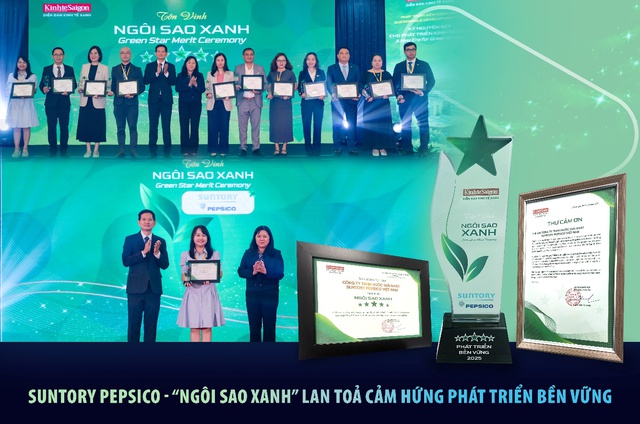
Among the standout initiatives is Suntory PepsiCo Vietnam, a leading beverage company, pioneering sustainable packaging strategies with a comprehensive approach. This includes enhancing design, utilizing recycled plastics for packaging, and promoting collection systems alongside community education.
Sustainable Packaging Development Strategy: From Commitment to Action
As a leader in the fast-moving consumer goods industry, Suntory PepsiCo views sustainable packaging not merely as a responsibility but as a cornerstone of its sustainable development strategy. The company has implemented a synchronized strategy based on four core objectives: reducing the use of virgin plastic, increasing the use of recycled plastic (rPET) for packaging, designing packaging that is recyclable or reusable, and improving collection efficiency through community education.
One notable achievement in reducing virgin plastic usage was the launch of Aquafina bottles in 2022, featuring the lightest packaging in the entire PepsiCo global system. This design significantly reduced virgin plastic input, cutting over 5,700 tons of virgin plastic in 2023 alone, equivalent to a reduction of nearly 23,000 tons of CO₂ emissions.
In the same year, Suntory PepsiCo became the first beverage company in Vietnam to introduce Pepsi products using 100% recycled plastic (rPET) for packaging. This milestone not only represents a breakthrough in material innovation but also sends a powerful message to promote a circular economy for plastic packaging in Vietnam. The range of products using recycled plastic (rPET) continues to expand, demonstrating the company’s long-term commitment to reducing virgin plastic input.
Simultaneously, the company is advancing packaging design innovations to ensure recyclability, biodegradability, or reusability. Initiatives such as removing non-recyclable labels, replacing non-biodegradable bottle seals, and addressing specific materials in Bag-in-Box systems highlight their pioneering efforts in redesigning product packaging, setting new benchmarks for sustainable packaging in the industry.
To date, over 90% of Suntory PepsiCo’s packaging is recyclable, reusable, or biodegradable, reflecting their commitment to supporting the government’s call to minimize single-use plastics.
Post-Consumer Packaging: Solving the Puzzle Through Collaboration
Beyond production, Suntory PepsiCo is a pioneer in fulfilling extended producer responsibility by enhancing the efficiency of post-consumer packaging collection and recycling systems. Since 2019, the company has been a co-founder of the Vietnam Packaging Recycling Alliance (PRO Vietnam), aimed at fostering a circular economy by making collection and recycling activities more accessible, efficient, and sustainable.
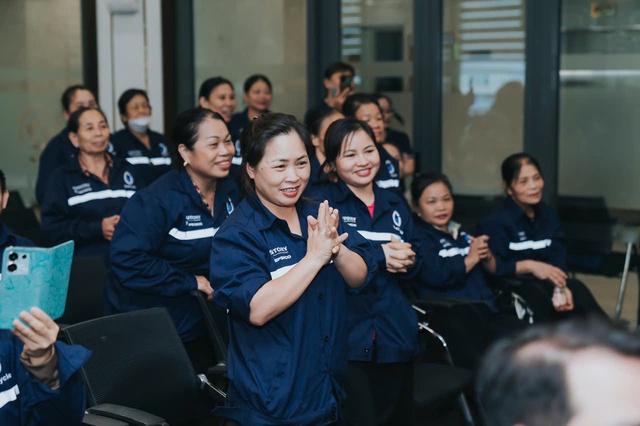
Training and support for informal waste collectors
Through communication campaigns, recyclability information is printed directly on products, enabling consumers to make environmentally friendly choices. Notably, the company focuses on training and supporting informal waste collectors, who work directly with plastic waste daily. Training sessions equip them with sorting knowledge, waste handling skills, and occupational safety practices. Empowering this group not only enhances recycling system efficiency but also improves their livelihoods sustainably.
Engaging the Youth – Sowing the Seeds of Sustainable Thinking
In addition to waste collectors, Suntory PepsiCo aims to change consumer behavior, particularly among the youth – the future consumers and agents of societal change. In 2024, the company partnered with universities to conduct source segregation training, introducing knowledge about the lifecycle of plastic packaging and recycling practices. This long-term strategy aims to inspire a green lifestyle in the next generation and spread positive impacts throughout the community.
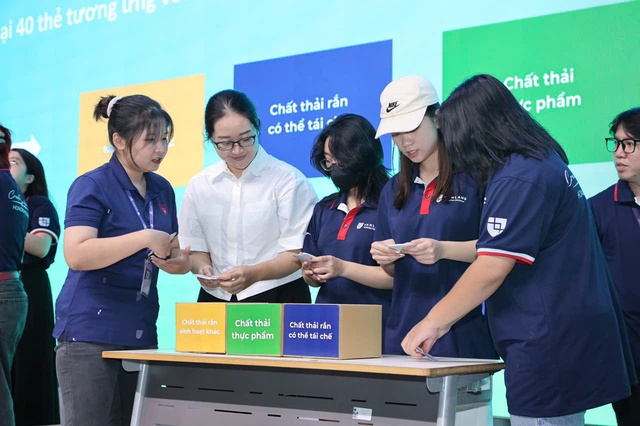
Suntory PepsiCo Vietnam collaborates with universities to conduct training sessions
For over three decades, Suntory PepsiCo has continuously innovated and developed for a sustainable future alongside Vietnamese consumers. Beyond sustainable packaging strategies, initiatives such as reforestation through the Water of Life program and the Mizuiku clean water education program have made significant contributions to the community and garnered widespread recognition.
Global Packaging Leader Champions Circular Economy Initiatives in Vietnam
Recently, Tetra Pak unveiled its Sustainability Report for the 2024 fiscal year (FY24), highlighting a 25% reduction in greenhouse gas (GHG) emissions across its entire value chain since 2019, with a further 5% improvement achieved since 2023.
Vietnam’s First Unique 1.4km Road: A Collaboration Between Two Global Giants
The emergence of this road stands as a testament to Vietnam’s unwavering commitment to sustainable development.
Green Transportation Transition: Hanoi and Ho Chi Minh City Must Implement Citizen Support Policies

The Government Office has issued a directive urging the People’s Committees of Hanoi and Ho Chi Minh City to promptly disclose their roadmaps for transitioning to green transportation. This announcement emphasizes the need for clear, actionable support policies to accompany the shift toward sustainable mobility solutions.
Sustainable Development: Transforming Cost Burdens into Brand Assets
A groundbreaking innovation in bottle caps has enabled Vinamilk (HOSE: VNM) to eliminate over 5 million plastic straws, contributing to a remarkable 80% growth in the New Zealand market. This small yet impactful solution from the dairy giant demonstrates that reducing emissions isn’t solely a cost challenge—it can serve as a strategic “priority card,” expanding product presence in premium markets and elevating brand value.
The Green Cost Conundrum: When Sustainable Products Cost More Than Pollution.

The concept of a circular economy is an inevitable path for many, yet Vietnam faces a perplexing paradox: recycled products are significantly more expensive than their virgin counterparts.