


















Hai Phong – Ha Long Expressway: Vietnam’s Most Expensive Highway
Inaugurated in 2018, the Hai Phong – Ha Long Expressway is a transformative transportation project for Northern Vietnam’s coastal economy. Despite its modest length of 24.6 km, the total investment soared to 13.7 trillion VND, averaging 557 billion VND per kilometer—significantly higher than other highways. What makes this investment so extraordinary?
Primarily, the route traverses a challenging coastal area with weak geological foundations, requiring complex groundwork and costly structural solutions. Additionally, the project includes the Bach Dang Bridge, Vietnam’s largest cable-stayed bridge at the time of completion and the third among the world’s seven longest multi-span cable-stayed bridges. Its three-tower design, expansive river span, and harsh construction conditions significantly inflated costs compared to projects on stable terrain.
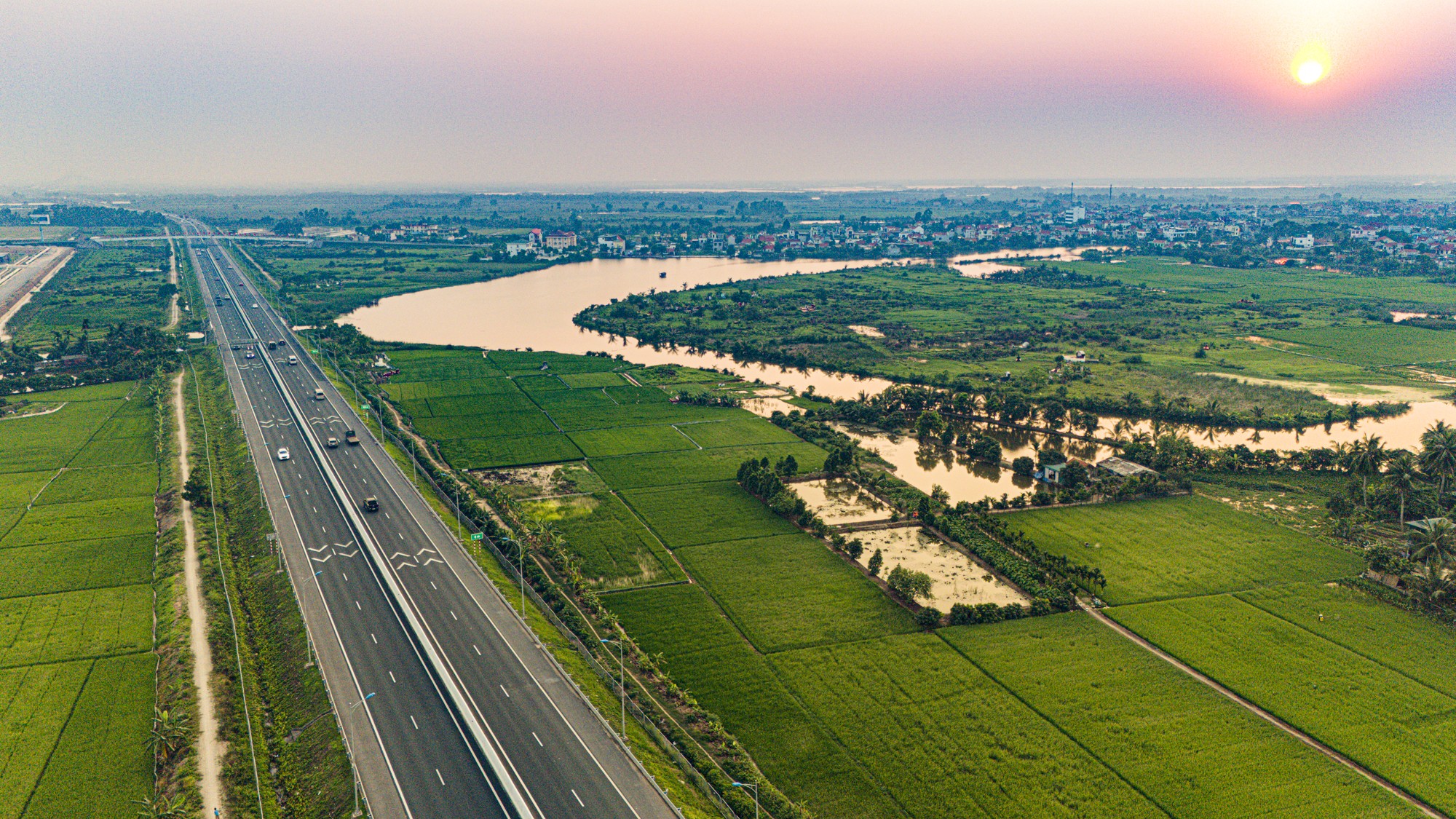
The Hai Phong – Ha Long Expressway crosses coastal river mouths and swamps. Photo: Ngoc Dep
Executed as a Public-Private Partnership (PPP), the project allocated over 6.4 trillion VND from Quang Ninh’s budget for the Ha Long – Bach Dang Bridge segment, while nearly 7.3 trillion VND in BOT funds focused on the bridge, access roads, and interchanges. This marked the first time a local government independently managed such a large-scale infrastructure investment, showcasing innovative resource mobilization and development leadership.
Beyond its cost, the expressway delivers immense value. Travel between Hai Phong and Ha Long was reduced from 70 km to 55 km, with journey times from Hanoi to Ha Long dropping to just over 2 hours.
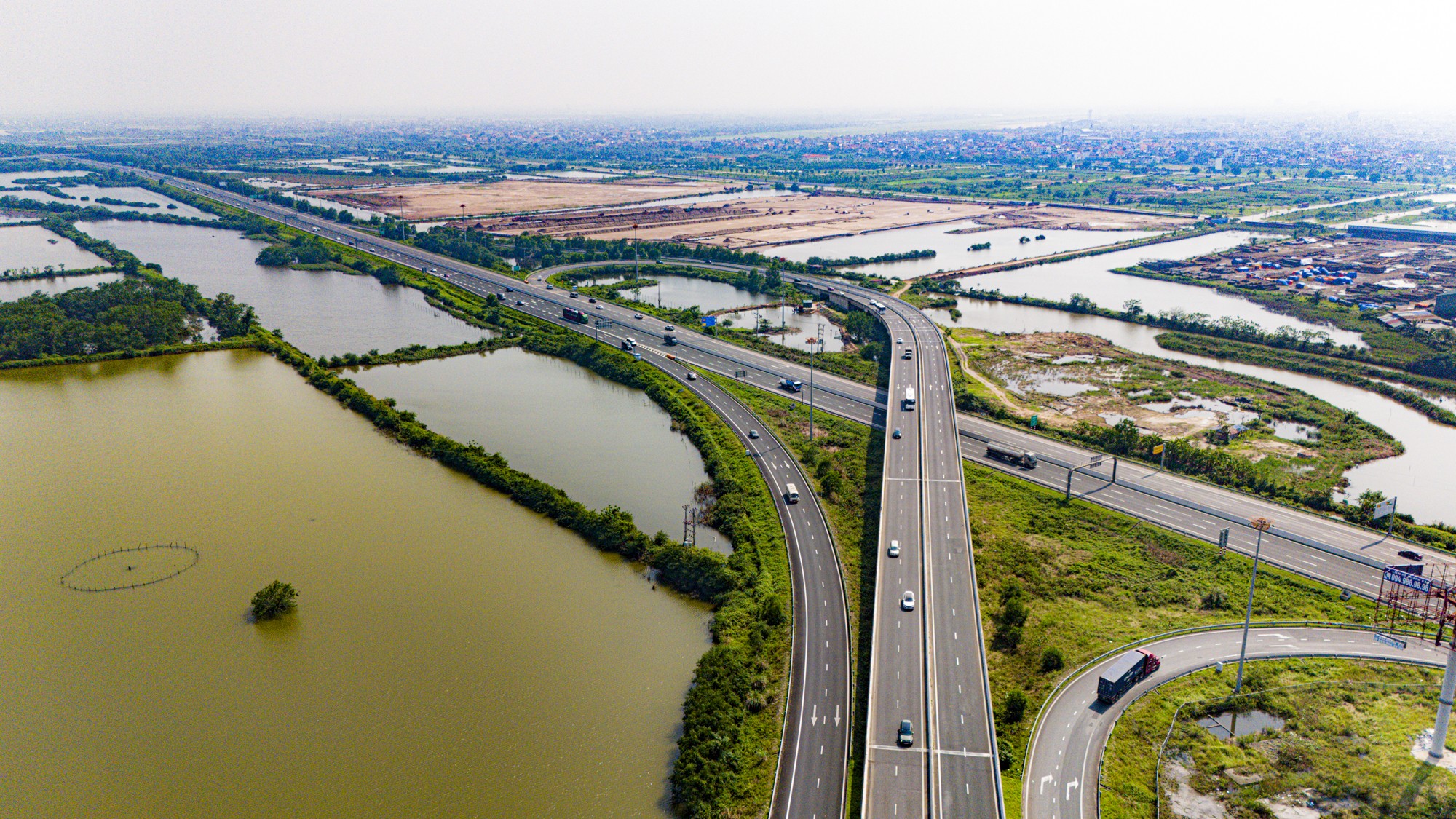
Construction began in 2014, with the expressway opening in 2018. Photo: Ngoc Dep
The route alleviates congestion on National Highways 10 and 18A, expands development opportunities for the Northern Key Economic Region, and seamlessly connects Hai Phong’s industrial hub with Ha Long’s international tourism center.
As a vital transportation artery, the Hai Phong – Ha Long Expressway sets a precedent for local PPP infrastructure projects, fostering dynamic connectivity among industrial, port, and tourism hubs.
Bach Dang Bridge: A Marvel of Vietnamese Cable-Stayed Engineering
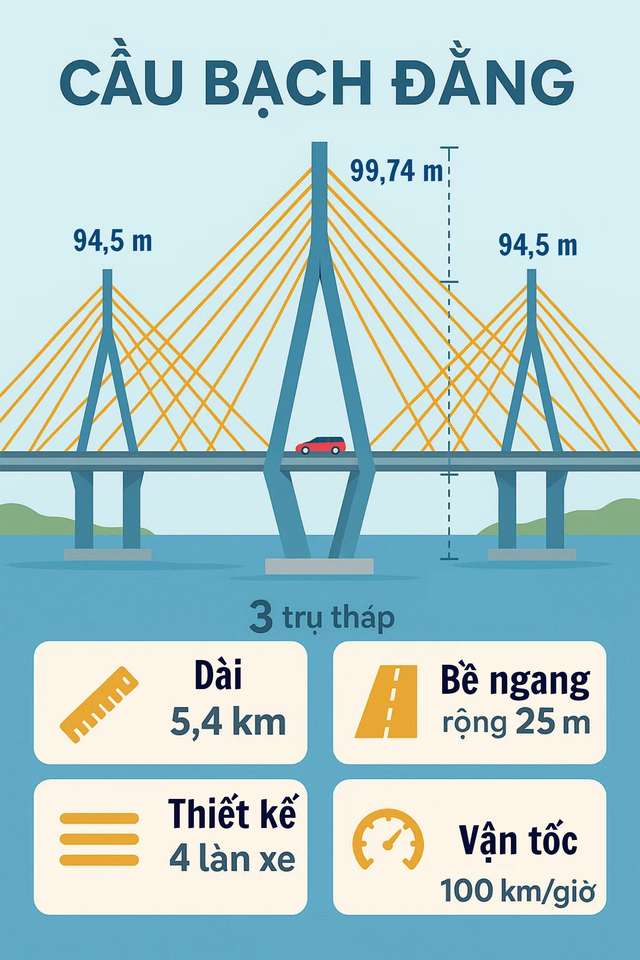
Image caption
Spanning the Bach Dang River estuary, the Bach Dang Bridge links Hai Phong and Ha Long, standing as a flagship infrastructure achievement of the past decade. Beyond its strategic role in Northern Vietnam’s maritime connectivity, the bridge is a technical masterpiece—one of Vietnam’s largest cable-stayed bridges and the world’s third longest multi-span cable-stayed bridge at completion.
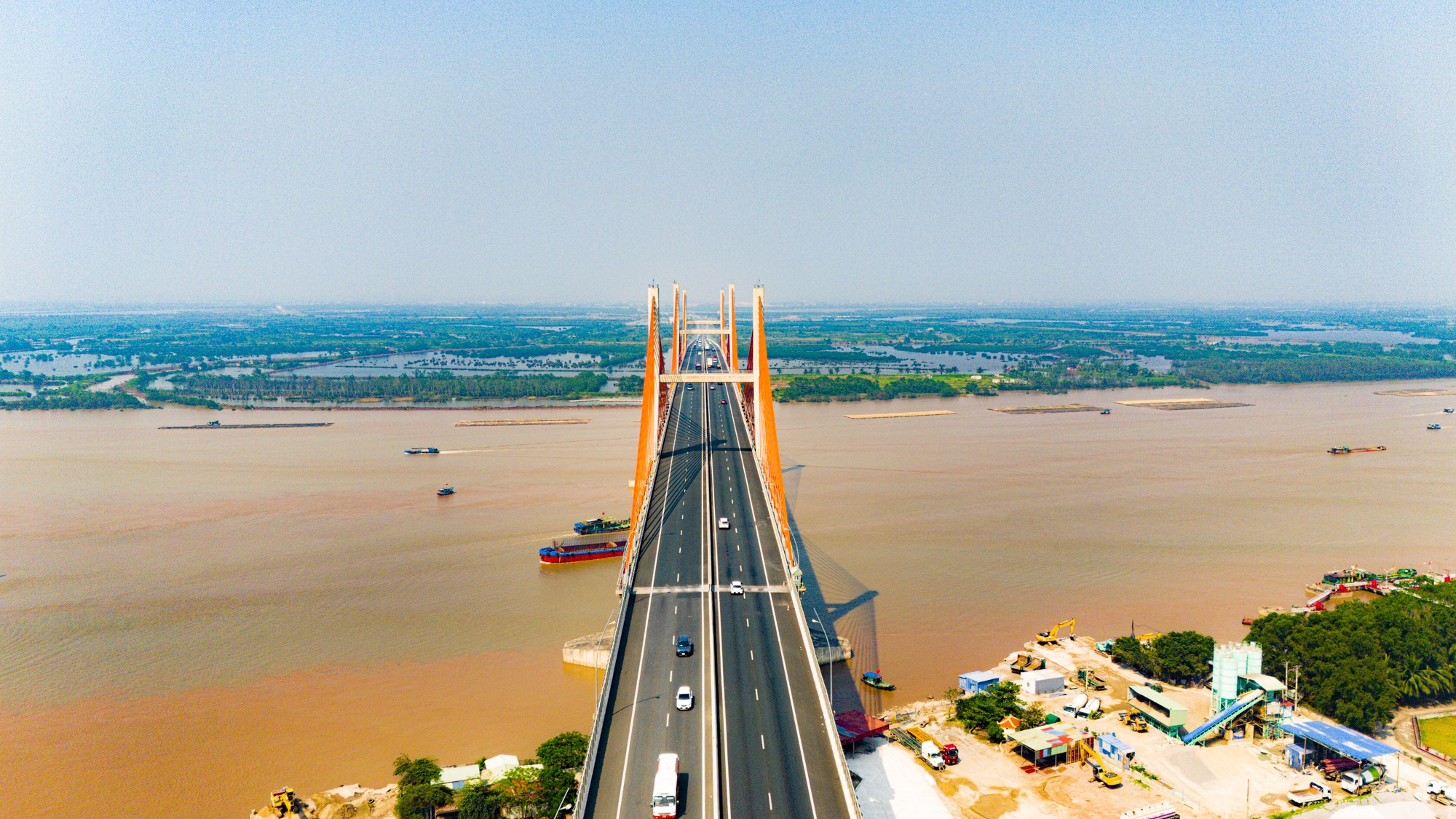
The 5.4 km bridge features a 25-meter-wide deck, 4 lanes, and a 100 km/h speed limit. Photo: Ngoc Dep
Its three-tower cable-stayed design, spanning complex waters at the Gulf of Tonkin entrance, symbolizes the unity of Hai Phong, Ha Long, and Hanoi with its stylized “H” shape, adding modern architectural flair to the coastal landscape.
As the centerpiece of the Hai Phong – Ha Long Expressway, the bridge eliminated long-standing traffic bottlenecks, drastically reducing travel times between key economic and tourism hubs in the Northeast. This facilitates logistics, port operations, and international tourism services.
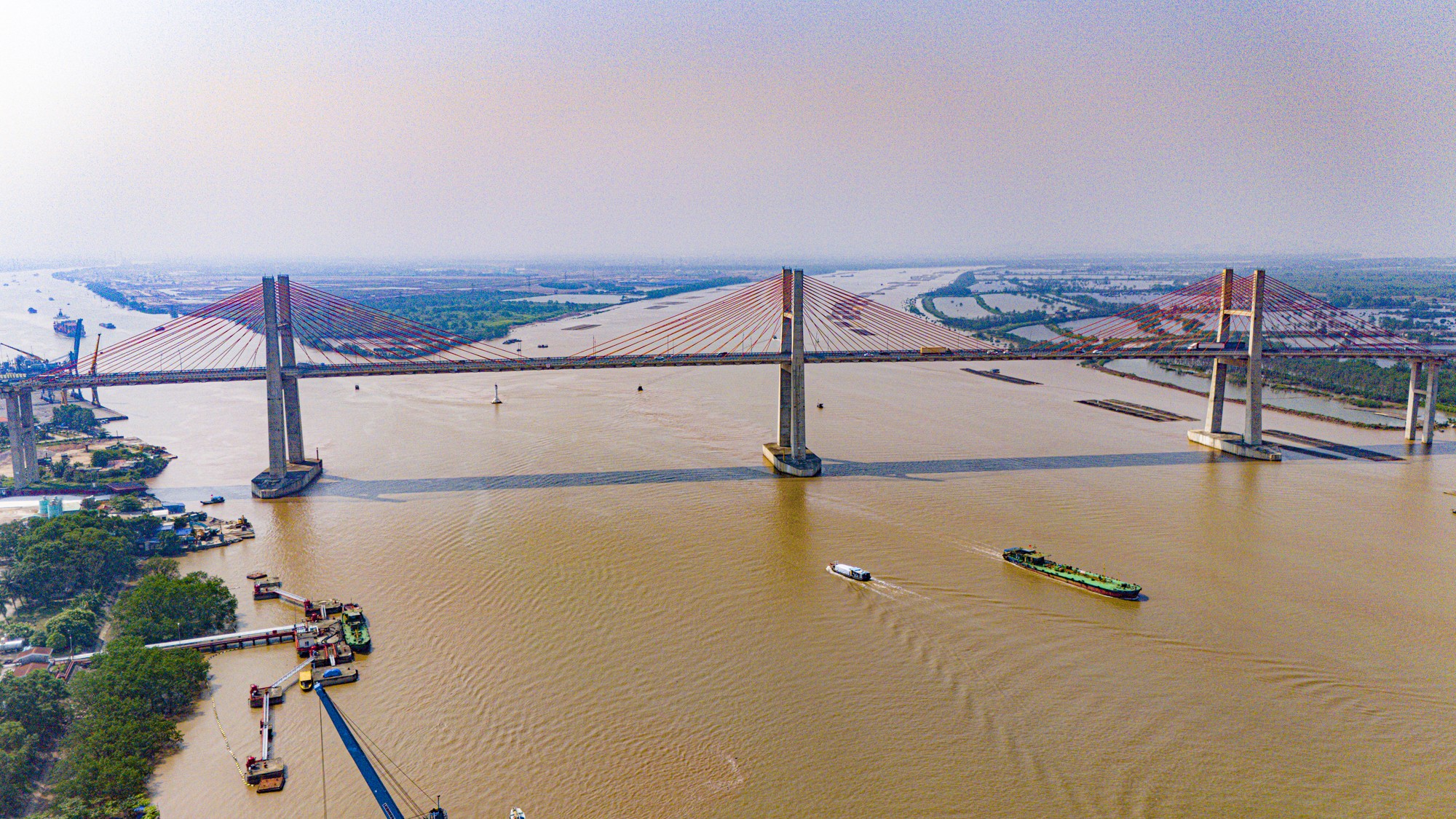
The bridge’s three towers include a 99.74-meter central tower and two 94.5-meter side towers, with over 800 tons of cable installation. Photo: Ngoc Dep
Beyond its functional role, the Bach Dang Bridge symbolizes Vietnamese engineers’ mastery of large-scale infrastructure technology, project management, and execution.
As the strategic link between Hai Phong, Quang Ninh, and Hanoi, the bridge now serves as the Northern region’s new gateway to the sea, marking a transformative leap in infrastructure development and solidifying Vietnam’s position in global cable-stayed bridge engineering.
Exploring the Construction Site of the 2.4 Trillion VND Interchange Over Vietnam’s Widest Boulevard
The 2.4 trillion VND interchange connecting Ring Road 3.5 and Thang Long Boulevard is under intense 24/7 construction. Upon completion, this project will serve as a vital artery, significantly improving access to numerous urban areas such as Vuon Cam, An Lac Green Symphony, and Van Canh.
Phú Mỹ 2 Bridge Construction: A $560 Million PPP Project

Spanning approximately 6.3 kilometers, the Phu My 2 Bridge will connect Ho Chi Minh City and Dong Nai Province, with 4.6 kilometers in HCMC and 1.7 kilometers in Dong Nai. Designed for a speed of 80 km/h, the bridge features eight lanes—six for motor vehicles and two mixed-use lanes. Construction is slated to begin in Q3 2026, with completion and operation expected by 2029.
Proposed Establishment of an Inter-Sectoral Task Force to Resolve Hurdles in Quang Tri Airport Project

The People’s Committee of Quang Tri Province has officially submitted a proposal to the Ministry of Construction, requesting the establishment of an inter-sectoral working group. This initiative aims to address existing challenges, accelerate investment progress, and ensure the Quang Tri Airport is operational by the target completion date of April 30, 2026.
Ho Chi Minh City Sets Compensation Payout Timeline for National Highway 13 Project

Ho Chi Minh City has officially approved the implementation plan for the BOT project to upgrade and expand National Highway 13, with a total investment of nearly VND 21 trillion. The project is expected to be completed and operational by 2028.
Phú Quốc to Launch Nearly 9,000 Billion VND Metro Line

The first phase of Phú Quốc Island’s urban metro line project is set to break ground later this year, with completion targeted for mid-2027, just in time for the APEC summit. This ambitious initiative, undertaken through a public-private partnership (PPP) model, boasts an estimated investment of nearly 9 trillion VND.